


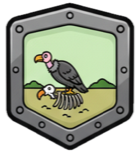


Andean Condor
Vultur gryphus
The Andean Condor is a large bird that soars high in the sky. With its impressive wingspan, it can glide for hours without flapping its wings, making it a magnificent sight in the mountains.
Habitat: Mountain regions
The Andean Condor is a massive black bird with striking white patches on its wings, especially noticeable in flight. It has a distinctive white ruff of feathers around its neck and a bald, reddish-grey head and neck, which often changes color with its mood. Males also have a prominent dark comb on their head.
Category
BirdsRarity
Common
Danger
1/5 · Very low
Snaps
Be the first to snap!
A group of condors circling in the sky is called a "kettle," looking like boiling water!
Andean Condors don't have strong talons like eagles; they have flat feet good for walking.
Male condors have a fleshy comb on their head, like a rooster, which changes color.
They use their bald heads to keep clean while eating messy meals inside carcasses.
Andean Condor can expertly ride warm air currents that helps them climb to incredible heights without flapping their wings.
Andean Condor has incredible eyesight that helps them spot tiny carcasses from thousands of feet up in the vast mountains.
Andean Condor has a powerful, hooked beak and strong neck that helps them tear tough hide and clean the environment.
Andean Condor can soar for hours without flapping their wings, saving lots of energy to search for food.
These giant birds are nature's clean-up crew, eating dead animals to keep mountains tidy!
Feathered describes animals, primarily birds, possessing a covering of feathers.
Aerial creatures spend a significant portion of their lives airborne, utilizing flight for various activities such as hunting, migration, or nesting.
Scavengers consume dead organic matter, helping to decompose carcasses and other waste in the ecosystem.
Gliding animals move through the air by launching themselves and maintaining flight with specialized body structures, without flapping wings.

This habitat trait identifies species found in mountainous regions, characterized by high elevation, steep slopes, and varying climate zones.

This trait characterizes organisms with an exceptionally long lifespan compared to others of their kind.

This trait identifies organisms whose diet consists entirely or primarily of animal tissue.

Diurnal animals are primarily active during daylight hours, typically resting or sleeping at night.

Describes a species whose presence and role have a disproportionately large effect on its environment.

Endangered status indicates a species is at a very high risk of extinction in the wild in the near future.
Danger
1/5 · Very low
Always watch birds from a distance and do not try to touch them.
The easiest way to identify Andean Condor is to use the Snappit nature identifier app.
100-135 cm
270-330 cm
8-15 kg
50-70 years
55 km/h
These giant birds are nature's clean-up crew, eating dead animals to keep mountains tidy!
Mountain regions
Zoom in to split clusters and explore where this object has been snapped.
Recent snaps will appear here as new observations are added.

North Rhine-Westphalia, DE
You might spot Giant Anteaters, Angolan Giraffe, and Giant Otter.
View guide →

Delaware, US
You might spot Red Panda, Andean Condor, and Crowned Sifaka.
View guide →
Alabama, US
You might spot African Elephant, Tiger, and Indian Rhinoceros.
View guide →
Connecticut, US
You might spot Tiger, Panthera Pardus Orientalis, and Andean Condor.
View guide →

Pennsylvania, US
You might spot African Penguin and Hyacinth Macaw.
View guide →
Take the discovery with you
Snap it with Snappit to identify it, learn what makes it special, and add the discovery to your collection.






.jpg&width=800)








