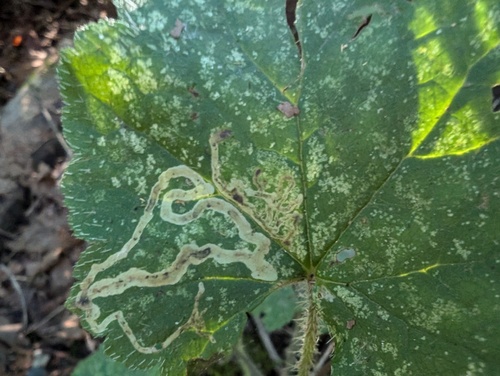





Phytomyza tiarellae
Phytomyza tiarellae
Phytomyza tiarellae is a tiny insect that loves to munch on plants. These little creatures are often found in gardens and can be tricky to spot because they are so small!
Habitat: Gardens
The Phytomyza tiarellae is a tiny, dark-bodied fly, typically black or dark grey, with clear wings and sometimes yellowish markings on its head or thorax. Its small size, often just 1-3 millimeters long, makes it hard to spot among foliage.
Category
InsectsRarity
Common
Danger
1/5 · Very low
Snaps
Be the first to snap!
Even though they're flies, adults are too small to bite you!
Their babies are tiny engineers, carving twisty tunnels inside leaves!
They are named after Tiarella plants, their favorite home and food!
They lay their eggs hidden deep within plant tissue to protect them.
Phytomyza tiarellae larvae can tunnel within plant leaves because of their chewing mouthparts that help them feed and hide.
Phytomyza tiarellae has specific chemical sensors that help them find and lay eggs only on certain Tiarella plants.
Phytomyza tiarellae larvae can live safely inside plant leaves that helps them hide from predators and harsh weather.
Larvae munch on plant leaves from the inside, while adults feed on sweet nectar.
Age differences: Larvae eat plant leaves from the inside, but adults drink nectar or plant sap.
Tiarella cordifolia
Larvae tunnel and feed within its leaves.

Poecile atricapillus
Forages on leaves for small insects and larvae.

Misumena vatia
Ambushes small insects on flowers and leaves.
Solitary animals live alone for most of their lives, only interacting with others for mating or parental care.
This trait characterizes organisms whose diet consists entirely or primarily of plant material.
Pertaining to species that are significantly smaller than typical or average for their kind.
This habitat trait indicates species that can coexist with humans in urban and suburban environments, utilizing man-made structures and green spaces.
No aliases listed yet.
Danger
1/5 · Very low
It's best to look at insects from a distance and not touch them.
Look for six legs, antennae, three body sections and the shape of the wings. Beetles have hardened front wings; flies have just one working pair. Tiny insects may need a close view before their group is clear. Insect Identifier: upload a photo and compare the visible details.
2-5 mm
1-3 mm
30-50 days
0.5 km/h
Larvae munch on plant leaves from the inside, while adults feed on sweet nectar.
Gardens
Foraging
Zoom in to split clusters and explore where this object has been snapped.
Recent snaps will appear here as new observations are added.
Take the discovery with you
Snap it with Snappit to identify it, learn what makes it special, and add the discovery to your collection.