Pisaster giganteus
Pisaster giganteus
The Pacific sea star, or Pisaster giganteus, is a colorful starfish found in the ocean. It has five arms and can be purple, orange, or even yellow! These starfish love to cling to rocks and explore the tide pools.
Habitat: Coastal areas
The Pisaster giganteus is a large sea star, typically purple, brown, or red, often adorned with prominent, blunt white spines that form a striking network across its dorsal surface. Its five robust arms radiate from a central disc.
Category
InvertebrateRarity
Common
Danger
1/5 · Very low
Snaps
1
Giant sea stars don't have a brain or blood, but they still thrive!
Some giant sea stars surprisingly have six or even seven arms!
Their entire body is covered in tiny, hard skeletal plates called ossicles.
They breathe using tiny, feathery skin gills all over their back!
Pisaster giganteus can regrow lost arms because of specialized cells that helps them recover from injury.
Pisaster giganteus has hundreds of powerful tube feet that help them cling tightly to rocks and slowly crawl across the seafloor.
Pisaster giganteus can push its stomach outside its body to digest prey, which helps them eat large or shelled animals.
Pisaster giganteus can sense chemicals in the water, which helps them detect prey like mussels from a distance.
A slow but mighty hunter, this sea star feasts on shelled creatures like mussels and barnacles.
Mytilus californianus
They are a favorite prey for this sea star.
Balanus glandula
These sea stars pry open and digest barnacles.
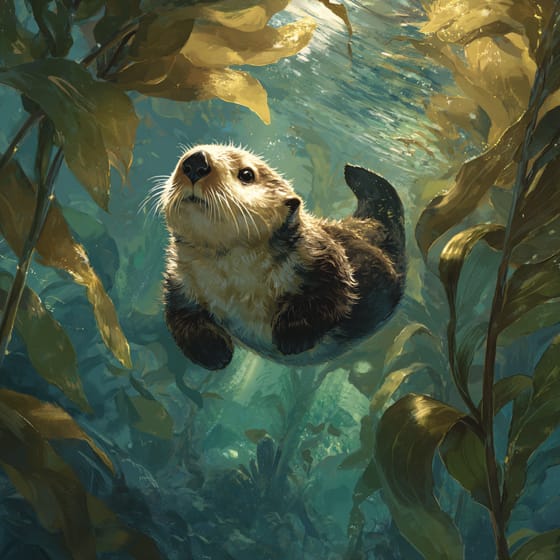
Enhydra lutris
Sea otters sometimes prey on sea stars.
%2C_Point_Lobos%2C_CA%2C_US_-_May_2013.jpg&width=800)
Larus occidentalis
Gulls may eat sea stars exposed at low tide.
Solitary animals live alone for most of their lives, only interacting with others for mating or parental care.
Colorful describes organisms or objects displaying a wide range of bright and distinct colors.
Filter feeders obtain nutrients by straining suspended food particles and small organisms from water.
Coastal habitats are dynamic environments located along the interface between land and sea, influenced by tides, waves, and saltwater.

This trait identifies organisms whose diet consists entirely or primarily of animal tissue.

Describes a species whose presence and role have a disproportionately large effect on its environment.

Regenerative organisms possess the ability to regrow lost or damaged body parts, tissues, or organs.

Marine habitats encompass all saltwater environments of the Earth's oceans, supporting an immense diversity of aquatic life.

Endangered status indicates a species is at a very high risk of extinction in the wild in the near future.
Danger
1/5 · Very low
Don't touch sea stars without asking an adult, as they need to stay in their ocean home.
The easiest way to identify Pisaster giganteus is to use the Snappit nature identifier app.
10-30 cm
0.5-3 kg
10-20 years
0.01 km/h
A slow but mighty hunter, this sea star feasts on shelled creatures like mussels and barnacles.
Coastal areas
Foraging
Zoom in to split clusters and explore where this object has been snapped.
Take the discovery with you
Snap it with Snappit to identify it, learn what makes it special, and add the discovery to your collection.