




Podabrus
podabrus
Podabrus is a fascinating genus of soldier beetles, widely recognized for their soft, elongated bodies and highly beneficial predatory habits. Commonly encountered in gardens, meadows, and forests, these beetles are excellent natural pest controllers. They voraciously consume aphids, small caterpillars, and other soft-bodied insect pests, making them a gardener's best friend. Their delicate appearance belies their role as formidable, active hunters in the micro-ecosystems they inhabit. As daytime foragers, Podabrus beetles are frequently seen perching atop vibrant flowers and dense foliage. Beyond hunting, they occasionally supplement their diet with nectar and pollen, casually acting as minor pollinators as they travel from bloom to bloom.
Habitat: Typically found in meadows, gardens, agricultural fields, and woodland edges where flowering plants and soft-bodied insect prey are abundant.
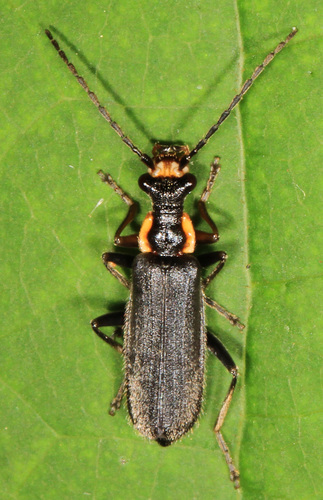
Podabrus beetles are relatively small, typically measuring between 0.5 and 1.5 centimeters in length, and are defined by their elongated, soft-bodied forms with leathery wing covers (elytra). Their coloring is usually a mix of black, brown, grey, or yellow. Unlike many other soldier beetles, members of the genus Podabrus have a head that is distinctly visible and not entirely concealed by the pronotum (the plate covering the thorax), giving them the distinct appearance of having a "neck." They possess long, thread-like antennae and spindly legs perfectly adapted for climbing through complex foliage.
Category
InsectsRarity
Common
Danger
1/5 · Very low
Snaps
Be the first to snap!
They are highly valued by gardeners and farmers as natural biological control agents because a single beetle can consume dozens of aphids in a single day.
To differentiate Podabrus from closely related soldier beetles, entomologists look for their distinct 'neck', as their head is not tucked fully under their thoracic shield.
Unlike most beetles that are heavily armored, Podabrus have soft, leathery wing covers, earning them the common nickname 'leatherwings'.
When threatened by predators, they can exude noxious chemical compounds from special glands to make themselves unpalatable.
Their pliable, leathery elytra and lack of rigid armor allow them to easily squeeze into tight floral structures to hunt hiding pests.
They possess specialized mandibles adapted for quickly seizing, piercing, and consuming soft-bodied agricultural pests like aphids.
Both adults and larvae are primarily predatory, feeding heavily on soft-bodied insects, though adults will occasionally consume nectar and pollen.
Age differences: Larvae are strictly predatory ground-dwellers, while adults forage on the upper parts of plants and supplement their carnivorous diet with nectar.
Acyrthosiphon pisum
Podabrus beetles are important predators of plant-damaging aphids.

Hirundo rustica
Insectivorous birds frequently prey on adult soldier beetles.
Solidago canadensis
They forage on and casually pollinate flowering plants while hunting.
Furry describes animals possessing a dense covering of soft hair or fur.
Solitary animals live alone for most of their lives, only interacting with others for mating or parental care.
This trait characterizes organisms whose diet consists entirely or primarily of plant material.
Forest habitats are terrestrial environments dominated by dense tree cover, supporting a high diversity of plant and animal life.
Nocturnal animals are primarily active during the nighttime hours, typically resting or sleeping during the day.
Collections for this object will appear here as more themes are added.
Danger
1/5 · Very low
No special safety notes yet.
Look for hard wing covers meeting in a line down the back, then compare the antennae, body shape, legs and markings. Metallic colors shift a lot with lighting. Beetle Identifier: upload a photo and compare the visible details.
0-1 cm
1-2 cm
0.0001-0.0005 kg
1 years
5 km/h
Both adults and larvae are primarily predatory, feeding heavily on soft-bodied insects, though adults will occasionally consume nectar and pollen.
Typically found in meadows, gardens, agricultural fields, and woodland edges where flowering plants and soft-bodied insect prey are abundant.
Zoom in to split clusters and explore where this object has been snapped.
Recent snaps will appear here as new observations are added.
Take the discovery with you
Snap it with Snappit to identify it, learn what makes it special, and add the discovery to your collection.