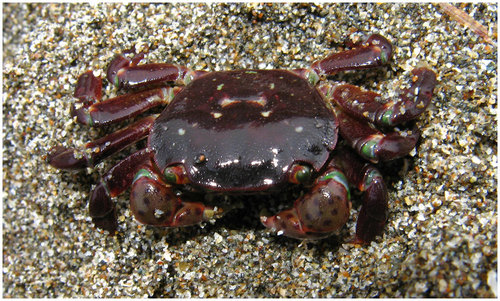


Purple Shore Crab
hemigrapsus nudus
The Purple Shore Crab (Hemigrapsus nudus) is a common and charismatic inhabitant of the rocky intertidal zones along the Pacific coast of North America. Renowned for its striking coloration, which ranges from deep purple to olive green, this small crustacean is a master of survival in one of the ocean's most volatile environments. During low tide, it can often be found scurrying beneath rocks or sheltering in damp crevices, waiting for the high tide to return. It plays a vital role in coastal ecosystems, acting as both an energetic herbivore scraping algae from rocks and a critical food source for larger marine and terrestrial predators. Its hardy nature and ease of observation make it a favorite for tide pool explorers of all ages.
Habitat: Found in rocky intertidal zones, estuaries, and tide pools along wave-swept shores, typically hiding under rocks or among seaweed.
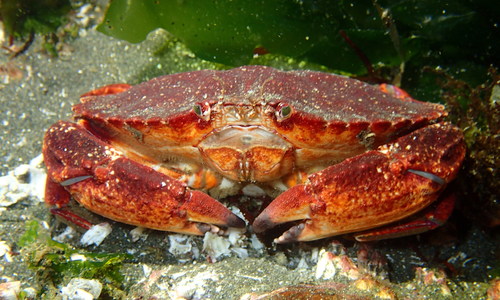
This small crab is easily identified by its smooth, squarish carapace that typically measures 3 to 5 centimeters in width. True to its name, it is most often a rich purple or reddish-brown color, though olive-green variations exist. Its most distinctive features are its large, powerful claws (chelipeds) which are covered in small, dark purple spots and have bright white tips. Unlike other shore crabs in its genus, its legs are entirely hairless, giving it a clean, smooth appearance that lacks the hair-like setae characterizing its close relative, the yellow shore crab.
Category
AnimalRarity
Common
Danger
1/5 · Very low
Snaps
6
Female crabs carry their fertilised eggs under their abdominal flap for several months, protecting them until they hatch into swimming larvae.
The bright purple spots on its claws look remarkably like freckles, which helps distinguish it from other local crab species.
The species name 'nudus' refers to the crab's completely smooth legs, which lack the fine hairs found on other shore crab species.
Can survive out of water for extended periods by breathing air through modified gills, provided they remain damp.
Can voluntarily shed a limb to escape predators or entrapment, later regenerating the lost limb during subsequent molts.
Displays color polymorphism that allows it to blend seamlessly with surrounding rocks, barnacles, and diverse seaweeds.
Primarily feeds on green algae and microalgae scraped from rocks, but will opportunistically consume small invertebrates and carrion.
Littorina sitkana
Predates on this snail species in rocky intertidal zones.
Pisaster ochraceus
Preys heavily on purple shore crabs during high tide.

Larus glaucescens
Preys on exposed shore crabs during low tide foraging.
No trait badges are assigned for this object yet.
No aliases listed yet.
Collections for this object will appear here as more themes are added.
Danger
1/5 · Very low
No special safety notes yet.
Look for fins, arms, tentacles, shells and body symmetry. Underwater light shifts colors, so structure and markings usually matter more than shade. Sea Creature Identifier: upload a photo and compare the visible details.
Primarily feeds on green algae and microalgae scraped from rocks, but will opportunistically consume small invertebrates and carrion.
Found in rocky intertidal zones, estuaries, and tide pools along wave-swept shores, typically hiding under rocks or among seaweed.
Foraging
Zoom in to split clusters and explore where this object has been snapped.

Washington, US
You might spot Rock Pigeon, American Crow, and Olympic Gull.
View guide →

Alaska, US
You might spot Bald Eagle, Salmonberry, and Ochre Sea Star.
View guide →

US
You might spot Variable Carpet Moth, Bald Eagle, and Red Huckleberry.
View guide →

Washington, US
You might spot Purple Shore Crab, Western Bunchberry, and Mule Deer.
View guide →
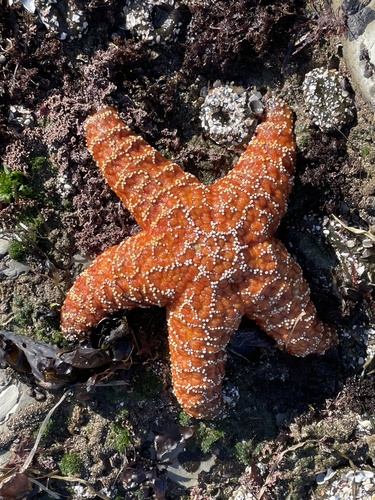
Washington, US
You might spot Ochre Sea Star, Purple Shore Crab, and Strawberry Tree.
View guide →
British Columbia, CA
You might spot Red Rock Crab, Dungeness Crab, and Salal.
View guide →
Take the discovery with you
Snap it with Snappit to identify it, learn what makes it special, and add the discovery to your collection.