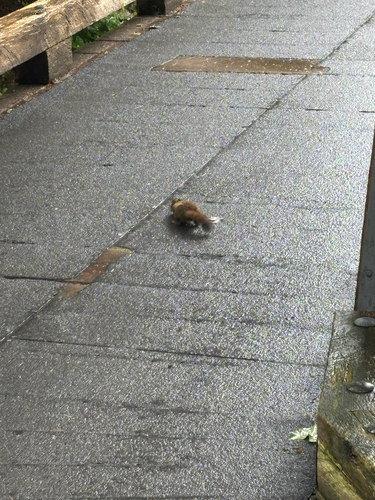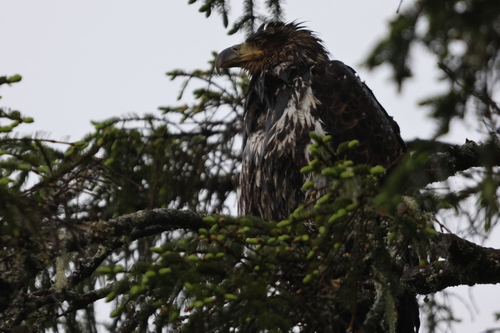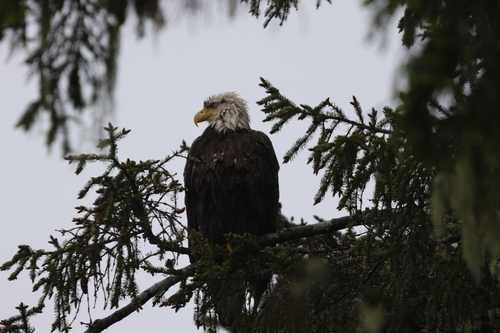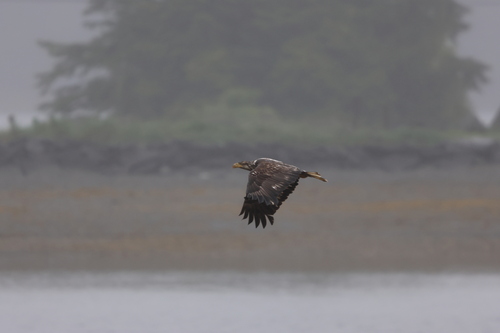





Bald Eagle

Sitka National Historical Park offers a rich tapestry of culture, history, and stunning Alaskan nature.
Sitka National Historical Park offers a rich tapestry of culture, history, and stunning Alaskan nature. This 113-acre park, Alaska's oldest federally designated cultural and historical park, uniquely blends Tlingit heritage with Russian colonial history. It preserves the site of the 1804 Battle of Sitka, a pivotal moment between the indigenous Tlingit people and Russian fur traders, making it an essential destination for understanding the region's complex past.
The park's main draw is the iconic Totem Trail, a mile-long path winding through a lush coastal rainforest of towering Sitka spruce and western hemlock trees, showcasing approximately 20 magnificent Tlingit and Haida totem poles. Each pole tells a unique story of clan ancestry, history, or legends, offering a profound glimpse into Alaska Native artistry and oral traditions. The Indian River, a highlight within the park, is famous for its robust salmon runs from late summer to early fall, where visitors can witness pink, chum, coho, and chinook salmon making their upstream journey. The Russian Bishop's House, a meticulously restored 1843 log structure, stands as one of North America's few surviving examples of Russian colonial architecture, providing a tangible link to Sitka's Russian past.
Visiting Sitka National Historical Park is an immersive experience, inviting contemplation amidst its natural beauty and historical depth. The park's Visitor Center, designed as a traditional clan house, features ethnographic displays, a short film on the park's history, and often hosts Alaska Native artists demonstrating traditional carving, weaving, and other crafts. Whether you're exploring the cultural significance of the totem poles, observing spawning salmon, or stepping back in time at the Russian Bishop's House, the park provides a memorable journey through Alaska's vibrant indigenous culture and colonial history. Take the ultimate field guide with you: use the Snappit app to identify birds, plants, and animals on your trip.
Enthusiasts * Culture Seekers * Nature Lovers & Photographers
Walk the Totem Trail to admire the intricate totem poles and immerse yourself in the rainforest.
* Observe Alaska Native artists at work in the cultural center, demonstrating traditional crafts.
* Join a ranger-led walk to learn about the park's natural history, totems, or the Battle of 1804.
* Explore the exhibits in the Visitor Center, including Tlingit clan artifacts.
* Visit the Russian Bishop's House for a glimpse into Russian America.
* Watch for salmon in the Indian River from the arched bridge, especially from late summer to early fall.
Summer (May-September) offers guided programs and warmer weather. Early fall brings autumn foliage and prime salmon viewing. Winter provides a tranquil, snowy backdrop for peaceful walks. Bear activity can occur, so check current conditions.
The park offers good accessibility. There are two accessible parking spaces at the Visitor Center. A paved trail with curb cuts leads from downtown Sitka to the Visitor Center. Indoor exhibits are barrier-free, and accessible restrooms are available. The Totem Trail is an easy, well-maintained, and generally accessible path. The first floor of the Russian Bishop's House is wheelchair accessible, with virtual tours available for the second floor.
A mile-long loop featuring approximately 20 Tlingit and Haida totem poles nestled within a temperate rainforest.
A beautiful stream, especially for viewing spawning salmon from late summer to early fall, with the arched bridge offering a prime vantage point.
A restored 19th-century Russian colonial building providing insight into Russian American history.
Features ethnographic displays of Tlingit artifacts, a theater showing a park film, and often hosts Alaska Native demonstrating artists.
Each card links to a full Explore page with photos, traits, and fun facts.
Start with the big picture, then zoom in to explore individual wildlife observations around this place.
Start at the Visitor Center
Begin your visit here to gather maps, view exhibits, watch the park film, and get current information on ranger programs and demonstrating artists.
Dress in Layers
Sitka's weather can be unpredictable, even in summer, so wearing layers is advisable to stay comfortable.
Allow Time for the Totem Trail
Don't rush; take your time to appreciate the intricate carvings and read the interpretive panels along the approximately one-mile Totem Trail. A guidebook is available at the Visitor Center.
Visit During Salmon Spawning
For the best chance to see salmon, plan your visit for late summer or early fall (typically August-September) and head to the arched bridge over the Indian River.
Check Russian Bishop's House Hours
The Russian Bishop's House has specific operating hours and may require appointments outside the main summer season. Confirm before visiting.
Wear Comfortable Shoes
While the trails are generally easy, comfortable walking shoes are recommended for exploring the park's paths.
Jun 15, 2026
Photo attribution
(c) Ace, some rights reserved (CC BY)
License: CC BY 4.0 ↗
Image may be shown cropped inside the card frame.
Jun 6, 2026
Photo attribution
(c) Alex Brown, some rights reserved (CC BY)
License: CC BY 4.0 ↗
Image may be shown cropped inside the card frame.
Jun 6, 2026
Photo attribution
(c) Alex Brown, some rights reserved (CC BY)
License: CC BY 4.0 ↗
Image may be shown cropped inside the card frame.
Jun 6, 2026
Photo attribution
(c) Alex Brown, some rights reserved (CC BY)
License: CC BY 4.0 ↗
Image may be shown cropped inside the card frame.
May 26, 2026
Photo attribution
(c) ashevillebirder, some rights reserved (CC BY)
License: CC BY 4.0 ↗
Image may be shown cropped inside the card frame.

Maryland, US
You might spot White-Tailed Deer and Eastern Gray Squirrel.
View guide →
.jpg)
District of Columbia, US
You might spot Eastern Gray Squirrel, Duck, and House Sparrow.
View guide →

Illinois, US
You might spot American Robin, Canada Goose, and House Sparrow.
View guide →

Virginia, US
You might spot Spotted Lanternfly and Northern Cardinal.
View guide →
Take the discovery with you
Identify the wildlife you spot, learn as you go, and keep a collection of the adventure.