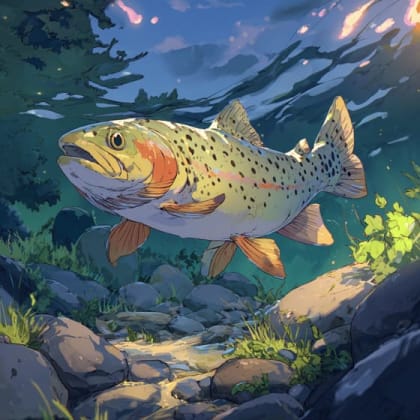
.jpg&width=800)





Rhinoptera jayakari
Rhinoptera jayakari
The Jayakar's Manta Ray is a gentle giant that glides through the ocean. It has a flat body and long fins that look like wings, making it a beautiful swimmer in the sea.
Habitat: Coastal areas
The Rhinoptera jayakari has a distinct diamond-shaped body with a dark brownish or olive-green back and a white belly. Its most notable feature is the bilobed head, which protrudes forward like a shovel, giving it an eagle-like appearance.
Category
FishRarity
Rare
Danger
1/5 · Very low
Snaps
Be the first to snap!
Baby eagle rays are born looking like tiny versions of their parents!
Their unique snout helps them dig for tasty shellfish on the seabed!
These rays often swim in huge schools, sometimes hundreds strong!
They use special 'grinding plates' instead of teeth to crush hard shells!
Rhinoptera jayakari can use its powerful, shovel-like snout to dig buried shellfish from the sand, helping them find food.
Rhinoptera jayakari has special electroreceptors that help them detect hidden prey on the seabed, even under sand.
Rhinoptera jayakari can jump high out of the water, which might help them escape predators or communicate.
They primarily feed on small crustaceans and shellfish that they dig out of the ocean floor.
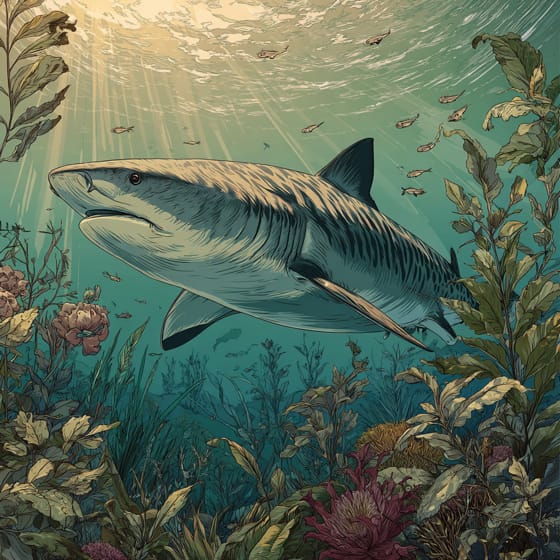
Galeocerdo cuvier
Large sharks prey on adult rays.
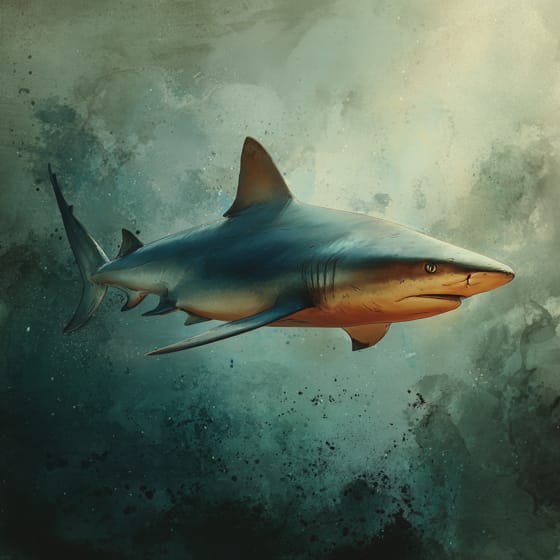
Carcharhinus leucas
Bull sharks are known predators of rays.
Portunus pelagicus
Crabs are a significant part of their diet.
Anadara granosa
They crush and consume various bivalves.
Social animals live in organized groups, cooperating for survival benefits such as foraging, defense, and raising offspring.
Filter feeders obtain nutrients by straining suspended food particles and small organisms from water.
Gliding animals move through the air by launching themselves and maintaining flight with specialized body structures, without flapping wings.
Coastal habitats are dynamic environments located along the interface between land and sea, influenced by tides, waves, and saltwater.

Diurnal animals are primarily active during daylight hours, typically resting or sleeping at night.

Describes a species whose presence and role have a disproportionately large effect on its environment.

Giant describes organisms or objects of significantly larger size than average for their species or type.

Marine habitats encompass all saltwater environments of the Earth's oceans, supporting an immense diversity of aquatic life.

Endangered status indicates a species is at a very high risk of extinction in the wild in the near future.
No aliases listed yet.
Danger
1/5 · Very low
Always watch from a distance and never touch wild animals in the ocean.
The easiest way to identify Rhinoptera jayakari is to use the Snappit nature identifier app.
60-100 cm
60-120 cm
10-50 kg
15-25 years
20 km/h
They primarily feed on small crustaceans and shellfish that they dig out of the ocean floor.
Coastal areas
Zoom in to split clusters and explore where this object has been snapped.
Recent snaps will appear here as new observations are added.
Take the discovery with you
Snap it with Snappit to identify it, learn what makes it special, and add the discovery to your collection.