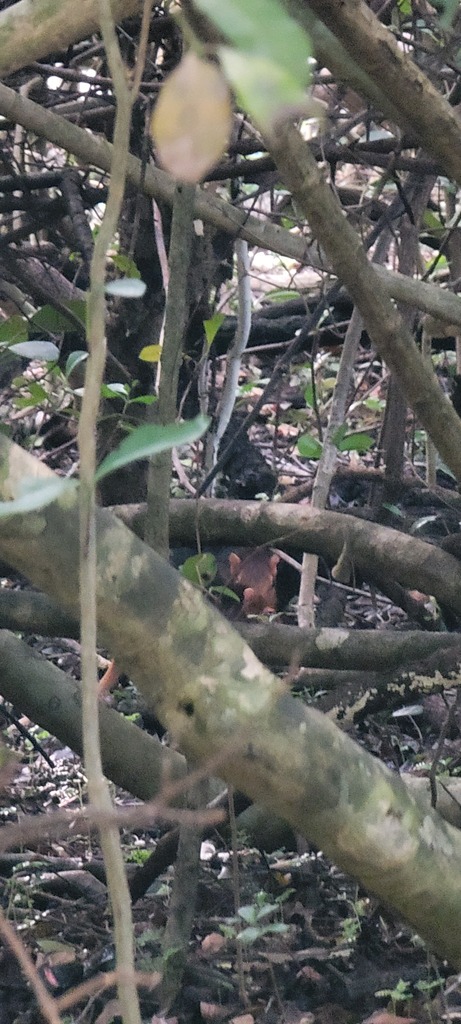





Rhynchocyon adersi
Rhynchocyon adersi
The Ader's Duiker is a small, shy animal with a long nose and big ears. It loves to hide in the forests and is very good at staying quiet and out of sight.
Habitat: Forests
The Rhynchocyon adersi is a small mammal with a distinctive long, flexible snout and large eyes ringed with pale fur. Its coat is a rich reddish-brown, often with a darker stripe down its back, helping it blend well with the forest litter.
Category
MammalsRarity
Rare
Danger
2/5 · Low
Snaps
Be the first to snap!
Each Ader's sengi builds several sleeping nests, moving between them for safety.
These speedy little mammals often run on well-used 'pathways' they create in the forest.
They are more closely related to elephants than to shrews or mice!
They keep their territory surprisingly clean by removing old leaves and debris.
Rhynchocyon adersi can sniff out hidden insects deep in the leaf litter because of its long, highly sensitive, trunk-like snout.
Rhynchocyon adersi has powerful hind legs that help them leap quickly away from predators and navigate dense undergrowth.
Rhynchocyon adersi can react and dart away incredibly fast to avoid danger, thanks to its keen senses and agility.
They sniff out and feast on small insects and other invertebrates found on the forest floor.

Panthera pardus
hunts them in their forest home
Naja nigricollis
a ground predator in their habitat
Pheidole megacephala
a common ant species they hunt
Macrotermes michaelseni
a key part of their insect diet
Furry describes animals possessing a dense covering of soft hair or fur.
Solitary animals live alone for most of their lives, only interacting with others for mating or parental care.
This trait characterizes organisms whose diet consists entirely or primarily of plant material.
Forest habitats are terrestrial environments dominated by dense tree cover, supporting a high diversity of plant and animal life.
Nocturnal animals are primarily active during the nighttime hours, typically resting or sleeping during the day.
Endangered status indicates a species is at a very high risk of extinction in the wild in the near future.
No aliases listed yet.
Danger
2/5 · Low
Observe from a distance and do not disturb wild animals.
Compare ears, muzzle, tail, feet and coat markings. Size is hard to judge without something nearby for scale, and young mammals may not have adult coloring yet. Mammal Identifier: upload a photo and compare the visible details.
17-23 cm
0.2-0.28 kg
2-4 years
25 km/h
They sniff out and feast on small insects and other invertebrates found on the forest floor.
Forests
Foraging
Zoom in to split clusters and explore where this object has been snapped.
Recent snaps will appear here as new observations are added.
Take the discovery with you
Snap it with Snappit to identify it, learn what makes it special, and add the discovery to your collection.