





river birch
Betula nigra
The river birch is a beautiful tree with peeling, light-colored bark. It loves to grow near water and provides shade and homes for many animals.
Habitat: Wetlands
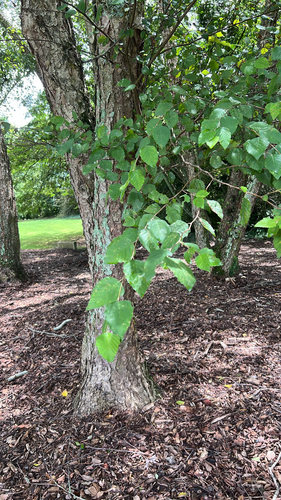
The river birch is easily recognized by its distinctive peeling bark, which curls away in papery, salmon-pink to reddish-brown layers. Its diamond-shaped leaves are glossy green above and silvery below, offering a vibrant contrast to its unique trunk.
Category
PlantsRarity
Common
Danger
1/5 · Very low
Snaps
5
Its sap can be tapped in spring to make a sweet syrup, just like maples!
The inner bark of the river birch was historically used to make flour!
This tree is super tough, it loves growing in soggy soil where others would struggle!
You can write messages on its papery bark because it peels off like ancient scrolls!
River birches can thrive in wet, flood-prone areas, a real adaptation that helps it survive where other trees might drown.
Its exfoliating bark protects against sunscald and insect damage, helping it defend itself.
River birch seeds germinate quickly in moist soil, helping it reproduce effectively along waterways.
Castor canadensis
Beavers gnaw on the bark and fell trees for building materials.
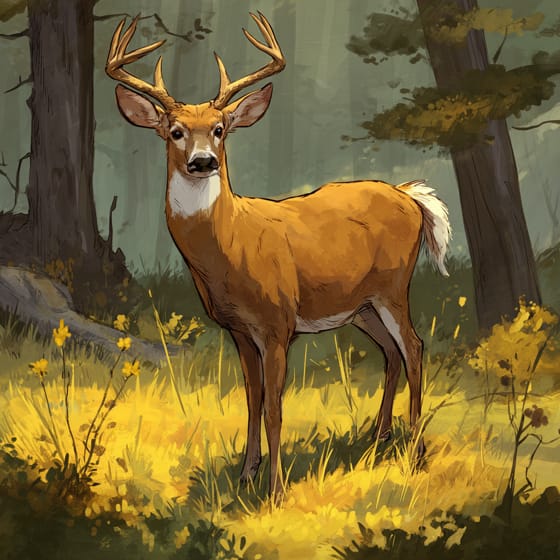
Odocoileus virginianus
Deer browse its twigs and leaves, especially new growth.
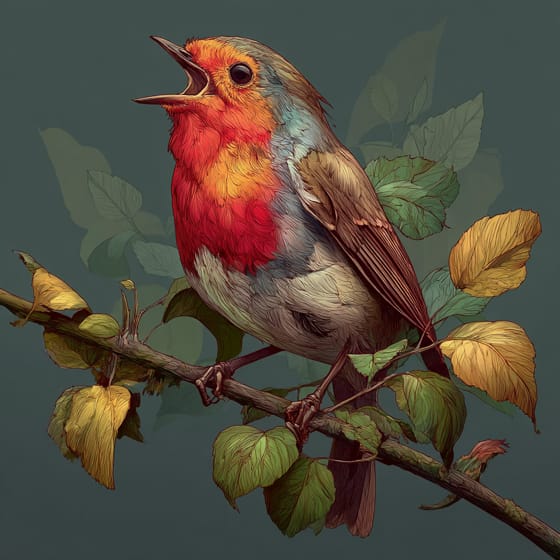
Turdus migratorius
Robins often build nests high in its sturdy branches.
Lactarius subdulcis
This fungus forms beneficial underground connections with its roots.
Deciduous plants periodically shed all their leaves, typically during autumn or dry seasons.
Shade tolerant plants are adapted to grow and thrive in areas with low light levels, requiring less direct sunlight.
Broadleaf trees are angiosperms characterized by flat, wide leaves that are typically shed annually in temperate climates.
Describes plants that are particularly attractive and beneficial to a wide range of pollinating organisms.

Timber refers to wood that has been prepared for use in building and carpentry.

This habitat trait identifies species found in wetlands, which are areas of land saturated with water, either permanently or seasonally, including marshes, swamps, and bogs.
No aliases listed yet.
Danger
1/5 · Very low
Stay on paths and don't climb trees without an adult's help.
The easiest way to identify river birch is to use the Snappit nature identifier app.
1500-2500 cm
900-1500 cm
Spring
Yes
None
Perennial
Wind
Zoom in to split clusters and explore where this object has been snapped.
Aug 12, 2025
The State Botanical Garden of GeorgiaPhoto attribution
(c) Alex Stach, some rights reserved (CC BY)
License: CC BY 4.0 ↗
Image may be shown cropped inside the card frame.

Alabama, US
You might spot Muscovy Duck and Gulf Longear Sunfish.
View guide →

Virginia, US
You might spot Canada Goose, Duck, and Great Blue Heron.
View guide →

Virginia, US
You might spot Duck, Canada Goose, and Red Deadnettle.
View guide →

Georgia, US
You might spot Asian Lady Beetle, Anole, and Joro Spider.
View guide →

Ohio, US
You might spot Monarch, Eastern Carpenter Bee, and Bee.
View guide →
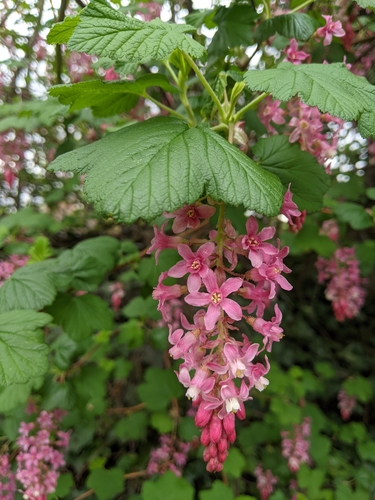
Kansas, US
You might spot Currants and Gooseberries, Red Maple, and Virginia Creeper.
View guide →
Take the discovery with you
Snap it with Snappit to identify it, learn what makes it special, and add the discovery to your collection.








.jpg&width=800)


_001.jpg&width=800)



