

Rustic Borer
xylotrechus colonus
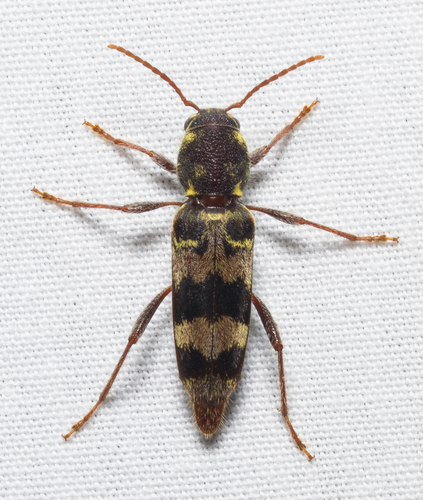
The Rustic Borer (Xylotrechus colonus) is a striking species of longhorn beetle native to the deciduous forests of North America. Renowned for its intricate, maze-like wing patterns, this beetle plays a vital ecological role as a natural forest recycler. By laying its eggs in dead or dying hardwoods, it ensures that its wood-boring larvae help break down timber, returning crucial nutrients to the soil and clearing space for new growth. While adult Rustic Borers are a common sight in the summer, often found resting on fallen logs or freshly cut firewood, it is their larval stage that does the heavy lifting of decomposition. These beetles are entirely harmless to humans and do not damage structurally sound or treated timber in homes, strongly preferring the natural decay of the forest floor.
Habitat: Found primarily in deciduous woodlands and forests across eastern North America, frequently resting on decaying hardwood logs, dying trees, or freshly cut firewood.
The Rustic Borer is a moderately sized, cylindrical beetle measuring between 8 and 15 millimeters in length. Its dark brown to black body is instantly recognizable by the series of striking pale yellow, ashy gray, or whitish zigzag bands and irregular chevron markings traversing its elytra (wing covers). Unlike many species in the longhorn beetle family, its antennae are relatively short and do not extend past the midpoint of its body. Its legs often feature a contrasting reddish-brown or rusty hue, perfectly aiding in its camouflage against mottled, lichen-covered bark.
Category
InsectsRarity
Common
Danger
1/5 · Very low
Snaps
2
Despite being classified as a 'longhorn' beetle, the Rustic Borer actually has surprisingly short antennae compared to many of its close relatives.
The tunnels created by their larvae, known as 'galleries,' are packed tightly with frass (wood dust) and help speed up the natural decomposition and nutrient cycling of the forest.
The zigzag patterns on the Rustic Borer's back act as a type of disruptive coloration, breaking up its outline so predators have a hard time spotting it on tree bark.
They are frequently accidentally transported into homes inside firewood, emerging indoors during the winter because the ambient warmth tricks them into thinking it is spring.
The erratic, zigzag bands on the beetle's wing covers perfectly mimic the mottled appearance of lichen and peeling bark on dead trees, shielding them from avian predators.
In their larval stage, they possess robust, heavily sclerotized mandibles capable of chewing through solid hardwood to create intricate feeding galleries.
Like many longhorn beetles, adults can produce a distinct squeaking or hissing noise by rubbing their head and thorax together to startle predators when handled.
Larvae feed extensively on the inner bark and sapwood of dead or dying deciduous trees, while adults consume very little.
Age differences: Larvae are entirely xylophagous (wood-eating), whereas adults have reduced mouthparts and primarily rely on energy reserves gathered during the larval stage, occasionally consuming small amounts of nectar or sap.
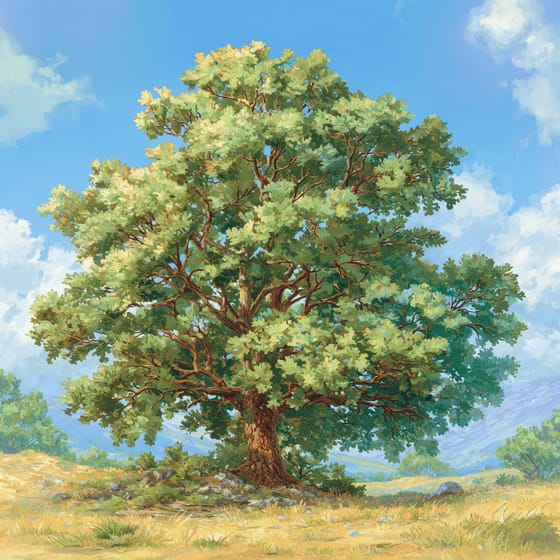
Quercus alba
Larvae develop within the decaying wood of oak trees, which act as a primary nursery and food source.
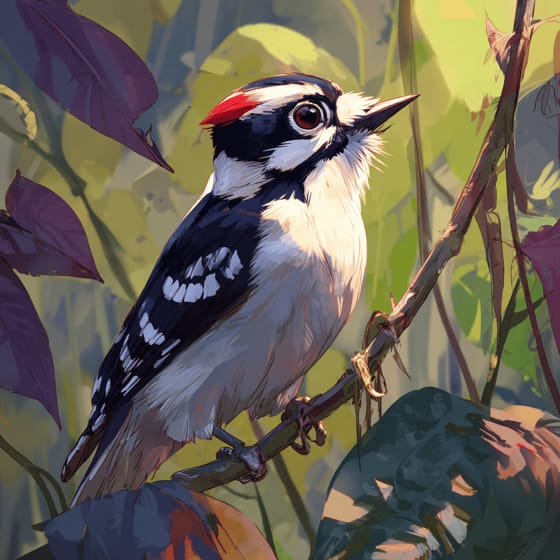
Dryobates pubescens
Woodpeckers actively drill into infested dead wood to consume the nutrient-rich borer larvae.
Ichneumonidae
Parasitoid wasps use their long ovipositors to drill through bark and lay eggs directly on the developing beetle larvae.
No trait badges are assigned for this object yet.
No aliases listed yet.
Collections for this object will appear here as more themes are added.
Danger
1/5 · Very low
No special safety notes yet.
The easiest way to identify Rustic Borer is to use the Snappit nature identifier app.
0-1 cm
1-3 cm
0.0001-0.0005 kg
1-2 years
Larvae feed extensively on the inner bark and sapwood of dead or dying deciduous trees, while adults consume very little.
Found primarily in deciduous woodlands and forests across eastern North America, frequently resting on decaying hardwood logs, dying trees, or freshly cut firewood.
Foraging
Zoom in to split clusters and explore where this object has been snapped.

US
You might spot Wharf Louse, Osprey, and Ruddy Turnstone.
View guide →

Ohio, US
You might spot Common Eastern Bumble Bee, Rudbeckia, and Bee.
View guide →

Connecticut, US
You might spot Unequal Cellophane Bee, Asian Lady Beetle, and Spongy Moth.
View guide →
Take the discovery with you
Snap it with Snappit to identify it, learn what makes it special, and add the discovery to your collection.













.jpg&width=800)




