

Shaggy Mane
coprinus comatus
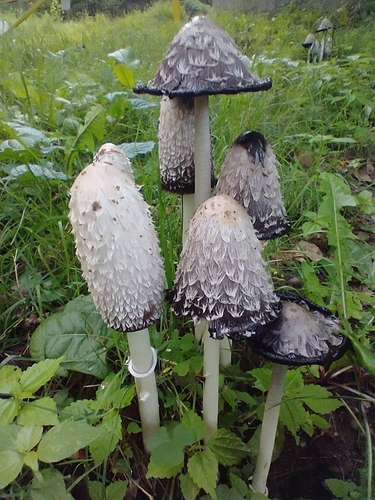
The Shaggy Mane (Coprinus comatus), also known as the lawyer's wig, is a striking and easily recognizable mushroom famous for its highly unusual life cycle. Typically appearing seemingly overnight in lawns, dirt roads, and disturbed soils, it begins its visible life as a tall, white, bullet-shaped cylinder adorned with shaggy, upward-pointing scales. It is widely admired by foragers as a choice edible mushroom when young. However, it harbors a fascinating biological secret: as it matures, the cap undergoes autodigestion, literally dissolving itself into a black, gooey ink dripping with spores. This remarkable process, called deliquescence, allows it to disperse its spores efficiently, though it gives the mushroom a fleetingly short lifespan above ground.
Habitat: Found in grassy meadows, lawns, and along gravel roads, often emerging from disturbed or compacted soil.
Young specimens feature a distinctive tall, elongated, cylindrical white cap covered in shaggy, reddish-brown-tipped scales, strongly resembling a traditional British judge's wig. As the mushroom matures, the cap expands outward into a bell shape, while the densely packed gills underneath transition from white to pink, and finally to a deep black. Within a matter of days or even hours, the edges of the cap curl upward and melt away into a thick black liquid, eventually leaving only the slender, hollow, and fragile white stalk standing.
Category
FungiRarity
Common
Danger
1/5 · Very low
Snaps
4
Despite being completely harmless and delicious when young, they must be cooked and eaten within hours of picking, or they will literally melt away into black liquid right inside your refrigerator.
Historically, the black goo produced by the melting caps was actually used as writing ink, and sometimes mixed with cloves to prevent it from smelling bad as it decayed.
It is a secret carnivore! Beneath the soil, its vast root-like mycelial network employs specialized, toxin-laced spiny structures to paralyze and digest microscopic worms.
Unlike its close relative the Common Inky Cap (Coprinopsis atramentaria), the Shaggy Mane does not contain coprine, a compound that becomes highly toxic when consumed in combination with alcohol.
The mushroom produces specific enzymes that digest its own cellular tissues, melting the cap into a black ink that drips to the ground to catch wind currents.
Underground, the fungal mycelium grows specialized spiny structures called spiny balls that paralyze and digest microscopic soil nematodes for supplementary nitrogen.
This species exhibits exceptionally rapid cellular expansion, capable of fruiting incredibly fast and popping up overnight after heavy rains in compacted soils.
It primarily acts as a saprobe, extracting nutrients by decomposing dead organic matter in the soil, but also acts as a carnivore by trapping tiny soil roundworms.
Caenorhabditis elegans
The mycelium of the Shaggy Mane hunts and digests these microscopic roundworms for nitrogen.
Cornu aspersum
Snails and slugs are known to feed on the tender fruiting bodies before they dissolve into ink.

Homo sapiens
Humans actively forage and eat young Shaggy Manes as a culinary delicacy.
No trait badges are assigned for this object yet.
No aliases listed yet.
Collections for this object will appear here as more themes are added.
Danger
1/5 · Very low
No special safety notes yet.
The easiest way to identify Shaggy Mane is to use the Snappit nature identifier app.
5-20 cm
0.01-0.06 kg
It primarily acts as a saprobe, extracting nutrients by decomposing dead organic matter in the soil, but also acts as a carnivore by trapping tiny soil roundworms.
Found in grassy meadows, lawns, and along gravel roads, often emerging from disturbed or compacted soil.
Trapping
Zoom in to split clusters and explore where this object has been snapped.

Alaska, US
You might spot Cliff Swallow, Pretty Jacob's-Ladder, and Dwarf Fireweed.
View guide →

Pennsylvania, US
You might spot Steeplebush, Elk, and Eastern Newt.
View guide →

Pennsylvania, US
You might spot Orange Hawkweed and Hickory Tussock Moth.
View guide →

Montana, US
You might spot Brown Bear, Gray Wolf, and Woodland Pinedrops.
View guide →

Massachusetts, US
You might spot Grey Cross Spider, Common Milkweed, and Roses.
View guide →
Washington, US
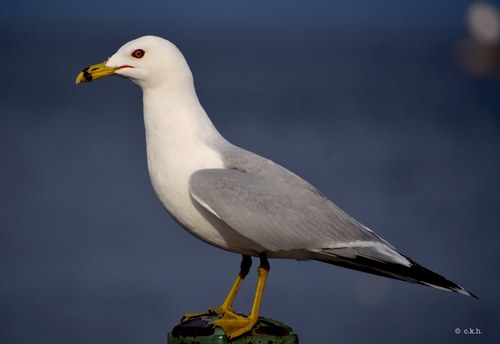
You might spot Ring-Billed Gull, Canada Goose, and Northern Saw-Whet Owl.
View guide →
Take the discovery with you
Snap it with Snappit to identify it, learn what makes it special, and add the discovery to your collection.