

Silver Wattle
acacia dealbata
The Silver Wattle (Acacia dealbata) is a fast-growing evergreen tree celebrated for its spectacular late-winter display of golden-yellow blossoms. Native to the tablelands and foothills of southeastern Australia, this resilient pioneer species is renowned for its feathery, blue-green to silvery foliage that catches the sunlight beautifully. Beyond its visual charm, the Silver Wattle plays a vital role in forest regeneration. As a member of the legume family, it possesses the remarkable ability to enrich poor soils by fixing atmospheric nitrogen, paving the way for other native plant species to thrive.
Habitat: Typically found in dry sclerophyll forests, woodlands, and along riverbanks, thriving in temperate regions with well-drained, acidic to neutral soils.
This medium-sized tree typically reaches heights of 5 to 30 meters, characterized by smooth, grey-green bark that becomes fissured with age. Its most striking feature is its bipinnate, fern-like foliage, which is covered in fine, silvery hairs that give the leaves a distinct glaucous, blue-grey appearance. During late winter, the tree is smothered in dense, fragrant, spherical golden-yellow puffball flower heads grouped in large panicles.
Category
PlantsRarity
Common
Danger
1/5 · Very low
Snaps
Be the first to snap!
In Europe, particularly in southern France, the flowers of the Silver Wattle are highly prized in the perfume industry and celebrated during annual Mimosa festivals.
Its bright yellow blooms are a vital source of early-season pollen for bees and other insects waking up from winter dormancy.
The common name wattle comes from early European settlers in Australia who used the flexible branches of these trees to build wattle and daub huts.
Houses symbiotic bacteria in its root nodules to convert atmospheric nitrogen into a usable nutrient form, enriching poor soils.
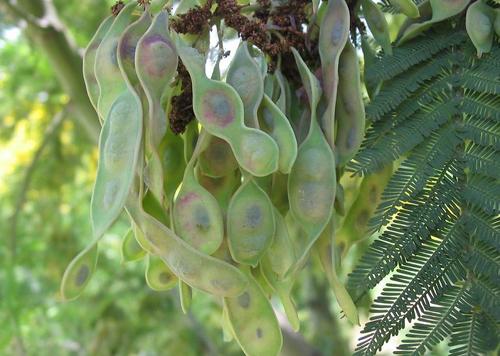
Produces hardy seeds with tough coats that can remain dormant in the soil for decades, germinating rapidly after being triggered by the heat of a forest fire.
Releases chemical compounds through its fallen foliage that can inhibit the germination and growth of competing understory plants.
Like most plants, the Silver Wattle generates its own energy through photosynthesis, using sunlight, carbon dioxide, and water while absorbing essential soil nutrients and fixing nitrogen.
Rhizobium leguminosarum
Hosts nitrogen-fixing nodules on its roots in a classic symbiotic relationship.
Alisterus scapularis
Feeds on the seeds and galls of the tree.
Icerya purchasi
Sucks sap from the branches and twigs of the tree.
No trait badges are assigned for this object yet.
No aliases listed yet.
Collections for this object will appear here as more themes are added.
Danger
1/5 · Very low
No special safety notes yet.
Start with the whole plant, then compare leaf arrangement, leaf edges, stems and any flowers or fruit. Opposite leaves grow in pairs; alternate leaves come one at a time along the stem. These details tell you far more together than a single green leaf does. Plant Identifier: upload a photo and compare the visible details.
500-3000 cm
20-50 years
Like most plants, the Silver Wattle generates its own energy through photosynthesis, using sunlight, carbon dioxide, and water while absorbing essential soil nutrients and fixing nitrogen.
Typically found in dry sclerophyll forests, woodlands, and along riverbanks, thriving in temperate regions with well-drained, acidic to neutral soils.
Zoom in to split clusters and explore where this object has been snapped.
Recent snaps will appear here as new observations are added.
Take the discovery with you
Snap it with Snappit to identify it, learn what makes it special, and add the discovery to your collection.