





Slender Bluet
Enallagma traviatum
The Slender Bluet is a small, beautiful dragonfly with bright blue colors. They love to flutter around ponds and streams, making them fun to watch as they zoom by!
Habitat: Wetlands
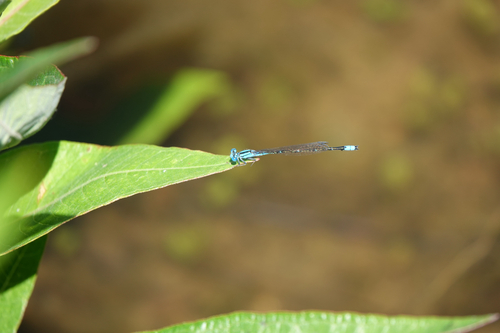
The Slender Bluet is a small damselfly with a very slender body. Males are strikingly bright blue with distinct black markings, including a black "wine-glass" or "keyhole" shape on the second abdominal segment. Females are typically duller, appearing greenish or brownish.
Category
InsectsRarity
Common
Danger
1/5 · Very low
Snaps
4
Adult Slender Bluets often eat hundreds of mosquitoes and other small flying pests daily!
Most of a Slender Bluet's life is spent underwater as a fascinating aquatic nymph!
Their wings can move separately, allowing them to hover or make super-fast turns in the air!
You can tell male Slender Bluets apart by a unique black "wine glass" pattern on their abdomen!
Slender Bluets have huge compound eyes that help them spot tiny prey and predators from almost every direction.
The Slender Bluet can launch into flight instantly from a perch to chase after prey or quickly escape from danger.
Slender Bluets have tiny claws on their legs that help them cling tightly to plants, even upside down, near water.
They are tiny hunters, catching and eating small flying insects or aquatic larvae in the water.
Age differences: Nymphs eat aquatic insects; adults hunt flying insects.
Culex pipiens
Adults and nymphs prey on mosquitoes.
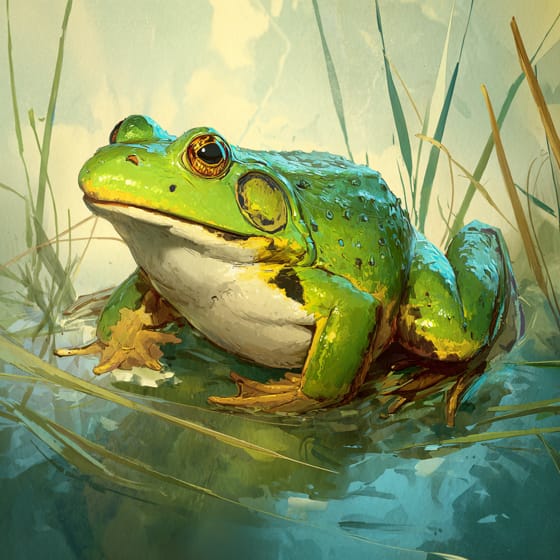
Lithobates clamitans
Frogs prey on both adult and nymph damselflies.
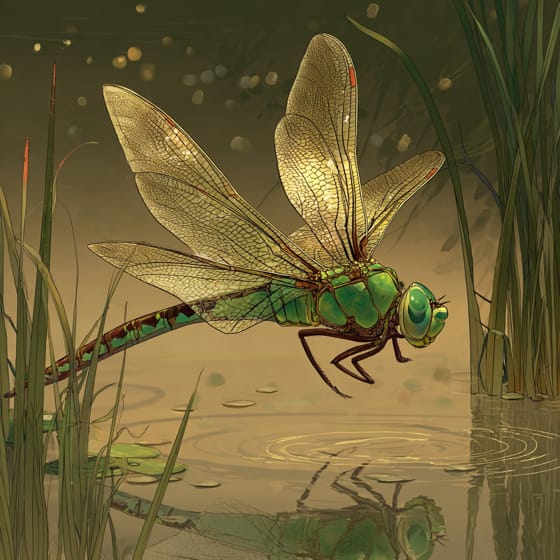
Anax junius
Larger dragonflies often hunt damselflies.
Typha latifolia
Provides perching sites and habitat for nymphs.
Solitary animals live alone for most of their lives, only interacting with others for mating or parental care.
Aerial creatures spend a significant portion of their lives airborne, utilizing flight for various activities such as hunting, migration, or nesting.
Colorful describes organisms or objects displaying a wide range of bright and distinct colors.
This trait identifies organisms whose diet primarily consists of insects and other small invertebrates.

This habitat trait identifies species found in wetlands, which are areas of land saturated with water, either permanently or seasonally, including marshes, swamps, and bogs.

Diurnal animals are primarily active during daylight hours, typically resting or sleeping at night.

Freshwater habitats include non-saline aquatic environments such as rivers, lakes, ponds, and wetlands, vital for numerous species.

This trait identifies organisms that exhibit exceptional swiftness in movement for hunting, escape, or travel.

Describes organisms that transfer pollen, enabling the fertilization and reproduction of plants.
No aliases listed yet.
Danger
1/5 · Very low
Dragonflies are harmless and fun to watch, but don't try to catch them!
The easiest way to identify Slender Bluet is to use the Snappit nature identifier app.
35-45 mm
28-35 mm
30-50 days
15 km/h
They are tiny hunters, catching and eating small flying insects or aquatic larvae in the water.
Wetlands
Pursuit
Zoom in to split clusters and explore where this object has been snapped.
May 29, 2026
Gloucester Downtown Historic DistrictPhoto attribution
(c) V. Ross Johnson, some rights reserved (CC BY-SA)
License: CC BY-SA 4.0 ↗
Image may be shown cropped inside the card frame.
Take the discovery with you
Snap it with Snappit to identify it, learn what makes it special, and add the discovery to your collection.









.jpg&width=800)



