





Soft scales
Coccidae
Soft scales are tiny insects that often live on plants. They have a soft, waxy covering that helps protect them from predators and the weather.
Habitat: Urban areas
The Soft scales has a soft, often flattened or dome-shaped body, typically without visible segments. They come in various colors like brown, green, or pink, and lack the separate, hard protective shell found on 'hard scales'.
Category
InsectsRarity
Common
Danger
1/5 · Very low
Snaps
Be the first to snap!
A special type of ant sometimes 'farms' soft scales for their sweet honeydew snack.
Female soft scales can lay hundreds of eggs, ensuring many babies are born!
Some soft scales are so still they look like bumps on a plant, not insects!
They often live in huge groups, making the plant look like it has tiny, colorful jewels.
Soft scales can excrete sugary honeydew that attracts other insects, which helps them form mutualistic relationships.
Soft scales has a protective waxy layer that helps them resist pesticides and dehydration.
Soft scales can reproduce without a mate through parthenogenesis, which helps them colonize new plants quickly.
Soft scales often have colors and shapes that blend in with plants, which helps them hide from predators.
They are tiny plant sap-suckers, feeding on the sweet juices inside plants.
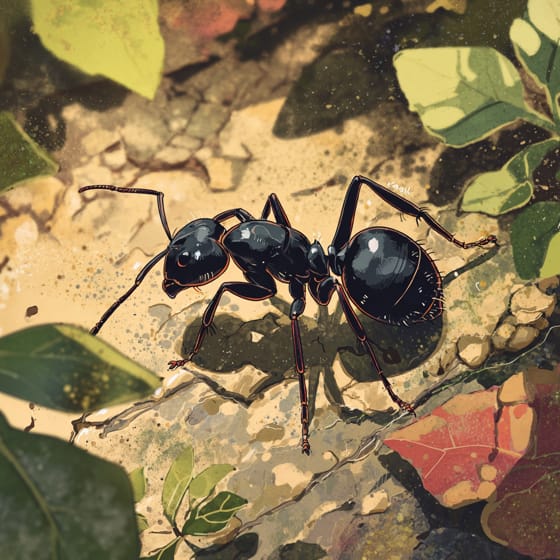
Lasius niger
Ants protect soft scales for their sweet honeydew.
Coccinella septempunctata
Ladybug larvae and adults feed on soft scales.
Metaphycus helvolus
Tiny wasps lay eggs inside scales, controlling populations.
Solitary animals live alone for most of their lives, only interacting with others for mating or parental care.
Colorful describes organisms or objects displaying a wide range of bright and distinct colors.
This trait characterizes organisms whose diet consists entirely or primarily of plant material.
Pertaining to species that are significantly smaller than typical or average for their kind.

This trait describes organisms that live on or in a host organism, obtaining nutrients at the host's expense.

This habitat trait indicates species that can coexist with humans in urban and suburban environments, utilizing man-made structures and green spaces.
No aliases listed yet.
Danger
1/5 · Very low
Don't touch bugs without asking an adult first, as some can be harmful.
The easiest way to identify Soft scales is to use the Snappit nature identifier app.
1-10 mm
30-365 days
They are tiny plant sap-suckers, feeding on the sweet juices inside plants.
Urban areas
6
1000
Zoom in to split clusters and explore where this object has been snapped.
Recent snaps will appear here as new observations are added.
Take the discovery with you
Snap it with Snappit to identify it, learn what makes it special, and add the discovery to your collection.








.jpg&width=800)



