





Northwestern Phoenix Moth
Eulithis xylina
The Northwestern Phoenix Moth is a beautiful insect with colorful wings. It loves to fly around flowers and is most active at night, making it a special sight in the garden.
Habitat: Forests
The Northwestern Phoenix Moth has forewings patterned with striking reddish-brown, tan, and dark wavy lines that help it blend seamlessly with tree bark or dry foliage. Its hindwings are typically a plainer light gray or brown, creating a subtle contrast.
Category
InsectsRarity
Common
Danger
1/5 · Very low
Snaps
1
Imagine being able to smell a friend from miles away! This moth can do exactly that!
Its scientific name, Eulithis, means "beautiful stone" – maybe referring to its amazing camouflage!
Phoenix Moth caterpillars walk in a unique "looping" way by bringing their tail to their head!
Wow! Some moths, like this one, only drink nectar as adults – they don't eat solid food!
Northwestern Phoenix Moth has intricate wing patterns that help them disappear against tree bark, avoiding hungry predators.
Northwestern Phoenix Moth can see in very low light because of special eye adaptations, helping them find food and mates after dark.
Northwestern Phoenix Moth has feathery antennae that can detect faint chemical signals from miles away, helping them find mates.
Northwestern Phoenix Moth has special organs that help them hear the ultrasonic clicks of hunting bats, allowing them to dodge attacks.
Adults sip nectar for energy, while caterpillars munch on plant leaves to grow big!
Age differences: Larvae are herbivores, eating leaves; adults are nectarivores, sipping flower nectar.
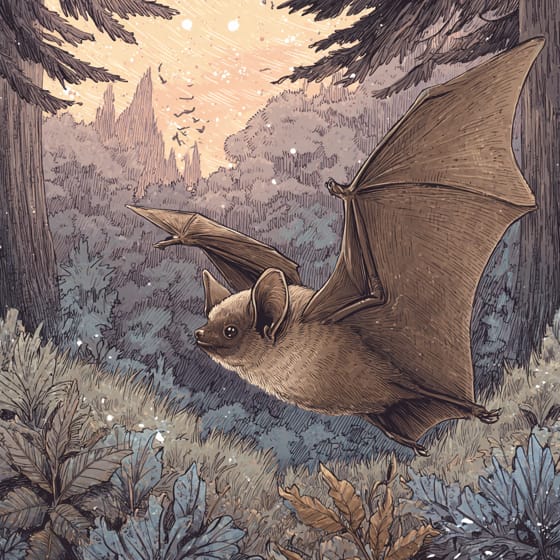
Myotis lucifugus
Bats hunt moths using echolocation at night.

Prunus virginiana
Its caterpillars feed on leaves of this shrub for growth.
Mirabilis multiflora
Adults collect nectar and help spread pollen between flowers.

Sialia currucoides
Birds forage for moths resting on plants during daylight.
Solitary animals live alone for most of their lives, only interacting with others for mating or parental care.
Camouflaged describes organisms that possess coloring or patterns that allow them to blend into their environment.
Colorful describes organisms or objects displaying a wide range of bright and distinct colors.
This trait characterizes organisms whose diet consists entirely or primarily of plant material.

Describes plants that are particularly attractive and beneficial to a wide range of pollinating organisms.

Forest habitats are terrestrial environments dominated by dense tree cover, supporting a high diversity of plant and animal life.

Nocturnal animals are primarily active during the nighttime hours, typically resting or sleeping during the day.

Describes organisms that transfer pollen, enabling the fertilization and reproduction of plants.
No aliases listed yet.
Danger
1/5 · Very low
Moths are usually harmless, but it's best to watch them from a distance.
The easiest way to identify Northwestern Phoenix Moth is to use the Snappit nature identifier app.
35-55 mm
20-30 mm
10-25 days
8 km/h
Adults sip nectar for energy, while caterpillars munch on plant leaves to grow big!
Forests
Foraging
Zoom in to split clusters and explore where this object has been snapped.
Take the discovery with you
Snap it with Snappit to identify it, learn what makes it special, and add the discovery to your collection.









.jpg&width=800)


