





Spined Woodborer
Trichocnemis spiculatus
The Spined Woodborer is a unique beetle that loves to live in trees. It has special spines on its body that help it blend in with the bark, making it hard to spot!
Habitat: Forests
The Spined Woodborer is a robust, dark brown to black beetle with a somewhat flattened body. Its most distinctive feature is the pair of sharp, prominent spines on each side of its thorax, giving it a formidable look.
Category
InsectsRarity
Common
Danger
1/5 · Very low
Snaps
1
Adult beetles can make squeaking sounds by rubbing body parts together to warn predators.
Some Spined Woodborer larvae live inside wood for many years before becoming an adult beetle!
Sometimes, adult beetles are attracted to bright lights at night, even though they mostly fly during the day!
This beetle helps recycle nutrients by turning dead trees into soil faster.
Spined Woodborer larvae can chew and digest tough dead wood because of special gut microbes that help break it down.
The Spined Woodborer has sharp spines on its thorax that help deter predators by making it uncomfortable to eat.
Spined Woodborers can detect tiny vibrations in wood, which helps them find suitable trees for laying eggs.
Larvae munch on dead wood, while adult beetles might sip on tree sap or pollen.
Age differences: Larvae consume dead wood, while adults primarily feed on sap and pollen.
Pinus ponderosa
Larvae tunnel and feed in its dead wood.
Pseudotsuga menziesii
Its larvae bore into and consume dead wood.
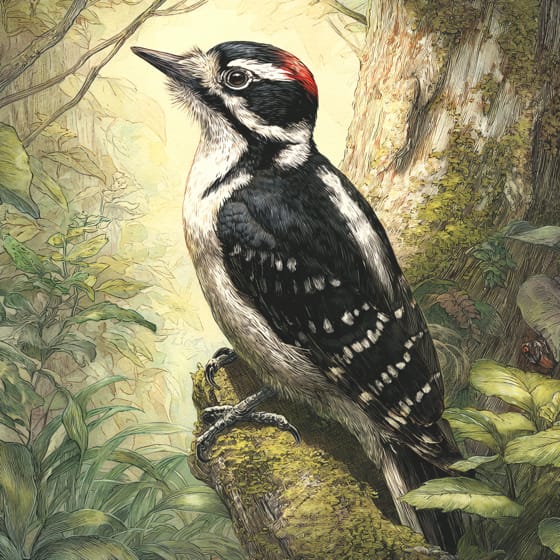
Picoides villosus
Woodpeckers drill into trees to find its larvae.
Solitary animals live alone for most of their lives, only interacting with others for mating or parental care.
Arboreal animals live primarily in trees, utilizing them for shelter, food, and protection from predators.
Camouflaged describes organisms that possess coloring or patterns that allow them to blend into their environment.
This trait characterizes organisms whose diet consists entirely or primarily of plant material.

Describes organisms that break down dead organic material, recycling nutrients back into the ecosystem.

Forest habitats are terrestrial environments dominated by dense tree cover, supporting a high diversity of plant and animal life.

Possessing sharp, pointed projections or spines on the body or surface.

Describes a species whose presence and role have a disproportionately large effect on its environment.
No aliases listed yet.
Danger
1/5 · Very low
Be careful when exploring trees; watch out for sharp branches!
The easiest way to identify Spined Woodborer is to use the Snappit nature identifier app.
15-30 mm
730-1095 days
Larvae munch on dead wood, while adult beetles might sip on tree sap or pollen.
Forests
Foraging
6
Zoom in to split clusters and explore where this object has been snapped.
Take the discovery with you
Snap it with Snappit to identify it, learn what makes it special, and add the discovery to your collection.









.jpg&width=800)


