





spreading wood fern
Dryopteris expansa
The spreading wood fern is a lovely green plant that grows in shady places. Its fronds spread out like a fan, making it look soft and fluffy. It's a great plant for hiding little creatures!
Habitat: Forests
The spreading wood fern is a robust, lacy fern with broad, triangular fronds. Its vibrant green leaves often have a slightly ruffled or wavy texture, forming dense, upright clumps. Look for its prominent dark scales on the lower stems and leaf midribs, distinguishing it from similar forest ferns.
Category
PlantsRarity
Common
Danger
1/5 · Very low
Snaps
Be the first to snap!
Ferns are ancient plants, thriving on Earth long before dinosaurs appeared!
Instead of seeds, these ferns reproduce using microscopic, dust-like spores.
Its fronds unfurl like tiny coiled springs, a process called circinate vernation!
Some parts of this fern have been traditionally used to make a yellow dye!
The spreading wood fern can launch tiny spores from its fronds that float on the wind to grow new ferns!
This fern has tough fronds that can stay green even through mild winters, helping it gather sunlight all year.
The spreading wood fern has spreading underground stems called rhizomes that help it slowly expand its territory.
Deroceras reticulatum
This common slug may graze on its tender fronds.
Pterostichus melanarius
Ground beetles find cool hiding spots beneath its dense fronds.
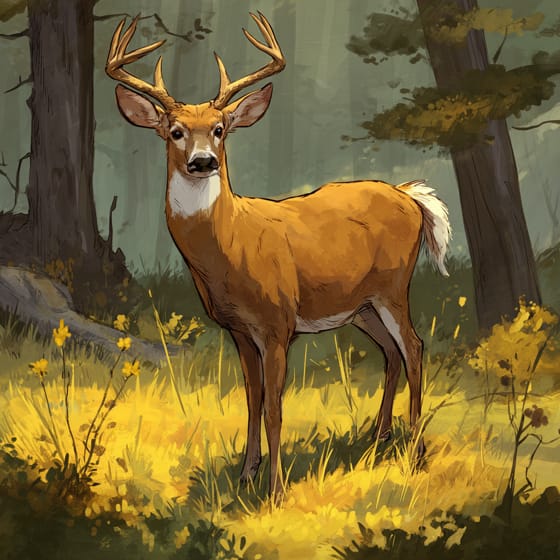
Odocoileus virginianus
Deer occasionally browse its fronds, especially new growth.
Furry describes animals possessing a dense covering of soft hair or fur.
Shade tolerant plants are adapted to grow and thrive in areas with low light levels, requiring less direct sunlight.
Evergreen plants retain their foliage throughout the year, never shedding all their leaves at once.
Spore-producing organisms reproduce by releasing small, often single-celled, reproductive units called spores.

Describes organisms that break down dead organic material, recycling nutrients back into the ecosystem.

Forest habitats are terrestrial environments dominated by dense tree cover, supporting a high diversity of plant and animal life.

Describes a species whose presence and role have a disproportionately large effect on its environment.
No aliases listed yet.
Danger
1/5 · Very low
It's safe to look at ferns, but don't pull them out of the ground.
The easiest way to identify spreading wood fern is to use the Snappit nature identifier app.
30-90 cm
45-90 cm
No
None
Perennial
Forests
Zoom in to split clusters and explore where this object has been snapped.
Recent snaps will appear here as new observations are added.

British Columbia, CA
You might spot Western Skunk Cabbage, Western Sword Fern, and Fly Agaric.
View guide →

British Columbia, CA
You might spot Salal, Northern Red Belt, and Western Sword Fern.
View guide →
Take the discovery with you
Snap it with Snappit to identify it, learn what makes it special, and add the discovery to your collection.








.jpg&width=800)



_001.jpg&width=800)


