





Spurge-laurel
Daphne laureola
Spurge-laurel is a lovely green shrub that grows in shady places. It has shiny leaves and small yellow-green flowers that bloom in spring, making it a special sight in the forest.
Habitat: Forests
The Spurge-laurel has glossy, dark green leaves that are clustered at the top of its stems, appearing almost like rosettes. Its tiny, yellowish-green flowers are tucked among the leaves, later developing into small, shiny black berries.
Category
PlantsRarity
Common
Danger
3/5 · Moderate
Snaps
Be the first to snap!
Despite its small size, the wood of the Spurge-laurel is surprisingly tough and dense!
Its name "Daphne" comes from an ancient Greek myth about a nymph who turned into a laurel tree!
NEVER eat the shiny black berries or any part of this plant; they are extremely poisonous!
The plant blooms in winter, making it one of the very first sources of nectar for early insects!
Spurge-laurel has powerful toxins in all its parts, especially the berries, that help it defend against hungry animals.
Spurge-laurel keeps its waxy, dark green leaves all year round, helping it make food even in cold winter months.
Spurge-laurel can grow happily in deep shade under big trees, which helps it find a home others might avoid.
Apis mellifera
Visits early spring flowers for nectar and pollen.
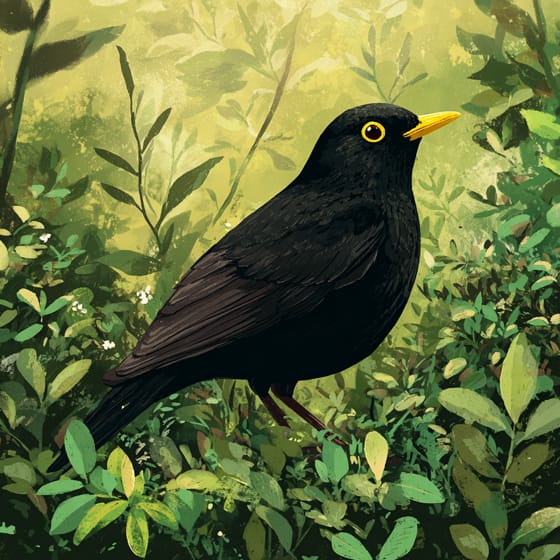
Turdus merula
Eats ripe berries, helping to disperse the seeds.
Marssonina daphnes
Causes leaf spot disease, weakening the plant's foliage.
Flowering plants are any plants that produce flowers as part of their reproductive cycle.
Shade tolerant plants are adapted to grow and thrive in areas with low light levels, requiring less direct sunlight.
A shrub is a woody plant smaller than a tree, typically with multiple stems branching from or near the ground.
Spring blooming plants produce their flowers during the spring season, often signifying the end of winter and the start of new growth.

Evergreen plants retain their foliage throughout the year, never shedding all their leaves at once.

Fragrant flowers emit a pleasant aroma, often to attract pollinators or for defense.

Forest habitats are terrestrial environments dominated by dense tree cover, supporting a high diversity of plant and animal life.
No aliases listed yet.
Danger
3/5 · Moderate
Do not eat any part of the plant, as it can be harmful.
The easiest way to identify Spurge-laurel is to use the Snappit nature identifier app.
50-150 cm
50-100 cm
0.5-1 cm
Late winter to early spring
No
Deadly
Perennial
Zoom in to split clusters and explore where this object has been snapped.
Recent snaps will appear here as new observations are added.
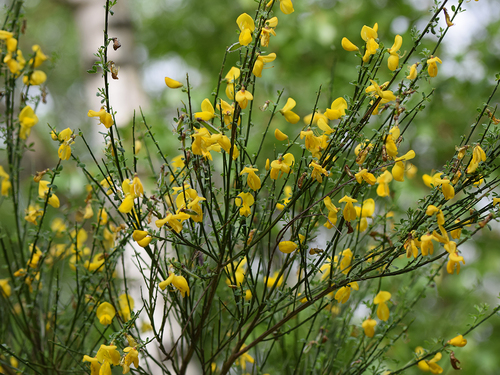
British Columbia, CA
You might spot Scotch Broom, Pacific Trillium, and Fringe Cups.
View guide →

British Columbia, CA
You might spot Canada Goose, Oregon Oak, and Barn Swallow.
View guide →
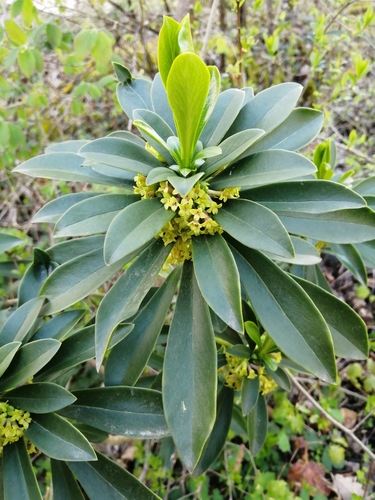
British Columbia, CA
You might spot Spurge-Laurel and Common Wall Lizard.
View guide →
Take the discovery with you
Snap it with Snappit to identify it, learn what makes it special, and add the discovery to your collection.







.jpg&width=800)


_001.jpg&width=800)


