



Stenopogon inquinatus
Stenopogon inquinatus
The Stenopogon inquinatus is a fun little fly that loves to buzz around! They are often found near water and are known for their unique, colorful bodies.
Habitat: Wetlands
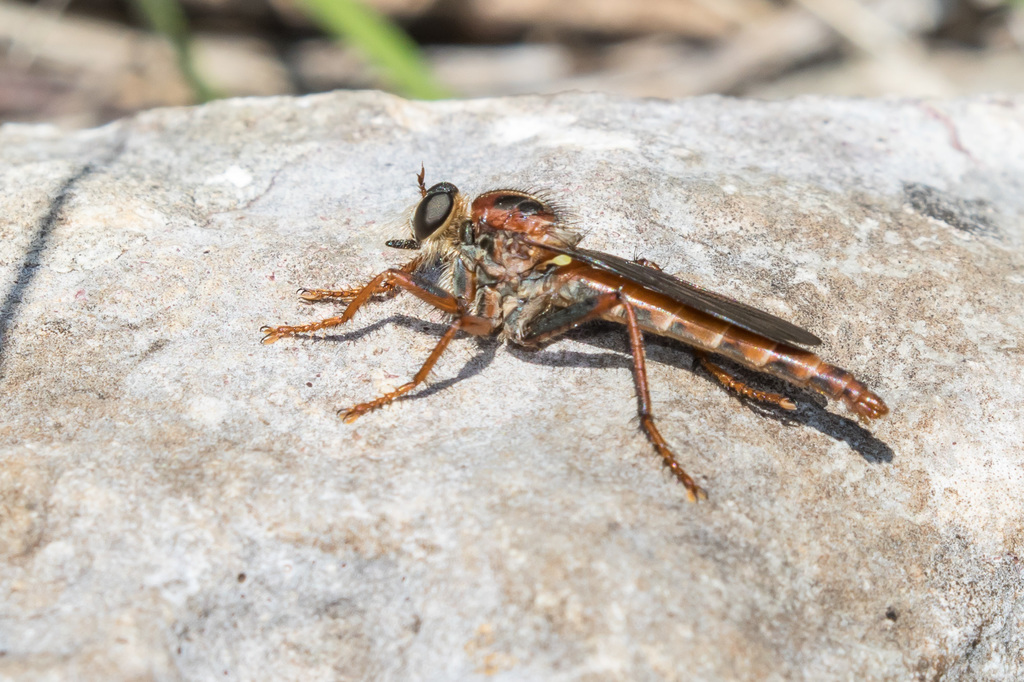
The Stenopogon inquinatus is a medium-sized robber fly, typically greyish-brown with bristly legs and a distinct "moustache" of hairs around its mouthparts. It has large, prominent reddish-brown compound eyes, giving it excellent vision for hunting.
Category
InsectsRarity
Common
Danger
1/5 · Very low
Snaps
Be the first to snap!
Robber flies often perch on sunny rocks or branches, patiently waiting for a meal to fly by!
Some types of robber flies cleverly mimic bees or wasps to scare away predators!
Their larvae are also fierce hunters, living in soil and eating other insect grubs!
They don't drink nectar; they pierce their prey and slurp out its liquefied insides!
Stenopogon inquinatus can ambush prey with incredible speed and agility, using its sharp eyesight to pinpoint targets.
Stenopogon inquinatus has a powerful venom injected through its proboscis that quickly paralyzes its insect prey.
Stenopogon inquinatus has strong, bristly legs that help them securely grasp struggling prey in flight.
This insect is an expert hunter, preying on other insects to get its meals.
Age differences: Larvae are predatory, feeding on small soil-dwelling insects and grubs, while adults hunt flying insects.
Apis mellifera
A common flying insect prey for adult robber flies.
Vespula vulgaris
Despite their sting, wasps are prey for these agile hunters.

Melanoplus sanguinipes
Larger insects like grasshoppers are important food sources.
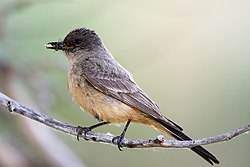
Sayornis saya
This bird preys on various insects, including robber flies.
Social animals live in organized groups, cooperating for survival benefits such as foraging, defense, and raising offspring.
Aerial creatures spend a significant portion of their lives airborne, utilizing flight for various activities such as hunting, migration, or nesting.
This trait identifies organisms whose diet includes both plant and animal matter.
Colorful describes organisms or objects displaying a wide range of bright and distinct colors.
This habitat trait identifies species found in wetlands, which are areas of land saturated with water, either permanently or seasonally, including marshes, swamps, and bogs.
Diurnal animals are primarily active during daylight hours, typically resting or sleeping at night.
This trait identifies organisms that exhibit exceptional swiftness in movement for hunting, escape, or travel.
Describes organisms that transfer pollen, enabling the fertilization and reproduction of plants.
No aliases listed yet.
Danger
1/5 · Very low
These flies are harmless, but it's best to watch them from a distance.
Look for six legs, antennae, three body sections and the shape of the wings. Beetles have hardened front wings; flies have just one working pair. Tiny insects may need a close view before their group is clear. Insect Identifier: upload a photo and compare the visible details.
22-30 mm
15-20 mm
14-45 days
40 km/h
This insect is an expert hunter, preying on other insects to get its meals.
Wetlands
Ambush
Zoom in to split clusters and explore where this object has been snapped.
Recent snaps will appear here as new observations are added.
Take the discovery with you
Snap it with Snappit to identify it, learn what makes it special, and add the discovery to your collection.