





Burrowing Mayflies
Ephemeridae
Burrowing Mayflies are special insects that spend most of their lives underwater as tiny larvae. They come out of the water to fly for just a short time, making them unique and interesting to watch!
Habitat: Wetlands
The Burrowing Mayflies has a slender, often drab brown or grey body with two or three long, delicate tail filaments. Its larvae are easily distinguished by their large, feathery gills along the abdomen, designed for life underground.
Category
InsectsRarity
Common
Danger
1/5 · Very low
Snaps
Be the first to snap!
Adult mayflies have no mouths or stomachs; their only job is to mate!
Mayfly larvae are like tiny natural pollution detectors for healthy rivers!
Some mayfly larvae build elaborate, silk-lined tunnels deep under riverbeds!
They are one of Earth's oldest insect groups, flying for over 300 million years!
Burrowing Mayflies can dig U-shaped tunnels using strong mandibles, which helps them find shelter and food safely in riverbeds.
Burrowing Mayflies have large, feathery abdominal gills that help them breathe efficiently even in low-oxygen water within burrows.
Burrowing Mayflies can emerge in massive, synchronized swarms, which helps overwhelm predators and ensure successful mating.
Burrowing Mayflies have a unique winged subimago stage, which helps them complete a final molt before becoming fully reproductive adults.
Tiny plant bits and decaying matter are eaten by larvae; adults don't eat at all!
Age differences: Larvae eat detritus and algae; adults do not feed and lack functional mouthparts.
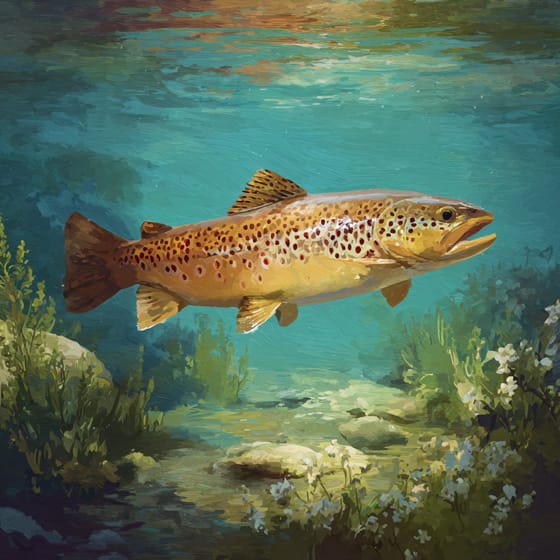
Salmo trutta
Trout are major predators of mayfly larvae and emerging adults.
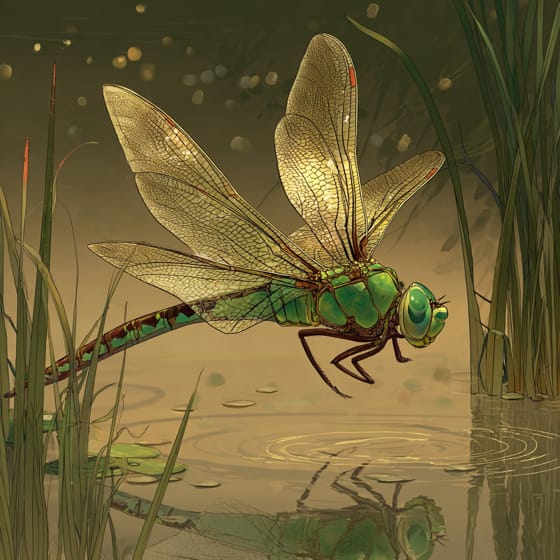
Anax junius
Dragonfly nymphs are fierce hunters of mayfly larvae underwater.
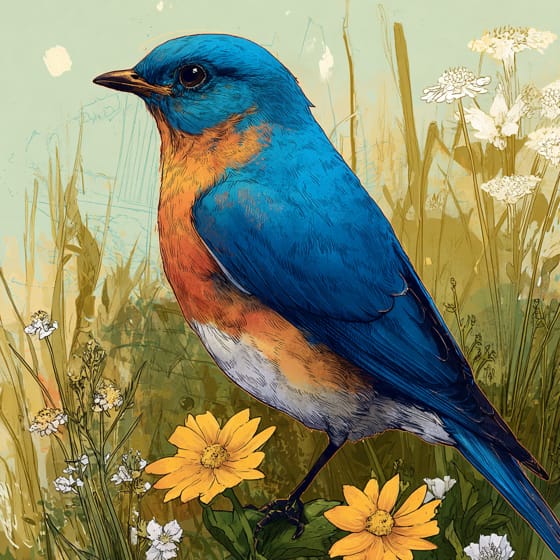
Sialia sialis
Birds often snatch adult mayflies from the air during their swarming flights.
Solitary animals live alone for most of their lives, only interacting with others for mating or parental care.
Filter feeders obtain nutrients by straining suspended food particles and small organisms from water.
This trait characterizes organisms whose diet consists entirely or primarily of plant material.
Describes organisms that break down dead organic material, recycling nutrients back into the ecosystem.

This habitat trait identifies species found in wetlands, which are areas of land saturated with water, either permanently or seasonally, including marshes, swamps, and bogs.

Diurnal animals are primarily active during daylight hours, typically resting or sleeping at night.

Describes a species whose presence and role have a disproportionately large effect on its environment.

Pertaining to species that are significantly smaller than typical or average for their kind.

Aquatic habitats encompass environments where organisms live predominantly in water, including oceans, rivers, lakes, and wetlands.

Describes organisms that transfer pollen, enabling the fertilization and reproduction of plants.
No aliases listed yet.
Danger
1/5 · Very low
Mayflies are harmless, but it's best to watch them from a distance and not touch them.
The easiest way to identify Burrowing Mayflies is to use the Snappit nature identifier app.
20-50 mm
10-30 mm
365-1095 days
5 km/h
Tiny plant bits and decaying matter are eaten by larvae; adults don't eat at all!
Wetlands
Filter Feeding
Zoom in to split clusters and explore where this object has been snapped.
Recent snaps will appear here as new observations are added.
Take the discovery with you
Snap it with Snappit to identify it, learn what makes it special, and add the discovery to your collection.







.jpg&width=800)



