





Say's Phoebe
Sayornis saya
Say's Phoebe is a small, cheerful bird that loves to perch on fences and rocks. With its soft gray feathers and bright orange belly, it is a friendly sight in open areas.
Habitat: Grasslands
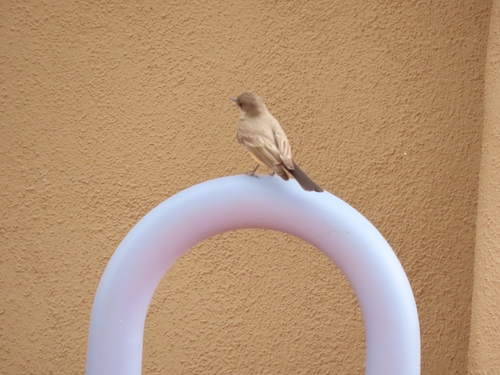
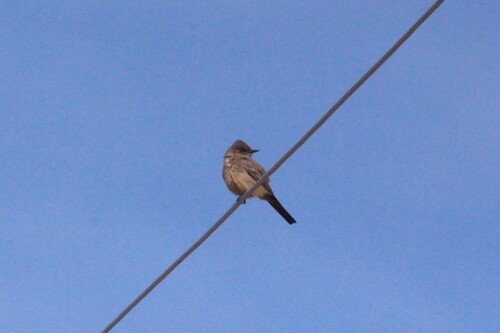
The Say's Phoebe is a medium-sized flycatcher with a grayish-brown back and a distinctive rusty-cinnamon belly and flanks. It has a pale throat that contrasts with its dark head, and a dark, mostly plain tail. This combination of muted upperparts and warm underparts makes it stand out from other phoebes.
Category
BirdsRarity
Common
Danger
1/5 · Very low
Snaps
25
Say's Phoebes often build their nests under bridges or building eaves!
Their gentle 'phee-wee' or 'py-we' call gives them their common name.
These birds are one of the earliest migratory species to return in spring!
They are fearless, often chasing away much larger birds from their nests!
Say's Phoebe can catch flying insects mid-air because of its agile flight and keen eyesight, helping them get food.
Say's Phoebe has the ability to hover in place, which helps them snatch insects from leaves or branches.
Say's Phoebe constantly pumps its tail up and down, a unique behavior that helps them balance and communicate.
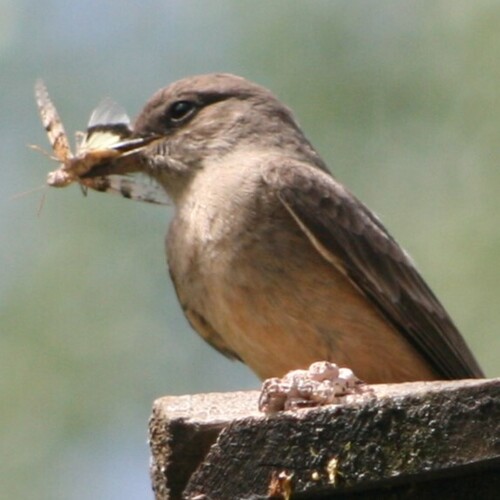
Say's Phoebes primarily feast on flying insects, catching them expertly in mid-air.
Musca domestica
Main food source
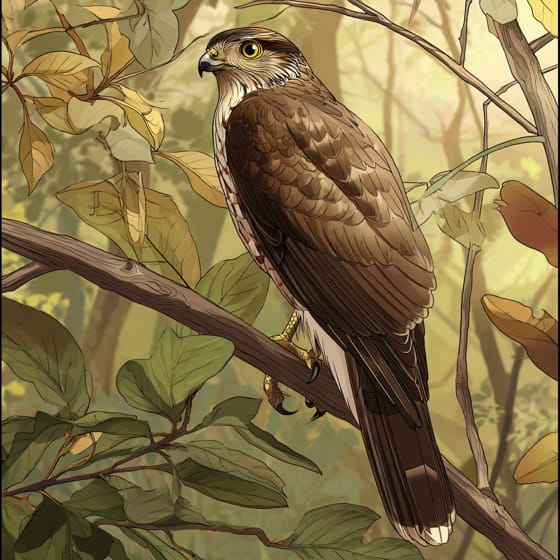
Accipiter cooperii
Common predator
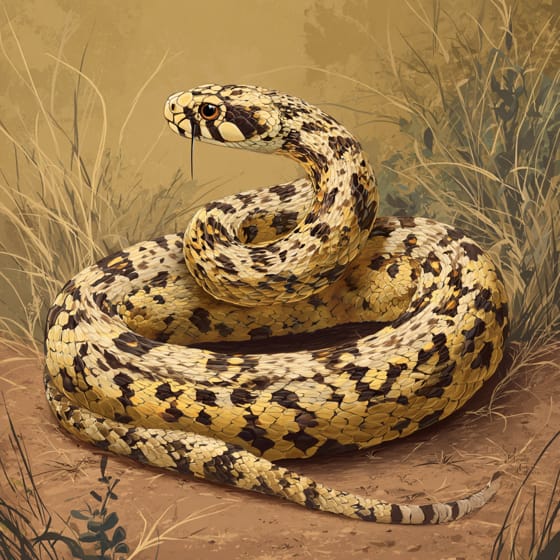
Pituophis catenifer
Preys on eggs/chicks

Homo sapiens
Uses buildings for nests
Feathered describes animals, primarily birds, possessing a covering of feathers.
Social animals live in organized groups, cooperating for survival benefits such as foraging, defense, and raising offspring.
Singing animals produce complex vocalizations, often for purposes of attracting mates, defending territory, or communicating within their species.
Grassland habitats are terrestrial biomes dominated by grasses and herbaceous plants, supporting a variety of grazing animals.

This trait identifies organisms whose diet primarily consists of insects and other small invertebrates.

Diurnal animals are primarily active during daylight hours, typically resting or sleeping at night.

This trait identifies organisms that exhibit exceptional swiftness in movement for hunting, escape, or travel.
Danger
1/5 · Very low
Enjoy watching birds from a distance and don't try to touch them.
The easiest way to identify Say's Phoebe is to use the Snappit nature identifier app.
17-20 cm
30-33 cm
0.018-0.024 kg
3-6 years
35 km/h
Say's Phoebes primarily feast on flying insects, catching them expertly in mid-air.
Grasslands
Zoom in to split clusters and explore where this object has been snapped.
Jun 12, 2026
Mesilla PlazaPhoto attribution
(c) Suanne Pyle, some rights reserved (CC BY)
License: CC BY 4.0 ↗
Image may be shown cropped inside the card frame.
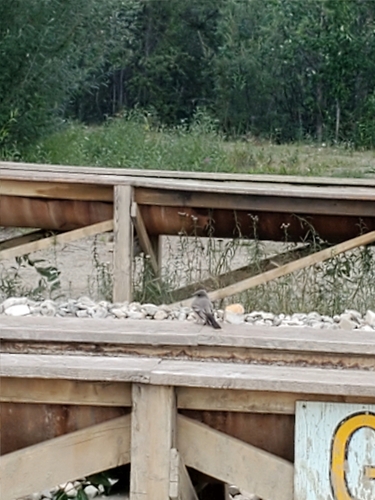
May 24, 2026
James Cant RanchPhoto attribution
(c) John Clonce, some rights reserved (CC BY)
License: CC BY 4.0 ↗
Image may be shown cropped inside the card frame.
Apr 20, 2026
Gallup Commercial Historic DistrictPhoto attribution
(c) William Harmon, some rights reserved (CC BY)
License: CC BY 4.0 ↗
Image may be shown cropped inside the card frame.
Jul 25, 2022
Chicken Historic DistrictPhoto attribution
no rights reserved
License: CC0 1.0 ↗
Image may be shown cropped inside the card frame.

Utah, US
You might spot Common Golden-Mantled Ground Squirrel and Steller's Jay.
View guide →

Utah, US
You might spot Common Golden-Mantled Ground Squirrel and Steller's Jay.
View guide →

Alaska, US
You might spot Cliff Swallow, Pretty Jacob's-Ladder, and Dwarf Fireweed.
View guide →

Texas, US
You might spot Texas Hedgehog Cactus, Ornate Tree Lizard, and Cactus Wren.
View guide →

New Mexico, US
You might spot White-Winged Dove and Silverleaf Nightshade.
View guide →

New Mexico, US
You might spot Duck, Greater Roadrunner, and American Robin.
View guide →
Take the discovery with you
Snap it with Snappit to identify it, learn what makes it special, and add the discovery to your collection.




.jpg&width=800)









