
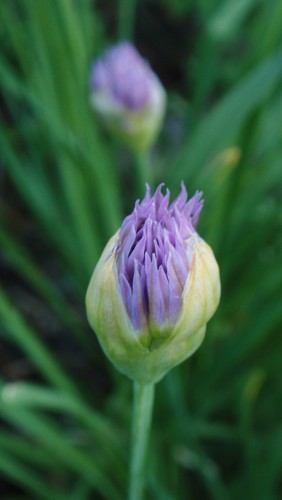


Swamp Onion
allium validum
The Swamp Onion, also known as the Pacific onion, is a robust, bulbous perennial wildflower native to the high-elevation wetlands, wet meadows, and swampy areas of western North America. Flowering from mid to late summer, this plant stands out with its dense, spherical clusters of pinkish-purple to white star-shaped blossoms that sit atop tall, thick, flat stems. It is a vital component of montane wetland ecosystems, providing a rich nectar source for native pollinators and stabilizing fragile soils near mountain streams, while exuding a strong, characteristic onion scent when bruised. Though wild, its unique adaptations make it a fascinating study in wetland botanical survival.
Habitat: Found in wet montane meadows, bogs, and along stream banks in mountainous regions.
This tall perennial features a sturdy, somewhat flattened stem reaching 50 to 100 cm in height, emerging from an elongated, clustering bulb. Long, flat, grass-like leaves drape around the base, matching the stem's bright green hue. At the peak of the stem sits a dense, umbel-shaped flower head clustering 15 to 40 individual, star-shaped flowers with prominent, protruding stamens. The blossoms range in color from soft pale pink to deep rose-purple, presenting a vibrant contrast against wet marshy grasses.
Category
PlantsRarity
Common
Danger
1/5 · Very low
Snaps
Be the first to snap!
Despite its strong, pungent onion smell and taste, Native American tribes, including the Paiute and Shoshone, used the bulbs and leaves as a flavorful food source and seasoning.
The species name 'validum' translates from Latin to mean 'strong' or 'robust', a nod to its stout stems and intense, aromatic scent.
Unlike many other wild onions, the Swamp Onion prefers its feet permanently wet, growing directly in saturated mud and flowing seeps.
Produces strong sulfur compounds, such as thiosulfinates, which give it a pungent onion odor to deter most mammalian herbivores.
Possesses specialized root structures that allow it to thrive in saturated, oxygen-depleted soils where other plants drown.
Spreads through stout rhizomes beneath the soil, forming dense clonal colonies that secure its position in shifting wetland substrates.
As an autotrophic plant, the Swamp Onion generates its own energy through photosynthesis, utilizing sunlight, carbon dioxide, and water while absorbing essential nutrients from saturated soils.
Bombus occidentalis
Pollinates the flowers while seeking nectar during the summer bloom.

Thomomys talpoides
Feeds on the subterranean bulbs, occasionally causing plant mortality but spreading bulbils.
Selasphorus platycercus
Feeds on the nectar of the pink star-shaped blossoms.
No trait badges are assigned for this object yet.
No aliases listed yet.
Collections for this object will appear here as more themes are added.
Danger
1/5 · Very low
No special safety notes yet.
Start with the whole plant, then compare leaf arrangement, leaf edges, stems and any flowers or fruit. Opposite leaves grow in pairs; alternate leaves come one at a time along the stem. These details tell you far more together than a single green leaf does. Plant Identifier: upload a photo and compare the visible details.
50-100 cm
0.05-0.25 kg
5-15 years
As an autotrophic plant, the Swamp Onion generates its own energy through photosynthesis, utilizing sunlight, carbon dioxide, and water while absorbing essential nutrients from saturated soils.
Found in wet montane meadows, bogs, and along stream banks in mountainous regions.
Zoom in to split clusters and explore where this object has been snapped.
Recent snaps will appear here as new observations are added.
Take the discovery with you
Snap it with Snappit to identify it, learn what makes it special, and add the discovery to your collection.


















