





Tasmanian blue gum
Eucalyptus globulus
The Tasmanian blue gum is a tall tree with smooth, grayish bark and beautiful green leaves. It grows in warm places and can be very tall, making it a great home for birds and other animals.
Habitat: Forests
The Tasmanian blue gum is a towering tree with smooth, pale grey bark that peels in long strips, revealing patches of cream or yellow underneath. Its iconic bluish-green, sickle-shaped leaves give it a distinct hue, complemented by creamy-white, fluffy flowers that bloom from hard, ribbed buds.
Category
PlantsRarity
Common
Danger
1/5 · Very low
Snaps
Be the first to snap!
Its scientific name, Eucalyptus globulus, refers to its spherical fruit.
Some older trees have trunks so big, five friends couldn't hug them!
The smell you recognize as "eucalyptus" comes from the oil in its leaves.
The wood changes color as it dries, turning from pinkish to a yellow-brown.
Tasmanian blue gum can quickly re-sprout from its trunk or roots after a bushfire, helping it survive in its fiery habitat.
Tasmanian blue gum has aromatic oils in its leaves that deter many herbivores from eating them, keeping the tree safe.
Tasmanian blue gum can grow very fast by absorbing a lot of water, which helps it outcompete other plants for resources.
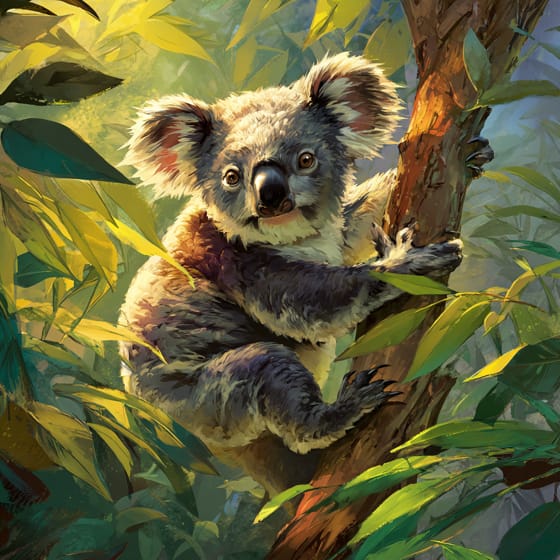
Phascolarctos cinereus
primary food source, specialized diet
Apis mellifera
collects abundant nectar and pollen

Trichoglossus moluccanus
feeds on abundant nectar
Calyptorhynchus funereus
cracks open gum nuts for seeds
Aromatic plants produce and emit fragrant volatile organic compounds, often for defense or to attract pollinators.
Broadleaf trees are angiosperms characterized by flat, wide leaves that are typically shed annually in temperate climates.
Evergreen plants retain their foliage throughout the year, never shedding all their leaves at once.
Medicinal plants possess chemical compounds that can be used for therapeutic purposes to treat illnesses or maintain health.

Describes plants that are particularly attractive and beneficial to a wide range of pollinating organisms.

Rapid growing plants exhibit accelerated growth rates, quickly increasing in size and biomass within a short period.

Timber refers to wood that has been prepared for use in building and carpentry.

Forest habitats are terrestrial environments dominated by dense tree cover, supporting a high diversity of plant and animal life.

Describes a species whose presence and role have a disproportionately large effect on its environment.
Danger
1/5 · Very low
Stay away from the tree's leaves and bark, as they can be slippery and may fall.
The easiest way to identify Tasmanian blue gum is to use the Snappit nature identifier app.
5000-9000 cm
1000-2000 cm
2-3 cm
Late Autumn to Early Summer (Southern Hemisphere)
No
Mild
Perennial
Zoom in to split clusters and explore where this object has been snapped.
Recent snaps will appear here as new observations are added.
Take the discovery with you
Snap it with Snappit to identify it, learn what makes it special, and add the discovery to your collection.








.jpg&width=800)


_001.jpg&width=800)



