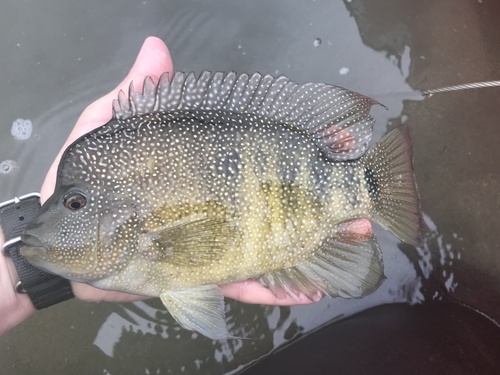


Texas Cichlid
herichthys cyanoguttatus
The Texas Cichlid, also known as the Rio Grande Cichlid, holds a unique place in North American ichthyology as the only cichlid species native to the United States. Renowned for its bold, territorial personality and striking, glittering appearance, this freshwater fish is a popular choice among aquarium hobbyists and a fascinating subject for nature enthusiasts. Native to the lower Rio Grande drainage in Texas and northeastern Mexico, it has adapted successfully to various slow-moving aquatic environments. These fish are highly parental, showcasing complex breeding behaviors where both the male and female work together to clean nesting sites, guard their eggs, and vigorously defend their fry against potential predators. This strong parental instinct, combined with their hardy nature, makes them incredibly successful survivors in both their native and introduced ranges.
Habitat: Typically found in warm, slow-flowing rivers, creeks, canals, and vegetated lakes with muddy or sandy substrates.
The Texas Cichlid is a robust, deep-bodied fish with a cream to gray-green base coloration, beautifully flecked with iridescent blue, green, or pearl-colored spots that cover its entire body and fins. Mature males often develop a prominent nuchal hump on their foreheads as they age. During the breeding season, their appearance undergoes a dramatic transformation: the rear portion of their body darkens to nearly black, while the front half turns a contrasting bright white or cream color. They typically reach lengths of 15 to 30 cm, displaying sharp, spiny dorsal and anal fins characteristic of cichlids.
Category
FishRarity
Common
Danger
1/5 · Very low
Snaps
Be the first to snap!
During breeding, their parental care is so aggressive that they will fearlessly attack much larger fish, and even human hands or nets.
It is the only cichlid species native to the entire United States, naturally occurring in southern Texas.
They are highly intelligent and curious fish, often capable of recognizing their owners in captivity and begging for food.
They can rapidly alter their coloration during spawning, darkening their rear body to deep black while blanching the front to bright white to signal reproductive readiness.
Mature males develop a fatty hump on their forehead used to signal dominance and attract females during the breeding season.
Both parents share nesting duties, with one guarding the eggs or fry while the other actively patrols the territory.
An opportunistic feeder that consumes a diverse range of plant matter, small invertebrates, and smaller fish.
Age differences: Juveniles feed primarily on small aquatic invertebrates and zooplankton, while adults incorporate more plant matter and larger prey, including small fish.

Micropterus salmoides
Juveniles and smaller Texas Cichlids are preyed upon by larger predatory fish sharing their warm freshwater habitat.
Poecilia latipinna
Texas Cichlids actively hunt small fish like the Sailfin Molly, which share their shallow, vegetated native habitats.
Clinostomum marginatum
A common trematode parasite that infects the muscle tissue and gills of the Texas Cichlid.
No trait badges are assigned for this object yet.
No aliases listed yet.
Collections for this object will appear here as more themes are added.
Danger
1/5 · Very low
No special safety notes yet.
Look at body shape, where the fins sit and their outline, mouth position, stripes and spots. Young fish and breeding adults can wear different patterns, and aquarium color varieties can look nothing like wild fish. Fish Identifier: upload a photo and compare the visible details.
15-30 cm
0.2-1 kg
5-10 years
An opportunistic feeder that consumes a diverse range of plant matter, small invertebrates, and smaller fish.
Typically found in warm, slow-flowing rivers, creeks, canals, and vegetated lakes with muddy or sandy substrates.
Foraging
500-2000
Zoom in to split clusters and explore where this object has been snapped.
Recent snaps will appear here as new observations are added.
Take the discovery with you
Snap it with Snappit to identify it, learn what makes it special, and add the discovery to your collection.