.jpg&width=800)





Tree Ruffle Liverwort
Porella navicularis
The Tree Ruffle Liverwort is a small, leafy plant that grows on tree trunks and shady places. It looks like a little green ruffle and helps keep the forest healthy by soaking up water.
Habitat: Forests
The Tree Ruffle Liverwort has flat, overlapping green leaf-like structures that form a wavy, ruffle-like mat. Its deep green color can deepen to brownish-green in drier conditions, often appearing velvety against tree bark or rocks. It typically grows prostrate, clinging to surfaces.
Category
PlantsRarity
Common
Danger
1/5 · Very low
Snaps
Be the first to snap!
Liverworts are ancient plants, older than dinosaurs, lacking true roots, stems, or leaves!
Liverworts are tiny ecosystem engineers, helping create new soil on bare rocks over time!
Some can dry out completely and then amazingly rehydrate and restart growing when it rains!
They need a thin film of water for their 'sperm' to swim and find eggs to reproduce!
Tree Ruffle Liverwort has special cells that absorb water like a sponge, helping it stay hydrated in dry spells.
Tree Ruffle Liverwort can anchor itself with tiny root-like rhizoids, helping it cling tightly to rough surfaces like bark.
Tree Ruffle Liverwort releases tiny, dust-like spores into the wind, helping it spread to new damp places.
Arion vulgaris
Slugs may graze on liverwort tissues when available.
Collembola vulgaris
Provides damp microhabitat for tiny invertebrates.
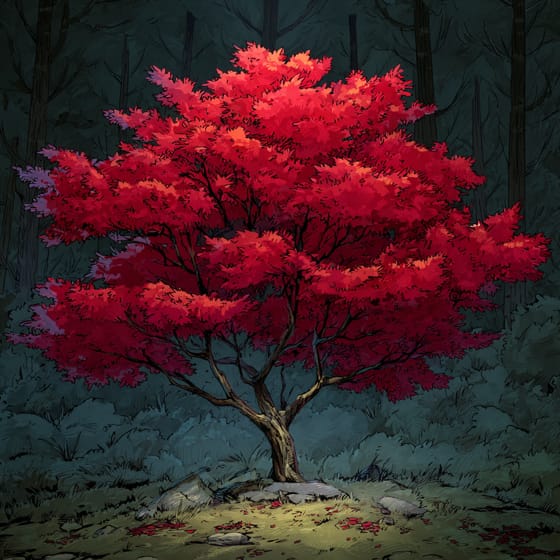
Acer rubrum
Often grows as an epiphyte on the bark of mature trees.
This trait characterizes plants lacking specialized vascular tissues (xylem and phloem) for transporting water and nutrients.
Shade tolerant plants are adapted to grow and thrive in areas with low light levels, requiring less direct sunlight.
Spore-producing organisms reproduce by releasing small, often single-celled, reproductive units called spores.
This trait signifies organisms belonging to a very old evolutionary group with ancestors dating back millions of years.

Describes organisms that break down dead organic material, recycling nutrients back into the ecosystem.

Forest habitats are terrestrial environments dominated by dense tree cover, supporting a high diversity of plant and animal life.

Describes a species whose presence and role have a disproportionately large effect on its environment.

Pertaining to species that are significantly smaller than typical or average for their kind.
No aliases listed yet.
Danger
1/5 · Very low
Always look but don't touch wild plants without asking an adult.
The easiest way to identify Tree Ruffle Liverwort is to use the Snappit nature identifier app.
0.5-2 cm
5-15 cm
No
None
Perennial
Forests
Zoom in to split clusters and explore where this object has been snapped.
Recent snaps will appear here as new observations are added.
Take the discovery with you
Snap it with Snappit to identify it, learn what makes it special, and add the discovery to your collection.








.jpg&width=800)



_001.jpg&width=800)



