





Elephant's Ear
Macaranga tanarius
Elephant's Ear is a big, leafy plant that loves warm places. Its large leaves look like elephant ears, making it fun to spot in gardens and forests!
Habitat: Tropical forests
The Elephant's Ear has giant, heart-shaped leaves, often over a meter wide, with the stem attached to the middle. Its vibrant green leaves can have reddish undersides or veins, making it stand out in sunny clearings.
Category
PlantsRarity
Common
Danger
1/5 · Very low
Snaps
Be the first to snap!
Its huge leaves can sometimes be used as natural umbrellas or even plates!
Some people use its bark and leaves to make traditional medicines.
The sap from this plant can sometimes be used to make a natural glue.
This tree is a 'pioneer,' first to sprout in clearings after disturbances.
Elephant's Ear has stem pockets that shelter ants, helping protect it from plant-eating insects. Teamwork!
Elephant's Ear grows fast in sunny clearings, quickly reaching for the best sunlight before other plants can.
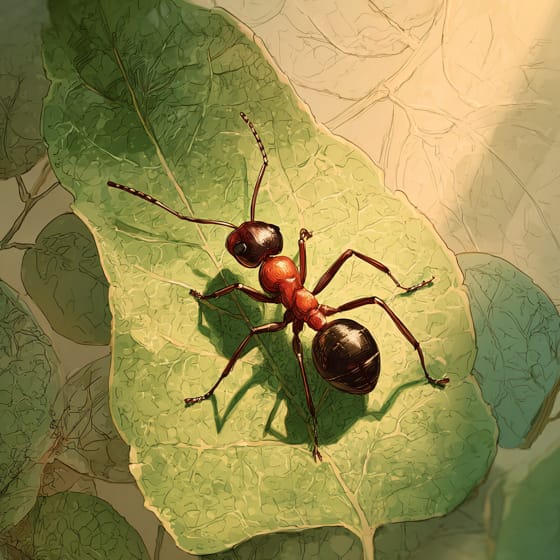
Crematogaster dohrni
ants live in its stems, protecting it from pests.
Aplonis panayensis
birds enjoy its small, fleshy fruits.
Epilachna indica
herbivorous beetles sometimes munch on its big leaves.
Flowering plants are any plants that produce flowers as part of their reproductive cycle.
Ornamental plants are cultivated primarily for their aesthetic appeal, enhancing landscapes and gardens with their attractive foliage, flowers, or form.
Shade tolerant plants are adapted to grow and thrive in areas with low light levels, requiring less direct sunlight.
Broadleaf trees are angiosperms characterized by flat, wide leaves that are typically shed annually in temperate climates.

Evergreen plants retain their foliage throughout the year, never shedding all their leaves at once.

Rapid growing plants exhibit accelerated growth rates, quickly increasing in size and biomass within a short period.

Forest habitats are terrestrial environments dominated by dense tree cover, supporting a high diversity of plant and animal life.
Danger
1/5 · Very low
Always wash your hands after touching plants, just to be safe!
The easiest way to identify Elephant's Ear is to use the Snappit nature identifier app.
500-1500 cm
300-800 cm
0.1-0.3 cm
Year-round
No
Mild
Perennial
Zoom in to split clusters and explore where this object has been snapped.
Recent snaps will appear here as new observations are added.
Take the discovery with you
Snap it with Snappit to identify it, learn what makes it special, and add the discovery to your collection.







.jpg&width=800)


_001.jpg&width=800)


