

Triaenogenius
triaenogenius
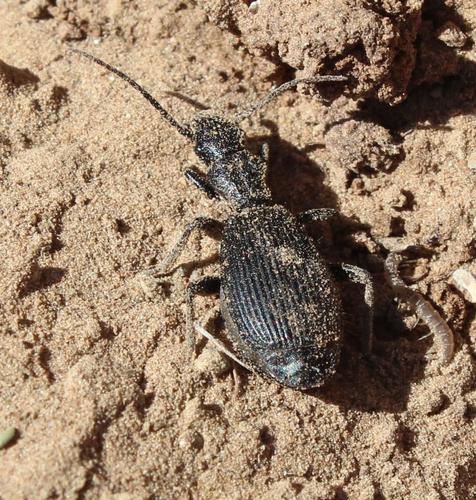
Triaenogenius is an intriguing genus of ground beetles belonging to the family Carabidae, primarily native to the savannas and semi-arid regions of Sub-Saharan Africa. These ground-dwelling predators play an important role in their ecosystems by keeping terrestrial insect populations in check. Known for their robust, heavily textured bodies and strong, forward-facing mandibles, they are formidable hunters of the forest and savanna floor, scouring the soil and leaf litter for prey. Despite their somewhat imposing appearance, these beetles are highly beneficial insects that act as natural pest control agents. Observing a Triaenogenius in its natural environment offers a unique look into the highly specialized survival tactics of ground-surface insect predators.
Habitat: Typically found in semi-arid savannas, dry woodlands, and grassland habitats, often sheltering under large rocks, fallen logs, or deep leaf litter.
Members of the Triaenogenius genus are medium to large ground beetles, typically measuring between 1 and 3 centimeters in length. They feature a heavily armored, matte or semi-glossy black to dark brown exoskeleton, often marked with deep longitudinal ridges and a coarse, pitted texture on their fused elytra. Their bodies are distinctly flattened, which is an evolutionary adaptation for squeezing under tight rocks, bark, and logs. They have prominent, sharp mandibles and long, slender legs adapted for rapid running across uneven terrain, paired with moderately long, filiform antennae.
Category
InsectsRarity
Common
Danger
1/5 · Very low
Snaps
Be the first to snap!
Their highly sensitive antennae help them detect microscopic vibrations and chemical cues left by passing prey in complete darkness.
These ground beetles have fused wing covers (elytra) and are completely flightless, relying entirely on their speed to run down prey.
They frequently engage in 'thanatosis' or playing dead, remaining completely stiff when a predator first uncovers them.
Like many carabids, they can secrete or spray irritating chemical compounds from specialized abdominal glands to repel predators.
Their compressed bodies allow them to easily squeeze into rocky fissures and under bark to escape extreme heat and predators.
Equipped with strong, scissor-like mandibles capable of crushing the tough chitinous exoskeletons of their insect prey.
Triaenogenius beetles are active terrestrial predators that feed on various ground-dwelling insects and other small invertebrates.
Age differences: Larvae are predatory but remain largely stationary in soil burrows, while adults are active, highly mobile hunters.
Microhodotermes viator
Triaenogenius actively hunts and feeds on these abundant termites in savanna ecosystems.
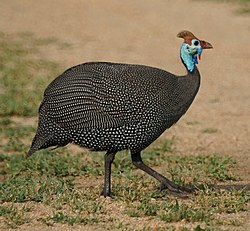
Numida meleagris
These terrestrial birds scratch through savanna leaf litter and readily consume ground beetles.
Anthia thoracica
Competes with other large, ground-dwelling predatory carabids for food and hiding spots under logs.
No trait badges are assigned for this object yet.
No aliases listed yet.
Collections for this object will appear here as more themes are added.
Danger
1/5 · Very low
No special safety notes yet.
Look for hard wing covers meeting in a line down the back, then compare the antennae, body shape, legs and markings. Metallic colors shift a lot with lighting. Beetle Identifier: upload a photo and compare the visible details.
1+ cm
0.001+ kg
1+ years
5 km/h
Triaenogenius beetles are active terrestrial predators that feed on various ground-dwelling insects and other small invertebrates.
Typically found in semi-arid savannas, dry woodlands, and grassland habitats, often sheltering under large rocks, fallen logs, or deep leaf litter.
Foraging
Zoom in to split clusters and explore where this object has been snapped.
Recent snaps will appear here as new observations are added.
Take the discovery with you
Snap it with Snappit to identify it, learn what makes it special, and add the discovery to your collection.