





Tule Bluet
Enallagma carunculatum
The Tule Bluet is a small, beautiful dragonfly with bright blue colors. They love to flutter around wetlands and ponds, making them fun to watch as they zip through the air.
Habitat: Wetlands
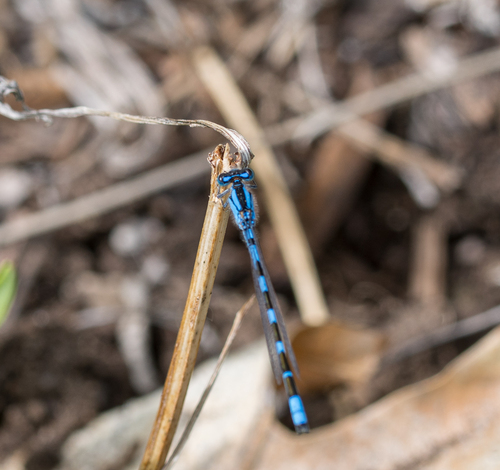
The Tule Bluet is a small, slender damselfly typically deep blue and black. Males have striking blue markings on their thorax and abdomen, often with a distinct "teardrop" shaped spot on the side of the second abdominal segment. Their large, widely spaced eyes are also blue.
Category
InsectsRarity
Common
Danger
1/5 · Very low
Snaps
4
Adult Tule Bluets only live for a few weeks, making every sunny day an adventure!
After hatching, a Tule Bluet naiad sheds its skin many times as it gets bigger.
Males have a special blue spot on their belly that helps females recognize them for mating.
Their babies live underwater for months, growing and hunting before they can fly!
Tule Bluet can swiftly catch tiny flying insects with its spiky legs that act like a basket.
Its young (naiads) can breathe underwater using feathery gills at the end of their abdomen.
Tule Bluets can fly forward, backward, and hover silently to ambush unsuspecting prey.
Tiny predators, Tule Bluets feast on smaller insects found near water.
Age differences: Young Tule Bluets (naiads) hunt aquatic insect larvae and small crustaceans underwater.
Culex pipiens
Tule Bluets prey on flying mosquitoes.
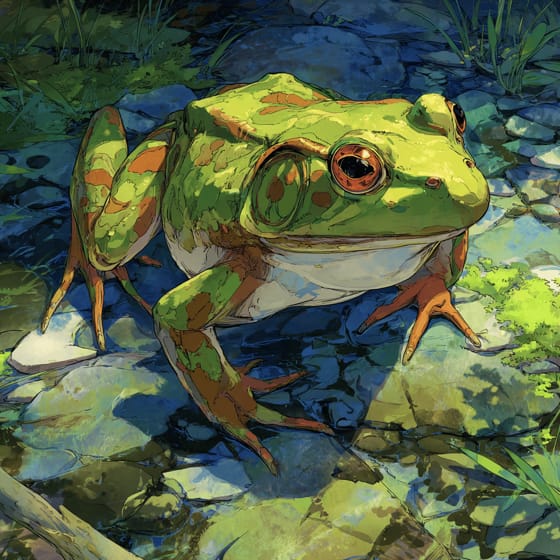
Lithobates catesbeianus
Adult Tule Bluets can be a meal for hungry frogs.
Gambusia affinis
Fish often eat Tule Bluet naiads underwater.
.jpg&width=800)
Tyrannus tyrannus
Birds snatch flying adult damselflies.
Solitary animals live alone for most of their lives, only interacting with others for mating or parental care.
Aerial creatures spend a significant portion of their lives airborne, utilizing flight for various activities such as hunting, migration, or nesting.
Colorful describes organisms or objects displaying a wide range of bright and distinct colors.
This trait identifies organisms whose diet primarily consists of insects and other small invertebrates.

This habitat trait identifies species found in wetlands, which are areas of land saturated with water, either permanently or seasonally, including marshes, swamps, and bogs.

Diurnal animals are primarily active during daylight hours, typically resting or sleeping at night.

Freshwater habitats include non-saline aquatic environments such as rivers, lakes, ponds, and wetlands, vital for numerous species.

This trait identifies organisms that exhibit exceptional swiftness in movement for hunting, escape, or travel.

Describes organisms that transfer pollen, enabling the fertilization and reproduction of plants.
No aliases listed yet.
Danger
1/5 · Very low
Always watch dragonflies from a distance so you don't scare them away.
The easiest way to identify Tule Bluet is to use the Snappit nature identifier app.
30-40 mm
25-33 mm
14-28 days
7 km/h
Tiny predators, Tule Bluets feast on smaller insects found near water.
Wetlands
Pursuit
Zoom in to split clusters and explore where this object has been snapped.
Jun 3, 2026
Cheesman ParkPhoto attribution
(c) Bob Walker, some rights reserved (CC BY)
License: CC BY 4.0 ↗
Image may be shown cropped inside the card frame.

Wisconsin, US
You might spot Common Eastern Bumble Bee, Bee, and Monarch.
View guide →

Colorado, US
You might spot African Penguin, Red Panda, and African Lion.
View guide →

Colorado, US
You might spot Eastern Fox Squirrel, Bee, and Duck.
View guide →

Nebraska, US
You might spot Canada Goose, Blue Dasher, and Eastern Pondhawk.
View guide →

Oregon, US
You might spot Canada Goose, Duck, and Greater White-Fronted Goose.
View guide →
Take the discovery with you
Snap it with Snappit to identify it, learn what makes it special, and add the discovery to your collection.








.jpg&width=800)



