.jpg&width=800)





Unarmed Leafcutter Bee
Megachile inermis
The Unarmed Leafcutter Bee is a small, friendly bee that loves to collect leaves for its nest. They are great pollinators and help flowers grow by spreading pollen.
Habitat: Urban areas
The Unarmed Leafcutter Bee is a robust, dark-bodied insect, often covered with pale yellowish to whitish hairs, particularly on its underside. It has a smoother, less spiky facial appearance compared to some other leafcutter bees, with a distinct, stocky shape.
Category
InsectsRarity
Common
Danger
1/5 · Very low
Snaps
Be the first to snap!
Baby leafcutter bees eat a special paste made of pollen and nectar their mom provides!
Look closely at leaves for perfect semi-circular cuts—that's their handiwork!
These bees are solitary, meaning each female builds her own nest without a queen!
They don't make honey, but are super important for plant pollination!
Unarmed Leafcutter Bees can precisely cut perfect semi-circular pieces from leaves because of their strong mandibles, helping them build secure nests.
Unarmed Leafcutter Bees have a special hairy 'pollen brush' on their belly that helps them carry lots of pollen back to their nest.
Unarmed Leafcutter Bees are excellent at pollinating because they rub their hairy bellies on flowers, collecting and transferring pollen effectively.
Unarmed Leafcutter Bees can construct intricate tube-shaped nests from leaf pieces, creating cozy, protected cells for their developing young.
This bee sips flower nectar for energy and collects pollen to feed its growing babies in the nest.
Solidago canadensis
Helps reproduce.

Trifolium repens
Transfers pollen.
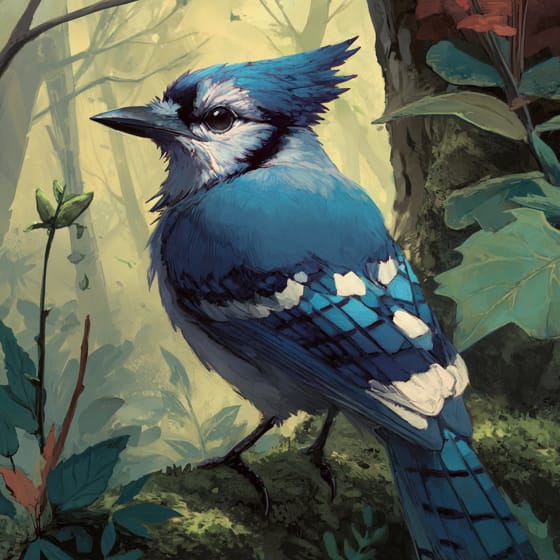
Cyanocitta cristata
Eats larvae.
Sapyga pumila
Lays eggs in nests.
Furry describes animals possessing a dense covering of soft hair or fur.
Social animals live in organized groups, cooperating for survival benefits such as foraging, defense, and raising offspring.
This trait characterizes organisms whose diet consists entirely or primarily of plant material.
Describes plants that are particularly attractive and beneficial to a wide range of pollinating organisms.

Diurnal animals are primarily active during daylight hours, typically resting or sleeping at night.

Describes a species whose presence and role have a disproportionately large effect on its environment.

This habitat trait indicates species that can coexist with humans in urban and suburban environments, utilizing man-made structures and green spaces.

Describes organisms that transfer pollen, enabling the fertilization and reproduction of plants.
No aliases listed yet.
Danger
1/5 · Very low
Watch bees from a distance and don't disturb their nests.
The easiest way to identify Unarmed Leafcutter Bee is to use the Snappit nature identifier app.
18-25 mm
10-14 mm
30-60 days
15 km/h
This bee sips flower nectar for energy and collects pollen to feed its growing babies in the nest.
Urban areas
Foraging
Zoom in to split clusters and explore where this object has been snapped.
Recent snaps will appear here as new observations are added.
Take the discovery with you
Snap it with Snappit to identify it, learn what makes it special, and add the discovery to your collection.






.jpg&width=800)



