





virginia stickseed
Hackelia virginiana
Virginia stickseed is a lovely little plant with bright blue flowers. It grows in fields and along roadsides, making the world a bit more colorful!
Habitat: Grasslands
The virginia stickseed has a tall, hairy stem with rough, lance-shaped leaves. Its tiny, pale blue to white flowers are clustered loosely along the upper stem. After flowering, small, round, intensely sticky burs develop, making it distinctive and hard to miss when they attach to clothing.
Category
PlantsRarity
Common
Danger
1/5 · Very low
Snaps
12
Its super-sticky seeds inspired its name, because they 'stick' to anything!
One plant can produce hundreds of these tiny, hook-covered 'hitchhiker' seeds!
The plant's scientific name, Hackelia, honors an Austrian botanist named Joseph Hackel.
Though tiny, its flowers provide nectar for small bees and pollinating flies!
Virginia stickseed has small, barbed seeds that easily cling to fur or clothing, helping it travel far and wide.
It can thrive in disturbed soil and open woodlands, allowing it to quickly colonize new areas where other plants struggle.
Apis mellifera
Feeds on nectar, aids pollination
Bombus impatiens
Visits flowers for nectar
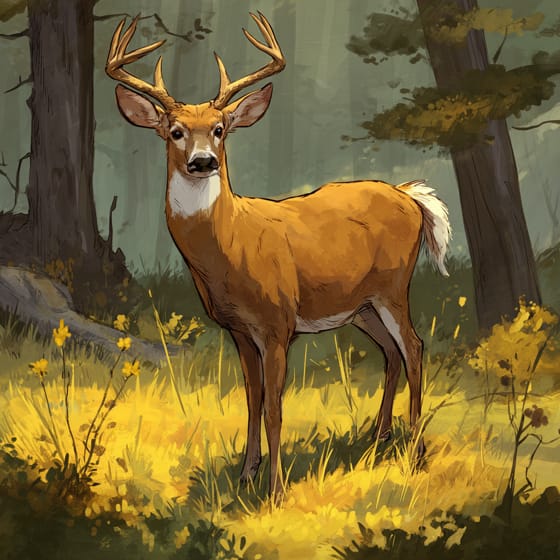
Odocoileus virginianus
Seeds stick to fur, aiding dispersal
Flowering plants are any plants that produce flowers as part of their reproductive cycle.
Spring blooming plants produce their flowers during the spring season, often signifying the end of winter and the start of new growth.
Medicinal plants possess chemical compounds that can be used for therapeutic purposes to treat illnesses or maintain health.
Colorful describes organisms or objects displaying a wide range of bright and distinct colors.

Grassland habitats are terrestrial biomes dominated by grasses and herbaceous plants, supporting a variety of grazing animals.

Describes plants that are particularly attractive and beneficial to a wide range of pollinating organisms.
No aliases listed yet.
Danger
1/5 · Very low
Always look but don't touch plants without asking an adult first.
The easiest way to identify virginia stickseed is to use the Snappit nature identifier app.
30-150 cm
15-30 cm
0.3-0.5 cm
Late spring to late summer
No
None
Biennial
Zoom in to split clusters and explore where this object has been snapped.

Wisconsin, US
You might spot Turkey, White-Tailed Deer, and Dame's Rocket.
View guide →

Ohio, US
You might spot Brown-Belted Bumble Bee and Eastern Carpenter Bee.
View guide →

Indiana, US
You might spot Monarch, Black Swallowtail, and American Pokeweed.
View guide →

Ohio, US
You might spot Spotted Lanternfly, Virginia Springbeauty, and Blue Phlox.
View guide →

Iowa, US
You might spot False Rue Anemone, Sharp-Lobed Hepatica, and Common Shiner.
View guide →

New Jersey, US
You might spot White-Tailed Deer and Great Blue Heron.
View guide →
Take the discovery with you
Snap it with Snappit to identify it, learn what makes it special, and add the discovery to your collection.








.jpg&width=800)



_001.jpg&width=800)




