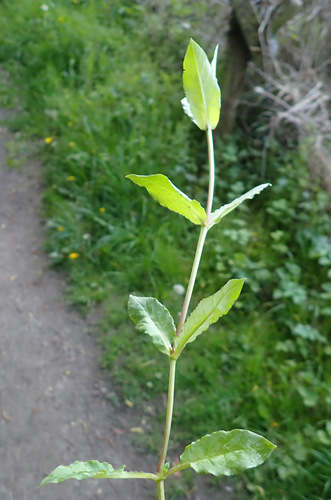


Water Chickweed
stellaria aquatica
Water Chickweed, scientifically known as Stellaria aquatica (and formerly Myosoton aquaticum), is a sprawling, moisture-loving perennial herbaceous plant that thrives in temperate zones. Found along stream banks, wet ditches, and marshy meadows, this resilient plant plays a quiet but vital role in its local ecosystem. It acts as a natural soil stabilizer along waterways, preventing erosion during minor floods, while offering shelter and nourishment to various insects. Though often overlooked due to its resemblance to other common weeds, its lush, leafy tangles and delicate star-like flowers lend a soft, green charm to wetlands and damp woodlands. It is a highly adaptable species that serves as a beautiful example of nature's simple, robust designs.
Habitat: Typically found in wet, fertile soils along the edges of rivers, streams, ditches, damp woodlands, and marshy meadows.
Water Chickweed is characterized by its sprawling, brittle stems that can reach up to 120 cm in length, often relying on surrounding vegetation for support. The upper parts of the stems are covered in sticky, glandular hairs. Its leaves are opposite, bright green, heart-shaped or broadly oval, and typically range from 2 to 5 cm in length, with the lower leaves having short stalks and the upper leaves being stalkless. The most distinctive feature is its flower: a small, white blossom with five petals that are so deeply cleft they easily appear to be ten separate petals. At the center of the flower, a keen observer will spot five distinct styles, a key identifying feature that distinguishes it from other chickweed species which typically have only three.
Category
PlantsRarity
Common
Danger
1/5 · Very low
Snaps
1
Each of the five white petals is split so deeply in the middle that the flower appears to have ten petals to the casual observer.
Its sticky stem hairs function as a natural physical trap, preventing tiny crawling pests from climbing up to damage the delicate reproductive parts of the flower.
While most chickweeds have three styles in the center of their flowers, Water Chickweed has five, which historically caused botanists to place it in its own genus, Myosoton.
Stems easily produce new roots at their nodes when they make contact with moist soil, allowing the plant to spread rapidly and survive physical damage from flooding.
The upper stems and flower stalks are covered in sticky, glandular hairs that act as a barrier to deter crawling insects from reaching and stealing nectar.
The plant is highly adapted to waterlogged soils, possessing specialized cell structures that facilitate oxygen transport even when submerged.
As a photoautotrophic plant, Water Chickweed utilizes sunlight, carbon dioxide, and water to synthesize sugars through photosynthesis, drawing essential minerals from moist soils.

Noctua pronuba
The caterpillars of this moth feed on the lush foliage of the Water Chickweed.
Apis mellifera
Bees visit the open flowers of Water Chickweed for nectar and pollen, aiding in pollination.
Myzus persicae
Aphids suck nutrient-rich sap from the tender, fleshy stems of the plant.
No trait badges are assigned for this object yet.
No aliases listed yet.
Collections for this object will appear here as more themes are added.
Danger
1/5 · Very low
No special safety notes yet.
Start with the whole plant, then compare leaf arrangement, leaf edges, stems and any flowers or fruit. Opposite leaves grow in pairs; alternate leaves come one at a time along the stem. These details tell you far more together than a single green leaf does. Plant Identifier: upload a photo and compare the visible details.
10-120 cm
1-2 years
As a photoautotrophic plant, Water Chickweed utilizes sunlight, carbon dioxide, and water to synthesize sugars through photosynthesis, drawing essential minerals from moist soils.
Typically found in wet, fertile soils along the edges of rivers, streams, ditches, damp woodlands, and marshy meadows.
Zoom in to split clusters and explore where this object has been snapped.

Connecticut, US
You might spot Green Frog and Mountain Laurel.
View guide →

New Hampshire, US
You might spot Hackberry Emperor, Tansy, and Wood Nettle.
View guide →
Take the discovery with you
Snap it with Snappit to identify it, learn what makes it special, and add the discovery to your collection.