





Yellow bladderwort
Utricularia × neglecta
The Yellow bladderwort is a special plant that grows in water! It has tiny bladders that trap small bugs to eat. This helps it get the nutrients it needs to grow strong and healthy.
Habitat: Wetlands
The Yellow bladderwort has delicate, bright yellow, snapdragon-like flowers that rise above the water's surface on slender stalks. Its submerged stems bear finely divided, rootless leaves and numerous tiny, translucent bladders, making it look like a floating mass of greenery.
Category
PlantsRarity
Common
Danger
1/5 · Very low
Snaps
Be the first to snap!
Break off a piece, and it grows into a new plant, reproducing easily!
Its bladder has a trigger hair: touch it, and *whoosh*, the trap snaps shut!
Rootless, it absorbs water nutrients directly using special underwater structures.
Tiny water fleas, mosquito larvae, and worms can all become its quick snack!
Yellow bladderwort has tiny bladders that suck in prey with amazing speed, creating a vacuum in milliseconds!
This plant has no roots, so it floats freely, drifting wherever the water currents take it to find new hunting grounds.
Yellow bladderwort is one of the few carnivorous plants that hunts underwater, catching small creatures with its special traps.
Apis mellifera
Attracted to its yellow flowers
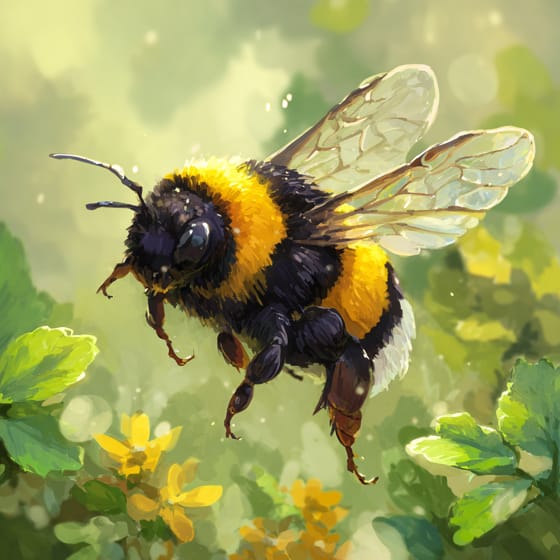
Bombus terrestris
Visits flowers to collect nectar and pollen
Daphnia pulex
Small crustaceans often caught in its bladders
Culex pipiens
Larvae swimming in water are trapped
Flowering plants are any plants that produce flowers as part of their reproductive cycle.
Colorful describes organisms or objects displaying a wide range of bright and distinct colors.
This trait identifies organisms whose diet primarily consists of insects and other small invertebrates.
Describes plants that are particularly attractive and beneficial to a wide range of pollinating organisms.

Rapid growing plants exhibit accelerated growth rates, quickly increasing in size and biomass within a short period.

This habitat trait identifies species found in wetlands, which are areas of land saturated with water, either permanently or seasonally, including marshes, swamps, and bogs.

This trait identifies organisms whose diet consists entirely or primarily of animal tissue.

Aquatic habitats encompass environments where organisms live predominantly in water, including oceans, rivers, lakes, and wetlands.
No aliases listed yet.
Danger
1/5 · Very low
Always be careful around water and ask an adult before exploring.
The easiest way to identify Yellow bladderwort is to use the Snappit nature identifier app.
5-100 cm
10-200 cm
1-2.5 cm
Late spring to early fall
No
None
Perennial
Zoom in to split clusters and explore where this object has been snapped.
Recent snaps will appear here as new observations are added.
Take the discovery with you
Snap it with Snappit to identify it, learn what makes it special, and add the discovery to your collection.








.jpg&width=800)



_001.jpg&width=800)




