Snappit logo
Snappit
Get App
Generic illustration, not a photograph of this venueIllustration
ParkChugoku, Japan

Akiyoshidai Quasi-National Park

Akiyoshidai is a landscape with two very different faces.

About

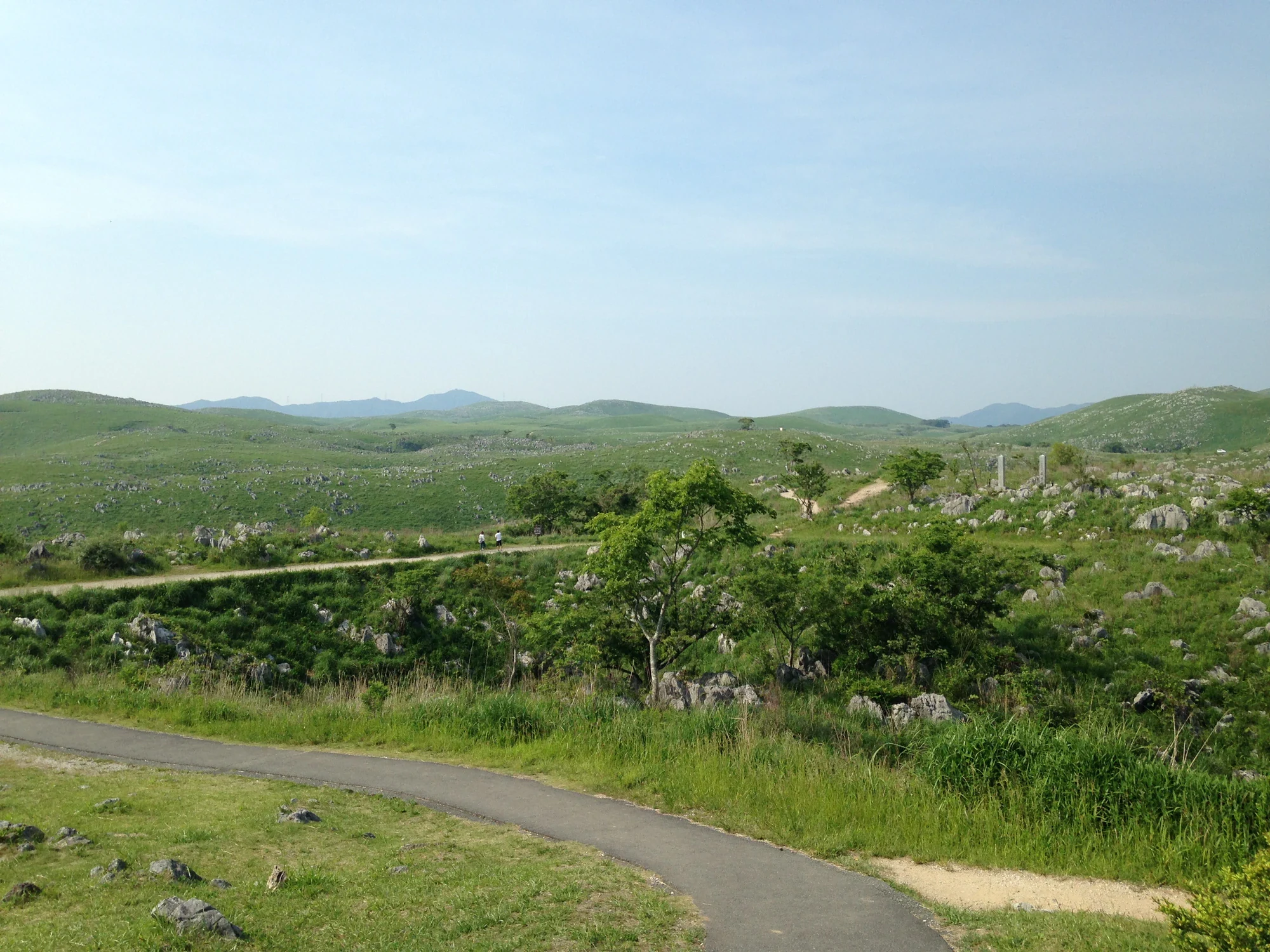
Akiyoshidai is a landscape with two very different faces. Above ground, white limestone stands through rolling grassland, and the sky feels unusually large. Below it, Akiyoshido opens into a cool, dim world of flowing water and stone formations. Seeing both makes the geology much easier to picture: water has shaped the rock at the surface and beneath your feet.

On the plateau, start at Karstar, the geopark information and rest center. Its windows look across the grassland, and staff can help you choose a walk that fits the weather and your group. The neighbouring Karst Observation Deck is closed for renovation from July 7, 2026 to March 26, 2027. Enjoy the view from Karstar and the permitted paths, and keep clear of the work area.

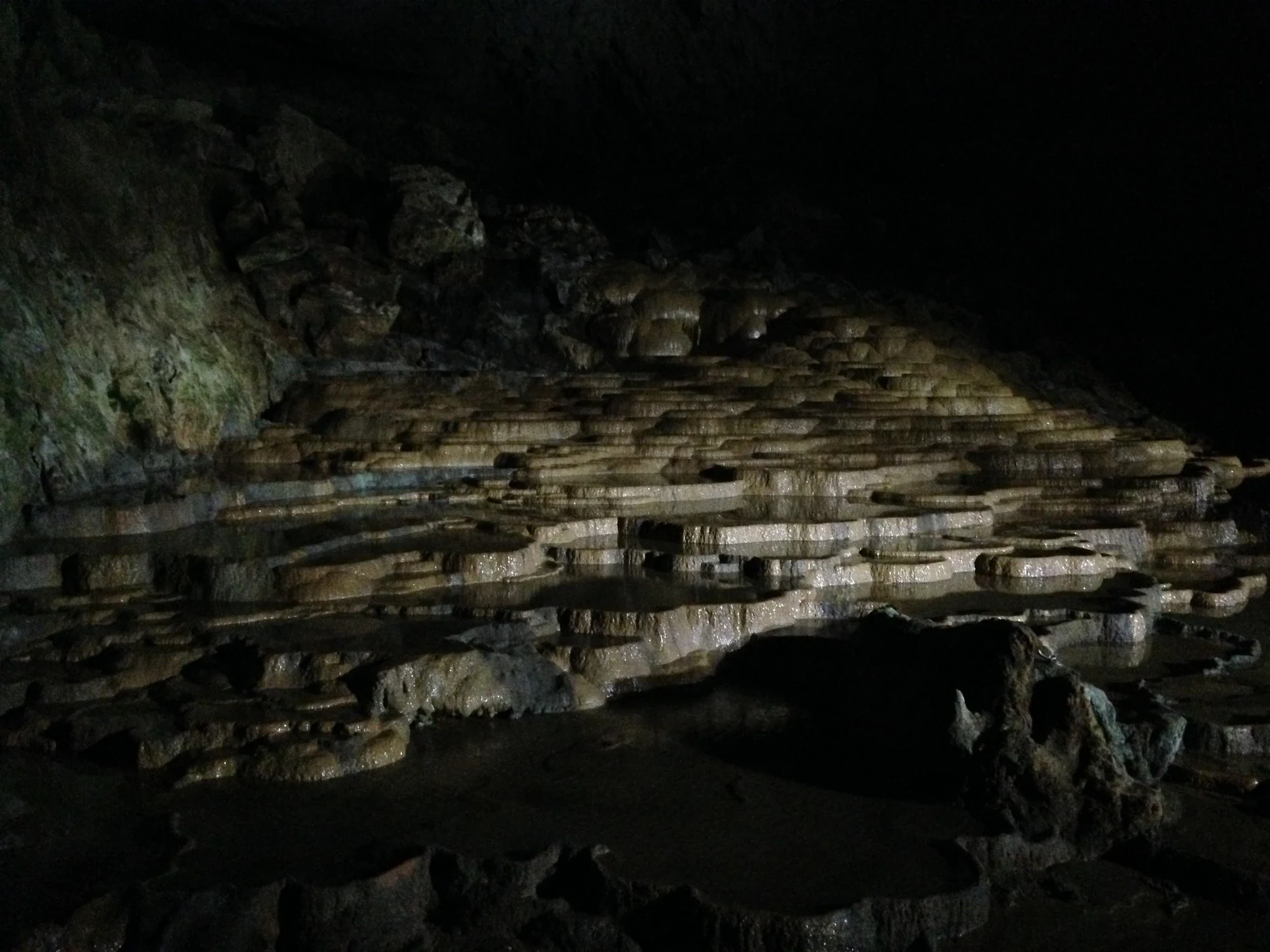
In Akiyoshido, the Hundred Saucers, or Hyakumaizara, are a lovely early stop: shallow, stepped pools spread across the cave floor like a miniature landscape. Farther along, the Golden Pillar and other formations reward a slower look. The public cave route is about 1 km one way, with stairs on the sections beyond the lower entrance area. It is a developed visitor route, but it is still a cave rather than a level indoor corridor.

For a straightforward first visit, enter and leave through the main cave entrance, then move to the plateau separately. That keeps your return to the bus terminal or parked car simple. The cave’s mid-route elevator gives walkers another way to combine the two, but it does not remove the steps on the approach inside the cave. A shorter visit to the Hundred Saucers can be just as satisfying if anyone is tiring. Don't forget to bring the Snappit nature identification app along to scan local species.

Akiyoshidai became a quasi-national park in 1955, and the plateau was designated a Special Natural Monument in 1964. The open grassland also tells a human story: local communities used cutting, grazing and controlled burning to maintain land that could otherwise become wooded. Today’s conservation work helps preserve both the familiar landscape and its grassland life.


What to do here

Spend the morning in Akiyoshido, looking at the pools, dripstone and underground stream. Return to the main entrance for lunch, then visit Karstar and take a short walk on the open plateau paths. Make a longer grassland circuit optional.

Seasonal info

Grassland colours usually deepen from mid-November into early December. Summer is exposed and can be hot above ground, while the cave stays around 17°C. Winter brings wind and possible slippery conditions. The annual controlled burn is normally in February; check that year’s date and access restrictions.

Accessibility

The official map identifies an assisted wheelchair route from the main cave entrance to the Hundred Saucers, about 300 m each way, with a steep entrance slope. Beyond that are steps. The elevator is not a step-free route through the whole cave. Contact the information center about your needs, and check current plateau access during the observation-deck works.

Don't miss

1

White limestone outcrops scattered across open grassland

2

The Hundred Saucers’ shallow, tiered cave pools

3

The Golden Pillar farther along the public cave route

4

Karstar’s broad windows and a short nature walk on the plateau

Low green hills dotted with pale rocks, with winding paths in the foreground.

Green grassland and scattered limestone on Akiyoshidai, photographed in May 2016.

Akiyoshi Plateau 20160522-10.jpg — そらみみ (Soramimi), CC BY-SA 4.0 (https://creativecommons.org/licenses/by-sa/4.0/). Source: https://commons.wikimedia.org/wiki/File:Akiyoshi_Plateau_20160522-10.jpg. Proportionally resized to a maximum 2000-pixel long edge without upscaling; recompressed as WebP quality 92, method 6. No crop, added text, colour adjustment or retouching. Original retained as working evidence only; EXIF omitted from derivative. · Creative Commons

Shallow, rounded rock terraces catch the cave lighting beneath a dark cavern wall.

Hyakumaizara, the “Hundred Saucers” formation inside Akiyoshidō, photographed in May 2016.

Hundred Saucers in Akiyoshi Cave 1.jpg — そらみみ (Soramimi), CC BY-SA 4.0 (https://creativecommons.org/licenses/by-sa/4.0/). Source: https://commons.wikimedia.org/wiki/File:Hundred_Saucers_in_Akiyoshi_Cave_1.jpg. Proportionally resized to a maximum 2000-pixel long edge without upscaling; recompressed as WebP quality 92, method 6. No crop, added text, colour adjustment or retouching. Original retained as working evidence only; EXIF omitted from derivative. · Creative Commons

Walks and routes

Akiyoshido, returning to the main entrance

Follow the signed visitor route from the main entrance past the Hundred Saucers and Golden Pillar towards the Kurotani end, then retrace it before leaving the cave. The full public route is about 1 km each way, so an out-and-back is approximately 2 km, plus the approach from the bus terminal or parking. Skip the Adventure Course for this outing.

Damp footing and multiple stair sections; unsuitable as a full wheelchair or pushchair route.

Akiyoshido, returning to the main entrance

A shorter cave visit to the Hundred Saucers

Make the Hundred Saucers your turnaround point. This is about 300 m in from the main entrance, or roughly 600 m there and back. Allow extra time for the approach, tickets and anyone who needs help on the slope; a shorter walk still requires the usual cave ticket.

Published assisted wheelchair section; steep entrance slope. Confirm suitability and assistance in advance. Do not continue past the marked wheelchair area.

A shorter cave visit to the Hundred Saucers

Karstar and nearby plateau views

Start with the view and information desk at Karstar. Ask which nearby path is open around the works, walk out only as far as suits the group, and retrace your steps. Pausing to compare the shapes of limestone outcrops is more rewarding than trying to cover the whole plateau.

Grassland paths can be uneven and sloping. Ask about a suitable approach to Karstar and current toilet access; the short outing does not promise a step-free trail.

Karstar and nearby plateau views

An optional longer plateau circuit

If staff confirm the current start and access, the published Karst Observation Deck course runs past Wakatakeyama and back to the deck area on the blue route shown in the official trekking map. The map gives about 55 minutes without leisurely stops; allow 75–90 minutes. Take the official map and do not improvise a shortcut through the grass.

An outdoor walking trail with uneven ground and slopes; not described as wheelchair accessible.

An optional longer plateau circuit

Cave first, then a relaxed plateau visit

4–5 hours on site; longer if bus connections or queues require it

Arrive at Akiyoshido Bus Center or the main-entrance parking. Check the cave notice, return bus and how you will reach the plateau; use the toilets before walking to the entrance.

Allow 90–120 minutes for the cave out-and-back. Turn sooner if the stairs or dim conditions are enough. Return to the main entrance and take a lunch break near the approach.

Walk up to the plateau only if the extra climb suits everyone, or use your arranged vehicle connection. Allow around half an hour for the uphill walk, with additional time if needed.

Spend 45–60 minutes at Karstar and on nearby permitted paths. Skip the closed observation deck. Keep enough time to get back to the cave-side bus terminal or your car; do not let a longer trail jeopardize the return journey.

A smaller outing with an easy stopping point

1–2 hours, depending on approach and breaks

Choose one landscape. For the cave, enter at the main entrance and turn at the Hundred Saucers, allowing 30–45 minutes inside plus the approach, tickets and assistance.

For the plateau, go directly to Karstar by a prearranged suitable vehicle connection, enjoy the windows and choose only as much outdoor walking as feels comfortable.

Keep the second landscape for another day if the transfer, weather or walking barriers would make the outing stressful.

Use the cave elevator to link the two landscapes

For walkers who can manage stairs, the elevator near the Golden Pillar offers another link to the plateau. From its surface entrance, the official map gives about ten minutes on foot to the observation-deck/Karstar area. Ask about the construction approach before going up. The map allows re-entry with your ticket stub: confirm the day’s last return, retain the ticket, and leave enough time to walk back down through the cave to the main entrance. This option does not include a through-visit to the far Kurotani end unless you add it.

Things to try

Compare water’s work above and below ground

In the cave, look at the edges of the Hundred Saucers from the visitor path. On the plateau, look for grooves and irregular shapes on limestone beside the trail. Ask children how the same water can help create such different forms, then use the geopark displays to test their ideas. Leave every rock and formation in place.

Let a guide connect the clues

The geopark offers short plateau tours and longer cave interpretation. Ask Karstar or the cave information desk about the next departure, available language and suitability for your group. Places can fill or tours can be cancelled; guiding and cave admission are separate charges.

Photograph without leaving the path

Use the contrast between bright grassland and the darker cave, keeping the walking line clear. Personal small-scale photography differs from commercial filming: contact the science museum about commercial shoots or equipment placed on the ground. Drones cannot be used in the caves.

Use the science museum when it is open

Akiyoshidai’s science museum near the plateau visitor area offers an indoor introduction to local natural history. Admission is free and usual opening is 09:00–17:00. It closes Mondays, or the following day when Monday is a public holiday, and December 28–January 4. Allow about 30–45 minutes; check temporary notices and reach it only if travel conditions are safe.

Make the cave conditional on water levels

For ordinary rain, check whether the cave is operating normally before choosing it as the day’s main visit. A documented heavy-rain event in July 2020 closed the main entrance because of rising water. Current staff directions take precedence; a closed entrance is a reason to revise the plan, not search for an unofficial way in.

Wildlife and habitats

Silver grass in autumn

Susuki gives parts of the plateau their waving, silvery autumn texture. Look for feathery heads catching the light and long leaves with a pale central line. Do not pull a stem for a closer look: leaf edges can cut, and collecting plants is prohibited.

Brambling during autumn arrivals

The prefecture’s historical Akiyoshidai account includes bramblings among birds arriving from the north in autumn. If a small flock appears, binoculars may show orange on the shoulders and breast, and a white rump in flight. Watch quietly from the path rather than following birds into the grass.

Look from the path and let the season set the pace. Plants are easier to study at leisure; birds may be heard or glimpsed only briefly. The prefecture’s bird account is based on 2004 records, so ask Karstar what has been noticed recently rather than expecting every listed bird on a short visit.

Stories and discoveries

These hills began in a warm sea

The limestone comes from material such as corals that accumulated in an ancient warm sea. Plate movement carried it towards the continent, and later rainwater and groundwater shaped the rock into the plateau’s hollows and caves. The grassland view is the latest chapter in a much longer story.

An open landscape takes continuing care

Local people once burned the grass to encourage fresh growth for cutting and grazing. Controlled burning now helps maintain the protected grassland. It is carefully managed work, with restricted areas and road controls, rather than an invitation to walk close to the flames.

When to visit

Spring: fresh growth after the burn

Spring brings new growth and flowers into the open landscape. If travelling near the controlled-burning period, check the actual year’s schedule and road restrictions; the date can change with weather.

Summer: keep the exposed walk short

Choose the cooler part of the day for the plateau, with water and a hat. The cave’s roughly 17°C air makes a light layer useful, but check access after prolonged or heavy rain. Keep outdoor plans flexible if thunderstorms threaten.

Autumn: grasses and smaller flowers

Silver-grass plumes and changing grassland colours are the main show, with the usual colour window around mid-November to early December. Look for smaller flowers from the trail edges rather than stepping into the vegetation for a photograph.

Winter: a cave-led day

Build the visit around the cave and a brief plateau look if the weather allows. Bring a warm outer layer for wind above ground and check for slippery paths. Karstar and the science museum have New Year closures even though the cave normally operates year-round.

Getting there and practical advice

Admission hours and cave tickets

At the October 2026 check, normal cave admission is 09:00–16:30. The main entrance extends to 17:30 in July–September, with special 08:30 starts on specified Golden Week and Obon dates; Kurotani and the elevator entrance finish admissions at 16:30. Ask staff when you must be out. Standard individual prices are ¥1,600 for high-school age and above, ¥1,300 for junior-high pupils and ¥850 for elementary pupils. Adult peak pricing is ¥1,900 in the listed Golden Week period and July–August. December–February prices are ¥1,350, ¥1,050 and ¥700 respectively. Check your date’s tariff.

Karstar on the plateau

The geopark center has visitor information and a free indoor rest area with large windows facing the grassland. Usual hours are 09:00–17:00, with closure December 29–January 3. Cafe hours can differ, so bring food and water if your day depends on them.

Toilets and borrowed wheelchairs

Use the entrance-area toilets before going underground. Free wheelchair loans are handled at the first-floor information desk of Akiyoshidai Tourism Exchange Center, and advance arrangements are possible. Ask which toilet and access route fit your needs: the plateau deck’s usual facilities are affected by the works.

Start from Shin-Yamaguchi

Bocho buses connect Shin-Yamaguchi Station with Akiyoshido Bus Center. The timetable revised October 1, 2026 generally takes 35 minutes outbound and 37 minutes back; adult one-way fare is listed as ¥1,170. Services have gaps and some day-of-week exceptions. Choose your return bus before entering the cave and check the operator’s date-specific timetable.

From the bus terminal to the cave

Allow about ten minutes to walk through the approach shopping street to the main cave entrance. The bus terminal is not at the cave mouth. This is the easiest arrival to pair with a cave out-and-back.

Move up to the plateau

The tourism office gives about 30 minutes on foot from the Akiyoshido bus-stop area to the plateau. It is an uphill transfer, additional to cave walking. Ask for the current pedestrian route around the works, or arrange a taxi. Some Hagi-bound buses serve Akiyoshidai, but they are too infrequent to assume an immediate connection. Check both legs locally; do not rely on an old circulator-bus listing.

If driving

The main cave entrance has municipal parking at ¥500 per ordinary car per use at the October 2026 check. Return to that entrance before moving your car to the plateau. Kurotani and the elevator entrance have separate parking areas, so save the correct entrance rather than a generic cave map pin.

The lower cave is the specific assisted option

The map marks the main entrance to Hundred Saucers as accessible with a companion, about 300 m one way, and explicitly warns about the steep ramp at the entrance. Call the information center on +81 837-62-0115 to discuss your chair, assistance and current conditions before making the trip.

An elevator does not make the full cave accessible

There are stairs between the main-entrance lower section and the elevator junction, and more on the Kurotani side. Do not book a through-cave outing on the assumption that the elevator removes those barriers. For pushchairs, choose a plan that does not rely on carrying one through a long stepped section.

Plateau facilities need a separate check

Tell Karstar what walking distance and surfaces you can manage and ask about current access during construction. The science museum states that it has no wheelchair-usable toilet. Do not treat an accessible toilet symbol on an older map as confirmation that every approach is usable today.

Visitor information

The observation deck is closed during renovation

The Karst Observation Deck is unavailable from July 7, 2026 to March 26, 2027. Temporary toilets have been provided, but ask Karstar about the best approach and the toilet facilities you need; older maps show the usual arrangements.

Cave opening check

The official notice at 09:00 on October 16, 2026 reported normal operation, with admission at all three Akiyoshido entrances from 09:00 to 16:30. Recheck the notice for your own travel day, particularly after heavy rain.

Sources and useful links

Wildlife you might spot

2

Each card links to a full Explore page with photos, traits, and fun facts.

We are still adding species preview cards for this place.

Snap map for this place

Start with the big picture, then zoom in to explore individual wildlife observations around this place.

Loading map…

Good to know before you go

Check the current cave opening notice and the observation-deck works before leaving. Arrive well before last admission so there is time to enjoy the walk and return.

Wear grippy shoes for damp cave paths, stairs and uneven grassland trails. Bring a light layer for the cave and sun or rain protection for the surface.

Choose your exit before entering the cave. Kurotani, the elevator entrance and the main entrance are different places; a through-walk will not return you to the bus terminal.

The bus terminal is about ten minutes’ walk from the main cave entrance. The plateau is uphill and needs another transfer, so leave space in the day for it.

Use toilets before entering the cave, carry drinking water, and keep children beside you near steps, water and railings.

Stay on marked paths. Do not enter grass-covered depressions or fenced areas, collect fossils or plants, or touch and damage cave formations.

Heavy rain can raise cave water levels and restrict entry. Do not assume that going underground is a safe alternative during a storm; follow staff directions and postpone if necessary.

Keep your cave ticket if using the elevator to visit the plateau and return underground. Ask staff about re-entry and that day’s final return time before going up.

Frequently asked questions

Akiyoshidai is the plateau; Akiyoshido is the cave beneath its southern side. They belong in one park visit, but their entrances, paths and practical arrangements are different.
The plateau itself is free to visit; Akiyoshido charges admission. Parking, guided tours and the cave’s Adventure Course are separate costs. Taishodo and Kagekiyodo are different caves with their own admissions, though a separate three-cave combination ticket is sold.
Yes, when the relevant entrances and route are open, but plan what happens at the other end. Kurotani has stairs and is away from the main bus terminal. Returning along the cave route to your original entrance is simpler if your vehicle or bus is waiting there.
Do not plan a through-trip on wheels. Ask about the assisted main-entrance-to-Hundred-Saucers section, the steep entrance ramp and your equipment. There are steps farther inside; using the elevator does not bypass all of them.
Plan around Karstar and open paths, keeping outside the construction area. The deck itself is unavailable through the planned works ending March 26, 2027. Check for updates before a visit after that date rather than assuming it has reopened.
It can suit a wet day when the operator confirms normal access. Heavy rain and rising water are different: entrances or parts of the route may close. Check the daily notice before travelling and obey restrictions on arrival.

Recent snaps at this place

Recent snaps will appear here as new observations are added.

View all ›

Take the discovery with you

Exploring Akiyoshidai Quasi-National Park?

Identify the wildlife you spot, learn as you go, and keep a collection of the adventure.

  1. 1Spot it
  2. 2Snap it
  3. 3Keep the discovery