
Snappit logo
Snappit
Get App
Generic illustration, not a photograph of this venueIllustration
ParkChubu, Japan

Botanic Gardens of Toyama

A good visit to the Botanic Gardens of Toyama is less about completing every path than noticing how differently plants live.

About

A good visit to the Botanic Gardens of Toyama is less about completing every path than noticing how differently plants live. Start with tropical fruit and rainforest plants near the entrance, then take an outdoor walk around the North Pond toward the Flower Promenade. A familiar food plant or an unusually shaped fruit gives children an easy way into the collection.

Beyond the promenade, the Japanese Plant Zone arranges plants by environments such as woodland, wetlands, riverbanks and the coast. The World Plant Zone brings together geographical collections and plants connected with everyday life, including fragrance, fibres and dyes. Comparing two of these areas is more rewarding than racing through all of them.

Keep room for something local. The garden highlights Etchū-misebaya, a plant endemic to Toyama, and plants associated with Japan’s snowy Sea of Japan side. Its October calendar points visitors toward the rockery for Etchū-misebaya. The cultivated display is an opportunity to learn about a regional plant without seeking out its wild habitat.

The five-house greenhouse complex adds another scale of discovery, from tropical crops to alpine and Yunnan plants. Choose the rooms that are open on the day. During the autumn 2026 orchid-house repairs, build your visit around the other collections and the outdoor garden. Unlock an interactive field guide for this spot: get the Snappit app to identify nature on the go.

Work began in 1989, the outdoor garden opened in October 1993, and the greenhouse facilities brought full opening in April 1996. Alongside recreation, the institution supports plant education, biodiversity conservation and research. That purpose explains the habitat displays and regional plants as much as the showier flowers.

What to do here

Pair the tropical fruit and rainforest rooms with a relaxed North Pond walk, then choose one outdoor theme: seasonal flowers, useful plants or Japanese habitats. Read a few labels closely, sketch one leaf and leave time to compare the plant with its neighbours.

Seasonal info

Use the garden’s latest plant highlights alongside its monthly calendars. Flowering shifts with the weather, and a listed plant may be resting or behind a temporary closure. In summer, do the outdoor portion first and take drinking-water breaks; in winter, ask which paths are usable before setting off.

Accessibility

The garden provides accessible toilets, designated parking, ramps and lifts in the training building and tropical fruit house. Wheelchairs and strollers are available at the entrance when free. Ask staff for a suitable circuit; the map marks the stage passage at the promenade as unsuitable for wheelchairs.

Don't miss

1

The North Pond and cherry-lined Flower Promenade, a useful focus for a shorter outdoor visit

2

Tropical fruit and rainforest rooms, where everyday foods meet unfamiliar plant forms

3

Japanese habitat displays, with a rockery stop for Toyama’s Etchū-misebaya in season

4

Seasonal plant walks and close looking

leaves, buds, seeds and fruit all make good subjects

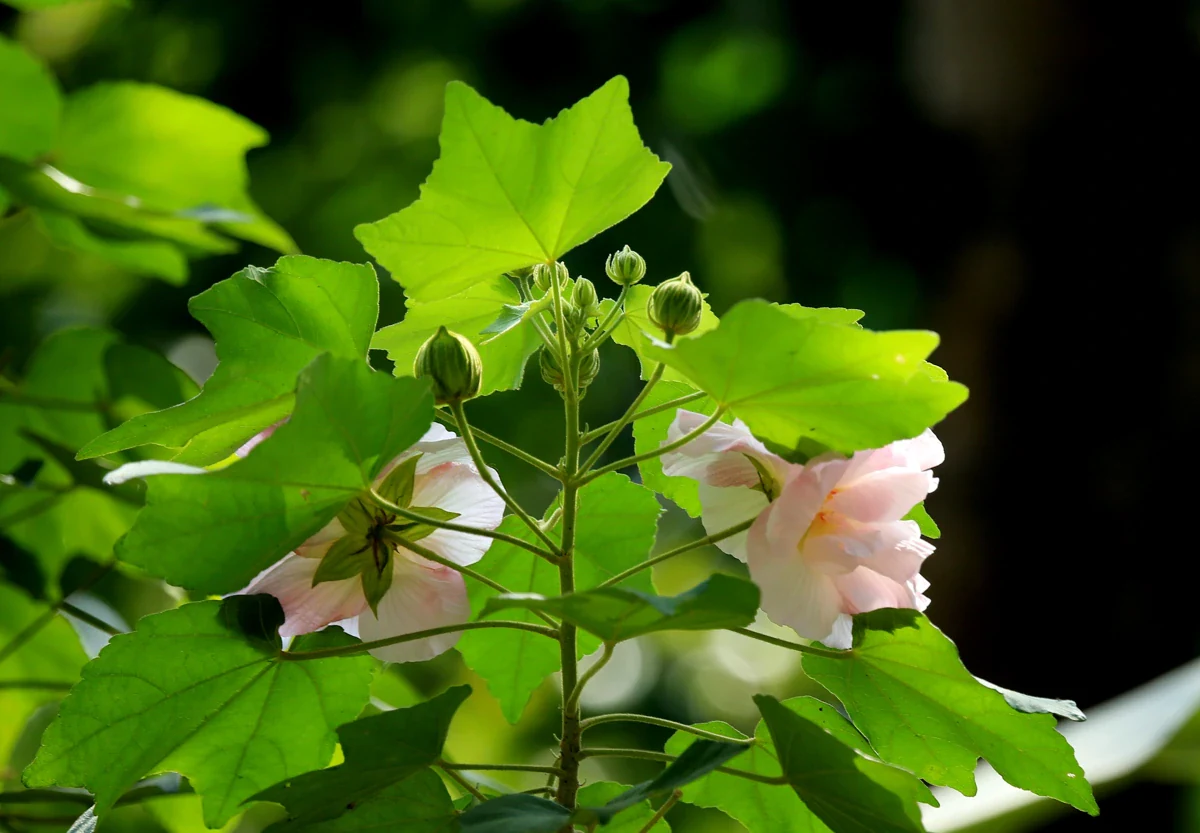
Off-site Hibiscus mutabilis example with broad lobed green leaves, unopened round buds and pale pink flowers on a branching stem.

An off-site example of Hibiscus mutabilis, photographed in November 2017, showing lobed leaves, buds and pale flowers. Toyama’s garden grows fuyō and suifuyō; this is not a photograph of its collection.

Hibiscus mutabilis11.jpg — Mini Anto, CC BY-SA 4.0 (https://creativecommons.org/licenses/by-sa/4.0/). Source: https://commons.wikimedia.org/wiki/File:Hibiscus_mutabilis11.jpg. Proportionally reduced from the published 4050 × 2811 original to 1200 × 833 pixels without upscaling; recompressed to WebP quality 92, method 6. No crop, retouching, added text or colour correction. EXIF omitted. Source previously processed in paint.net 4.0.19; no colour adjustment added. · Creative Commons

Walks and routes

Greenhouses and North Pond

A compact first visit with enough variety to feel complete. Use the entrance map to follow the garden paths around the North Pond; shorten the walk at any point and return toward Sunlight Hall.

Ask at the entrance for the best ramped route between rooms and pond paths. Avoid the stage passage marked on the map as impassable to wheelchairs.


Greenhouses and North Pond

Start at the main entrance and check which rooms are open. Give the tropical fruit and rainforest displays about 30–40 minutes.

Head out toward the North Pond, using the Yunnan collection side to reach the Flower Promenade. Pause for seasonal flowers or the contrast between planted collections and water.

Return along the other side of the pond through the useful-plant areas, choosing a short detour for fragrance, fibres or dyes. Finish at the greenhouse complex or take a break before leaving.

Add the South Pond and Japanese habitats

An optional extension from the Flower Promenade, rather than a tour of every woodland. It works best when you still have the energy to stop and compare plants.

The rockery and side paths need individual checking. Ask staff which surfaces and gradients suit your mobility needs; stay on the easier main circuit if uncertain.

Add the South Pond and Japanese habitats

Continue beyond the promenade to the South Pond and take the garden paths toward the rockery.

Look for the labelled seasonal display, then compare a nearby wetland planting with a woodland edge. How do leaf size, plant height and shade differ?

Return toward the promenade and rejoin the North Pond visit. Leave the farthest woodland paths for another day if time or energy is running short.

Things to try

Make a three-leaf field page

Choose three labelled plants in one open room or outdoor area. Draw the leaf outline, note whether the edge is smooth or toothed, and add the plant’s name. Compare the drawings over a break. A phone photograph works just as well; no collecting is needed.

Find a fruit in an unexpected place

In the tropical rainforest house, look for the calabash tree, labelled fukubenoki. Its large fruits develop directly on the trunk. The garden notes that dried fruit shells have been used as containers. If fruit is present, sketch its attachment point before comparing it with a crop in the tropical fruit house.

Join a short plant walk

The 2026–2027 programme lists Sunday walks from 13:30 to 14:00, meeting at the Sunlight Hall entrance. Volunteers or staff lead the first, second, fourth and fifth Sundays; the director leads the third. Major-event exceptions apply to the volunteer walks, so check the listing. English guiding is not stated.

A greenhouse-focused hour

Pick two open rooms and one display in Sunlight Hall, then take a break rather than forcing the outdoor circuit. Aim for one careful comparison, such as fruit positions or leaf shapes. During the 2026 repairs, leave the orchid house out of the plan.

Wildlife and habitats

Papaya

The garden lists papaya as a year-round point of interest. Start with its labelled plant and compare it with another fruit crop: are fruits, flowers or only leaves visible today? A bare plant can still be a good observation.

Tropical milkweed

Look closely at the flower structure when it is blooming, then compare the label with a neighbouring rainforest plant. The garden warns that this plant contains toxic compounds, so keep the activity to looking and drawing.

Pampas grass

The tall, pale plumes are a useful contrast to broad greenhouse leaves. Watch how the flower heads move in a breeze, keeping hands away from the sharp leaf edges.

Tea plant

A familiar drink begins as a living shrub. In autumn, look for the rounded petals of its flowers; the garden explains that this same plant supplies leaves processed into green and black tea.

Stories and discoveries

A local plant in a designed habitat

The Japanese Plant Zone recreates different kinds of vegetation rather than simply grouping every plant by flower colour. Etchū-misebaya gives the rockery a specifically Toyama connection.

A Madagascar connection

The rainforest house includes traveller’s tree, Ravenala madagascariensis. In its native Madagascar, ruffed lemurs drink nectar from its flowers. This is a story about the plant’s home ecosystem; Toyama’s display is the plant itself.

One shrub, several teas

The tea plant is a camellia relative. Green and black tea are different processed products of its leaves, so the small autumn flowers can make an everyday drink feel newly interesting.

When to visit

Spring

Use the cherry promenade as the main outdoor goal, then add a greenhouse. The cherry festival follows the actual bloom; get its dates from that year’s announcement rather than the general calendar.

Summer

Try the Japanese grassland and riverside displays for seasonal flowers, with a shorter outdoor walk on hot days. Occasional night-flowering-cactus openings are special events, not normal evening admission.

Autumn

Compare fruit and seeds, pampas plumes and tea flowers. Add the rockery if Etchū-misebaya is in season. For fuyō and suifuyō, ask staff whether any flowers remain before making a special detour.

Winter

Make the open greenhouse rooms the centre of your visit and add outdoor paths only as conditions allow. The shorter November–January day and the late-December/New Year closure need checking before a trip.

Getting there and practical advice

A break under timber beams

Dryas Hall is a timber-built room for lunch, rest and learning. Visitors can use it when it is not reserved. It also has nursing and rest facilities.

Pond-view café and shop

Coconut Island café faces the North Pond and is listed as open 10:00–16:00, following garden closure days. Confirm on arrival if a meal is essential. Dryas Shop sells garden goods and plants; stock varies.

Opening hours and admission

February–October: 09:00–17:00, last entry 16:30. November–January: 09:00–16:30, last entry 16:00. Ordinary adult admission is ¥630 in March–November and ¥420 in December–February. High-school students and younger, and visitors aged 70 or over, enter free; older visitors should bring proof of age.

Closed days

Normally closed Thursdays and 28 December–4 January. Thursday exceptions include public holidays, the first two Thursdays in April, Golden Week and 13–16 August. Special-event hours or charges can differ; check the current announcement.

From Toyama Station by bus

The garden lists departures from Toyama Station’s platform 6 on the Haginoshima circular route via Favore. Get off at Chūō Shokubutsuen-guchi (中央植物園口), then allow about 12 minutes for the approximately 700-metre walk. Check the current operator timetable and your return service.

Via Hayahoshi Station

Take the JR Takayama Line to Hayahoshi (速星). The garden’s diagram allows about 7 minutes by taxi or 30 minutes on foot from the station. The Fuchū community bus’s Usaka–Asahi route also serves Chūō Shokubutsuen-mae from Hayahoshi; check its operating days and timetable before relying on it.

By car

Use the address 42 Kamikutsuwada, Fuchū-machi, Toyama City (富山市婦中町上轡田42). The garden estimates about 15 minutes from Toyama Interchange. Parking is free; the site lists 328 ordinary-car spaces and seven designated accessible spaces.

The optional garden bus

When operating, the guided electric garden bus takes about 30 minutes and costs ¥200 for elementary-school age and above, with same-day booking. Service days, routes and times can change. Consult the monthly notice, especially in November, and ask about boarding needs before buying a ticket.

Choose your circuit with staff

Ask about the specific paths and rooms you want to use. Ramps and lifts support access, but the map explicitly rules out wheelchair passage at the promenade stage. The rockery should be treated as a separate access question.

Loans and family facilities

The entrance has 15 wheelchairs and 10 strollers for use when available, without reservations. Accessible toilets are provided. Nursing and rest rooms are in Dryas Hall, and changing beds are listed in all women’s toilets.

Visitor information

Autumn 2026: orchid-house repairs

Checked 16 October 2026: the garden’s notice schedules the orchid greenhouse to close from 1 September to mid-November for repairs. An exact reopening day has not been announced on that notice. The suggested visits below avoid that room; check the latest announcement before travelling. Check the homepage on stormy days too, as severe winds can trigger temporary closure.

Sources and useful links

Wildlife you might spot

4

Each card links to a full Explore page with photos, traits, and fun facts.

Snap map for this place

Start with the big picture, then zoom in to explore individual wildlife observations around this place.

Loading map…

Good to know before you go

Check the orchid-house reopening notice before coming specifically for orchids; repairs were scheduled from 1 September to mid-November 2026.

Pick two or three areas from the entrance map. The far woodland sections can wait for a longer visit.

For autumn tea flowers, look in the peony garden as well as the beds currently in bloom.

Photograph or sketch seeds and fallen leaves in place. Do not collect plants, insects, fruit or other plant material.

Bring a bag for your rubbish; the garden has no bins. Alcohol and pets are prohibited, with assistance dogs allowed.

Keep clear of pampas-grass leaf edges and other sharp or irritating plants; looking does not require touching.

Check your return bus before entering. Some public-transport approaches include a walk beyond the bus stop.

For work-related photography, arrange the required pledge with the garden and keep paths clear.

Frequently asked questions

Yes. Stay with the entrance greenhouses and the North Pond, then turn back when you have seen enough. The longer Japanese-habitat extension is optional.
Do not assume so. The orchid house is scheduled to be closed for repairs from 1 September to mid-November 2026. Check the current notice for its reopening and any changes to the other rooms.
No. Leave plant material where it is and do not taste the collection. Use photographs, drawings and the labels to make a discovery list instead.
Yes, if you concentrate on open greenhouses and current displays in Sunlight Hall. You will still need to get from the entrance to the buildings, so bring rain protection.
The published programme does not promise English guiding. Ask the garden ahead if language support is important.

Recent snaps at this place

Recent snaps will appear here as new observations are added.

View all ›

Take the discovery with you

Exploring Botanic Gardens of Toyama?

Identify the wildlife you spot, learn as you go, and keep a collection of the adventure.

  1. 1Spot it
  2. 2Snap it
  3. 3Keep the discovery




