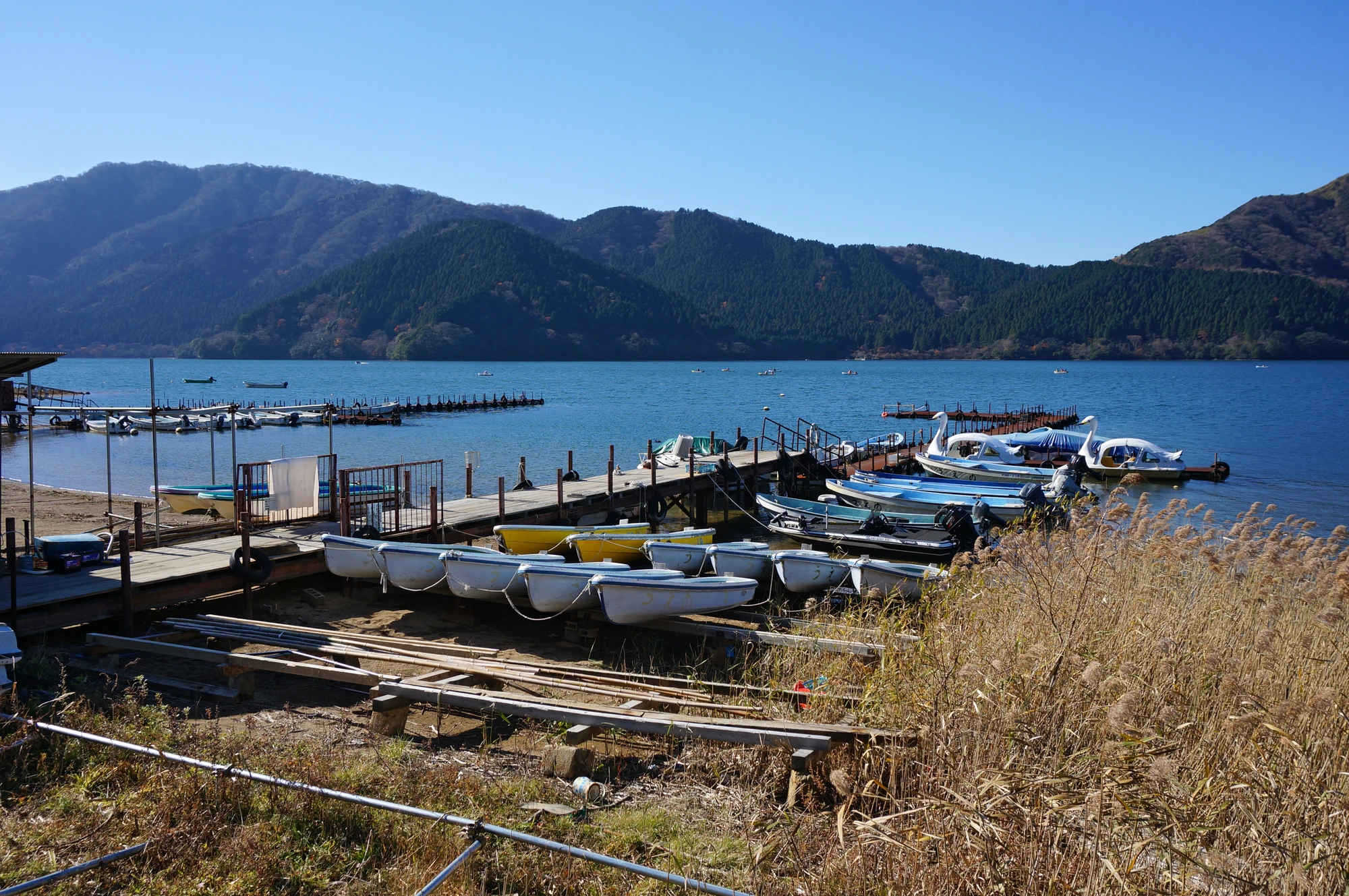
Fuji-Hakone-Izu is a national park with several very different journeys inside its name: Mount Fuji and its surrounding lakes, the Hakone mountains, the Izu Peninsula and the offshore Izu Islands. For a manageable first taste, make Hakone Visitor Center at Kojiri your base. This outing stays around the northern end of Lake Ashinoko, with time for woodland, birds and the lakeshore. Climbing Mount Fuji or reaching an Izu island calls for a separate trip.
Start indoors with the landscape itself. The center’s large map and topographic diorama help turn a ring of unfamiliar peaks into somewhere you can understand. Seasonal displays offer a reason to look closely outside, and the staff can help you choose a walk that fits the weather and your group. Leave some time for the lounge: the lake and surrounding mountains are worth enjoying without rushing straight back out.
The Ministry of the Environment’s recommended loop is only 2 kilometers, with 50 minutes of walking before stops. It links the Children’s Plaza, Wild Bird Sanctuary Forest, Shirayuridai grounds, the lakeside campground area, lakeshore recreation grounds and Flower Plaza before returning to the center. The pleasure is in the changes: shade and small movements in the trees, a quieter pause at the bird-observation hut, then open space and water. With children, give yourselves permission to spend longer at one good spot rather than treating the route as a checklist.
Birdwatching works well here even when you cannot put a name to every call. Pause, listen, and watch where branches move. The local park guide records long-tailed tits, willow tits and white-backed woodpeckers in the bird sanctuary, while fruiting trees help explain why this patch of woodland attracts birds. These are wild animals, so a visit may bring a brief glimpse, a sound from the canopy or no sighting at all. The forest and lake remain the point of the day.
The water also tells a volcanic story. Around 3,000 years ago, a collapse of Mount Kamiyama associated with volcanic activity helped dam the drainage and give Lake Ashinoko its present form. Look from the water back toward the surrounding slopes and then revisit the center’s model: the two views make more sense together. A clear view of Mount Fuji is a bonus on a wider Hakone trip, never a promise of this short loop.
Allow the visit to stay simple: a little learning, a gentle walk and a picnic if conditions suit. There is one important planning wrinkle for 2026–27. Renovation is scheduled to continue until 12 February 2027; the center remains open, but some exhibits or rooms may be unavailable, parking is reduced and temperature control may be affected. The theater is separately listed as out of service. Check the center’s current notice before making the indoor facilities the main reason for your journey. Take the ultimate field guide with you: use the Snappit app to identify birds, plants, and animals on your trip.
The national park was established on 1 February 1936. Its volcanic landscapes now extend across the Fuji, Hakone, Izu Peninsula and Izu Islands sectors. In Hakone, Lake Ashinoko’s present shape is linked to a major slope collapse and damming event around 3,000 years ago. The lake also has a long religious association with Hakone Shrine and the legend of a nine-headed dragon; the shrine itself lies away from this northern-lakeshore walk.