
Snappit logo
Snappit
Get App
Generic illustration, not a photograph of this venueIllustration
ParkChubu, Japan

Hamamatsu Flower Park

Hamamatsu Flower Park is a garden for choosing your own season.

About

Hamamatsu Flower Park is a garden for choosing your own season. In spring, cherry blossom and tulip beds compete for your attention; a little later, wisteria hangs over trellises and roses take their turn. The 30-hectare grounds follow the folds of the landscape near Lake Hamana, so the view keeps changing as you walk. Lawns, ponds and a large greenhouse give the planted displays a varied setting.

For a first visit, keep the plan simple: enter at the main gate, enjoy the fountain and Crystal Palace greenhouse, then choose one outdoor garden that is looking good that day. The greenhouse gives the outing a dependable centre, with changing displays and separate Bali and Mexican gardens. Outside, resist the urge to chase every name on the map. Time spent looking closely at one flower is often more rewarding than another hurried circuit.

There is plenty here for curious children. Look for a rose with a musical name, compare the shapes of neighbouring blooms, or watch how the fountain’s jets respond to the soundtrack. The Flower Train is a useful change of pace when legs get tired. If you want a near-complete ride, board at the main gate: everyone gets off there, even when they boarded partway around.

This is Hamamatsu Flower Park in Kanzanji, beside Hamamatsu City Zoo. Hamanako Garden Park is a different destination. Keep the flower park as a satisfying outing in its own right, and add the zoo only if you have the time and the right ticket. Enhance your adventure: download the Snappit app to identify the local species you encounter.

The park opened on 10 September 1970 as part of Hamamatsu’s 60th-anniversary celebrations, combining horticulture with a new visitor attraction near Kanzanji Onsen. Its work has included developing garden varieties as well as displaying them. The yellow-flowered iris Hamanako no Hikari, for example, is a cross between Japanese iris and yellow flag iris, rather than simply a yellow form of the ordinary Japanese iris.

What to do here

Start with the fountain and Crystal Palace, then follow the day’s flowering highlights to a wisteria trellis, the Rose Garden or the iris and hydrangea displays. Add a Flower Train ride or a picnic, leaving enough time to stop at the plants that catch your eye.

Seasonal info

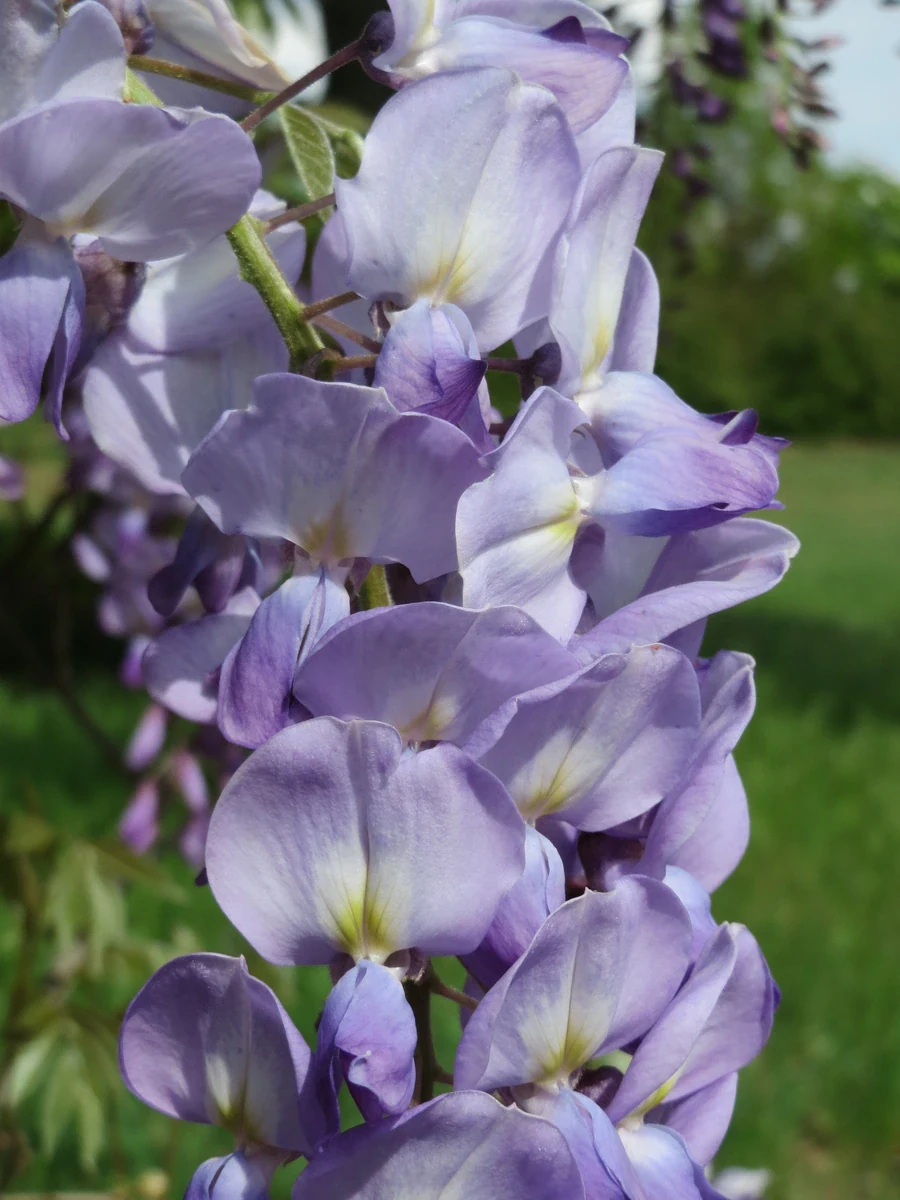
Wisteria is worth looking at twice: first as a whole curtain of flowers, then as individual blooms along a hanging cluster. The park grows several named forms whose peaks differ; its April 2026 reports show white wisteria and other displays reaching their best at different times. The photograph below is a botanical example from Germany, not a view of the park.

Accessibility

The grounds are hilly, and some paths are unsuitable for wheelchairs. As checked on 16 October 2026, the slope car was suspended after a breakdown, with no reopening date stated. Contact the park before travelling if you rely on it, and ask entrance staff for a suitable circuit. Free loan wheelchairs are first-come, first-served; they cannot be reserved.

Don't miss

1

Cherry blossom above colourful tulip beds in spring.

2

Wisteria trellises with different colours and flowering times.

3

The Crystal Palace greenhouse and its changing plant displays.

4

A fountain show whose music has a local Hamamatsu connection.

Walks and routes

Fountain, greenhouse and a seasonal garden

At the main gate, ask which flowers are at their best and pick up a map. Visit the fountain and Crystal Palace first, then choose one detour: wisteria in spring, roses in late spring, or the iris and hydrangea areas in June. Return by the signed public paths, or ask about a Flower Train stop if you are tired. Keep the route flexible rather than committing to every outer path.

Ask staff to adapt the sequence to your mobility needs. The map marks paths unsuitable for wheelchairs, and the slope-car suspension may affect your options. Ask staff about wheelchair boarding and the easiest place to get on.
Fountain, greenhouse and a seasonal garden

If you have only an hour

Keep the visit close to the main-gate attractions: a look at the current display, the fountain and Crystal Palace. Choose a few memorable plants rather than a distant garden, and allow time to return before closing. If hills are a concern, settle the route with staff first.

Things to try

Find a musical rose

The Rose Garden collects varieties with music-related names, reflecting Hamamatsu’s musical identity. Read a few labels and choose a favourite name, then compare its flower with the next plant. See how much the colour and petal shape change from one named variety to the next.

Try a three-flower challenge

Choose three flowers you can see from the path. Which has the most open shape? Which hangs down? Which repeats its colour elsewhere in the bed? Sketch or photograph them without touching the display, and use the park’s plant guide to investigate the names later.

Listen to the fountain

Watch a performance and notice how the jets change with the music. The fountain’s 2020 renewal introduced pieces by Hamamatsu-born composer Toyono Suzuki, including works using Yamaha Electone and Kawai piano sounds. Ask on arrival for that day’s show times.

Leave time for a play break

The children’s area has a dinosaur slide, other free equipment and separately paid amusements. In the October 2026 notice, staffed attractions run on weekends and holidays, 09:00–16:00, with last reception at 15:30; free equipment is available daily. Bad weather can shorten or stop operation.

Make a shorter greenhouse visit

Crystal Palace offers an indoor plant stop when showers make the outer gardens less appealing. You still need to get there from the entrance, so bring rainwear and take care on the slopes. In severe weather, check opening notices before travelling.

Wildlife and habitats

Mexican bush sage

Look for purple, velvety-looking flower spikes in the autumn displays. The operator grows this plant in pots and documented a main-gate display in October 2026. Compare the texture visually rather than stroking the flowers.

Japanese iris

In the early-summer iris garden, look for yellow markings at the base of the showy outer flower parts. Different garden varieties have different shapes. Some yellow-flowered plants here are interspecific hybrids, so read their labels rather than assigning every iris to the same species.

Garden roses

Explore flower shapes as well as colours in the Rose Garden: some blooms are tightly filled, others open more loosely. Compare nearby labels and look for musical names. This collection contains many cultivated varieties, not a single wild rose species.

Rose of Sharon

Look for this flowering shrub around the waterfowl pond, where the park recorded flowers in late September 2026. Look for the Japanese label ムクゲ and compare its flowers with the garden roses: the similar English name does not make it a rose.

Japanese black pine

Take a break from flowers to look at dark bark and stiff needles. The park lists planted black pines on paths north of the Rose Garden. Stay on an open path, and skip a hilly detour if it does not suit your visit.

These are cultivated plants documented by the park. Use labels and the current flower report to guide your search; displays move and flowering changes through the year. Enjoy the plants from the paths and leave them untouched.

Stories and discoveries

A garden with musical names

With about 270 varieties, the Rose Garden has plenty of labels to explore, including a collection of music-related names. It is an easy connection to spot between the planting and the city beyond the gates.

Cherry blossom bred here

Early-flowering Kanzanji-zakura and Furusato-zakura are part of the park’s horticultural history. They help stretch the cherry season beyond the familiar late-March wave; check the early-cherry area if you visit in late winter.

When to visit

Spring: choose your flower

Cherry blossom and tulips overlap around late March–early April; later April brings wisteria, followed by spring roses. Different varieties extend each season, but they do not all flower together. Choose your priority and consult the current report before booking a flower-focused day.

Early summer: irises and hydrangeas

June is a rewarding alternative to the spring rush. Staff recorded both displays in flower on 4 June 2026. Compare the flower forms and colours, and bring rain protection without assuming wet-weather paths will be easy underfoot.

Autumn: look closely at the displays

Autumn rewards a slower search for individual plants. Mexican bush sage adds velvety purple flower spikes; the park grows it in pots for its autumn displays and reported it at the main gate on 14 October 2026. Ask what is looking best when you arrive.

Winter: greenhouse and evening lights

Use the greenhouse as the centre of a winter visit. The announced 2026–27 illumination runs 21 November–3 January, with lights from 17:00, a partial night opening and entry through the main gate. Closing varies between 20:00 and 20:30; 29–31 December remains closed. Check your exact date and return bus before staying late.

Off-site botanical example: a hanging cluster of pale violet Japanese wisteria flowers with broad upper petals and darker purple lower petals, photographed in Germany.

Japanese wisteria flowers, photographed in Hockenheim, Germany, in April 2015. This off-site example shows the flower form; it is not a photograph of Hamamatsu Flower Park or one of its named cultivars.

20150426Wisteria floribunda2.jpg — AnRo0002, CC0 1.0 (https://creativecommons.org/publicdomain/zero/1.0/). Source: https://commons.wikimedia.org/wiki/File:20150426Wisteria_floribunda2.jpg. Proportional downsampling to fit 1200 × 1200 pixels, without enlargement; encoded as WebP quality 92, method 6. No crop, retouching, colour correction or text added. EXIF omitted. · Creative Commons

Getting there and practical advice

Food and a rest

Hana no Sanpomichi is the café-restaurant at the main entrance; meal service normally runs 11:00–15:00, with drinks and desserts later. GREEN ROSE is inside Crystal Palace. Hours can change or shorten, so check before building a late lunch around either café.

For families

Nursing rooms are listed at the main entrance, children’s area and Furamound rest area. Bring hot water if you need it for formula, and bring your own stroller. Use the park’s toilet map to find changing and multipurpose facilities.

By train and bus

Travel to JR Hamamatsu Station, then take a Kanzanji Onsen-bound bus from stand 1 of the north-side terminal to Flower Park, about 40 minutes. The park describes roughly half-hourly service, but use the linked Entetsu timetable to choose actual departures and check your return.

By car

Use 195 Kanzanji-cho, Chuo-ku, Hamamatsu, Shizuoka. The operator estimates about five minutes from Kanzanji Smart IC or 15 minutes from Hamamatsu-nishi IC. Ordinary-car parking is normally ¥200 per visit during opening hours; seasonal or event arrangements can change.

Plan around the hills

Do not assume that a botanical garden is level. The official map identifies wheelchair-inaccessible sections. Call 053-487-0511 to discuss the slope-car outage and a suitable route before travelling if hills or transfers are a concern.

Wheelchairs and scooters

Wheelchairs are lent free of charge at entrance gates, subject to availability. Mobility scooters are listed at ¥300 per hour from the main gate only; busy conditions may suspend lending. Neither can be reserved. Ask staff about suitability rather than treating a rental as access to every path.

Visitor information

Current planning note: 16 October 2026

For 1 October–20 November, the homepage lists 09:00–16:30, last entry 16:00, and adult admission ¥500 including a ¥200 same-day shopping voucher; schoolchildren enter free. The slope car is suspended. Recheck both the visitor notice and your transport before travelling.

Sources and useful links

Wildlife you might spot

5

Each card links to a full Explore page with photos, traits, and fun facts.

Snap map for this place

Start with the big picture, then zoom in to explore individual wildlife observations around this place.

Loading map…

Good to know before you go

Check the homepage for today’s fee, flowering report and service notices before setting out.

Choose one seasonal garden to add to the fountain and greenhouse, rather than trying to cover everything.

Wear comfortable shoes with grip; hills and wet paths can make a short walk more tiring.

Bring water and a sun hat in warm weather, and plan a seated break.

Bring your own stroller. Outdoor wagons and wagon-like strollers are not permitted.

Pack a picnic for the lawns or rest areas; outside food cannot be eaten in the entrance café.

Keep to paths, leave flowers and seeds in place, and keep children back from pond edges.

Leave room for other visitors when photographing flowers. Tripods are not permitted inside the greenhouse.

Frequently asked questions

The annual daytime tariff checked on 16 October 2026 is ¥600–1,200 for adults and ¥300–600 for elementary and junior-high-school children in February–June, depending on the flowers. July–August is free. September–January is ¥500 for adults, including a ¥200 same-day park shopping voucher, with schoolchildren free. Preschool children enter free. Special evening openings have their own published arrangements.
Normally 09:00–17:00 in March–September, 09:00–16:30 in October–November, and 10:00–16:30 in December–February. Last entry is 30 minutes before closing. The park closes on 29–31 December for maintenance; seasonal evening events can extend opening hours.
Yes. From Hamamatsu Station’s north-side bus terminal, use stand 1 for a bus toward Kanzanji Onsen and get off at Flower Park. The operator allows about 40 minutes. Check the current Entetsu timetable for your outward and return trips.
No. A ride is ¥100 for adults and ¥50 for children aged three through junior high school, as checked on 16 October 2026. Everyone must alight at the main gate. Boarding there gives the fullest circuit; intervals vary.
Pets are not admitted, including in carriers. Guide, assistance and hearing dogs are permitted.
Usually not. Hamamatsu City Zoo is separately ticketed, although a combination ticket and a connecting gate are available. Tell the ticket staff if you plan to visit both, including if you qualify for a concession.

Recent snaps at this place

Recent snaps will appear here as new observations are added.

View all ›

Take the discovery with you

Exploring Hamamatsu Flower Park?

Identify the wildlife you spot, learn as you go, and keep a collection of the adventure.

  1. 1Spot it
  2. 2Snap it
  3. 3Keep the discovery





