Snappit logo
Snappit
Get App
Generic illustration, not a photograph of this venueIllustration
ParkKR

Incheon Grand Park

This is a large, varied park in Namdong-gu, at 236 Munemi-ro.

About

This is a large, varied park in Namdong-gu, at 236 Munemi-ro. Its botanical collections, woodland and family facilities reward choosing a few priorities rather than trying to cover everything. The lake is a useful first destination; the rose garden suits a seasonal detour, while the separately gated arboretum needs an earlier arrival. Incheon Arboretum is part of this park, so you can combine the two in one outing. Bring comfortable shoes and leave room in the plan for a slow return to your chosen gate. Be ready to snap and learn! Get the Snappit app to identify any nature species you find here.

The botanical part of the park has a conservation role as well as a visitor role. Incheon Arboretum opened on 2 October 2008 and became a registered public arboretum in 2010. Its collections emphasize plants of Incheon and the northwestern islands and coast, connecting a city park visit with the region’s varied habitats.

What to do here

Start with the lake and an easy stretch of park paths, then choose plants or woodland as your main theme. If the arboretum matters most, visit it first and enjoy the wider park afterward. Families can build the day around one reserved activity instead of crossing the entire grounds between attractions.

Seasonal info

In hot weather, shorten exposed stretches and carry water. After heavy rain, skip muddy or slippery woodland sections. In winter, plan the arboretum earlier in the day and use shoes with good grip when paths are icy.

Accessibility

The main entrance admits wheelchairs, but the official tourism listing warns of steep sections and stairs elsewhere. Ask the information desk for a suitable route between your chosen stops; a large park and a named barrier-free forest path do not make every connecting path step-free.

Don't miss

1

Lake views with a flexible out-and-back walk.

2

Seasonal roses beside the greenhouse area.

3

A timed arboretum visit among themed plant collections.

4

Woodland around Gwanmosan and a dedicated forest-wellness area.

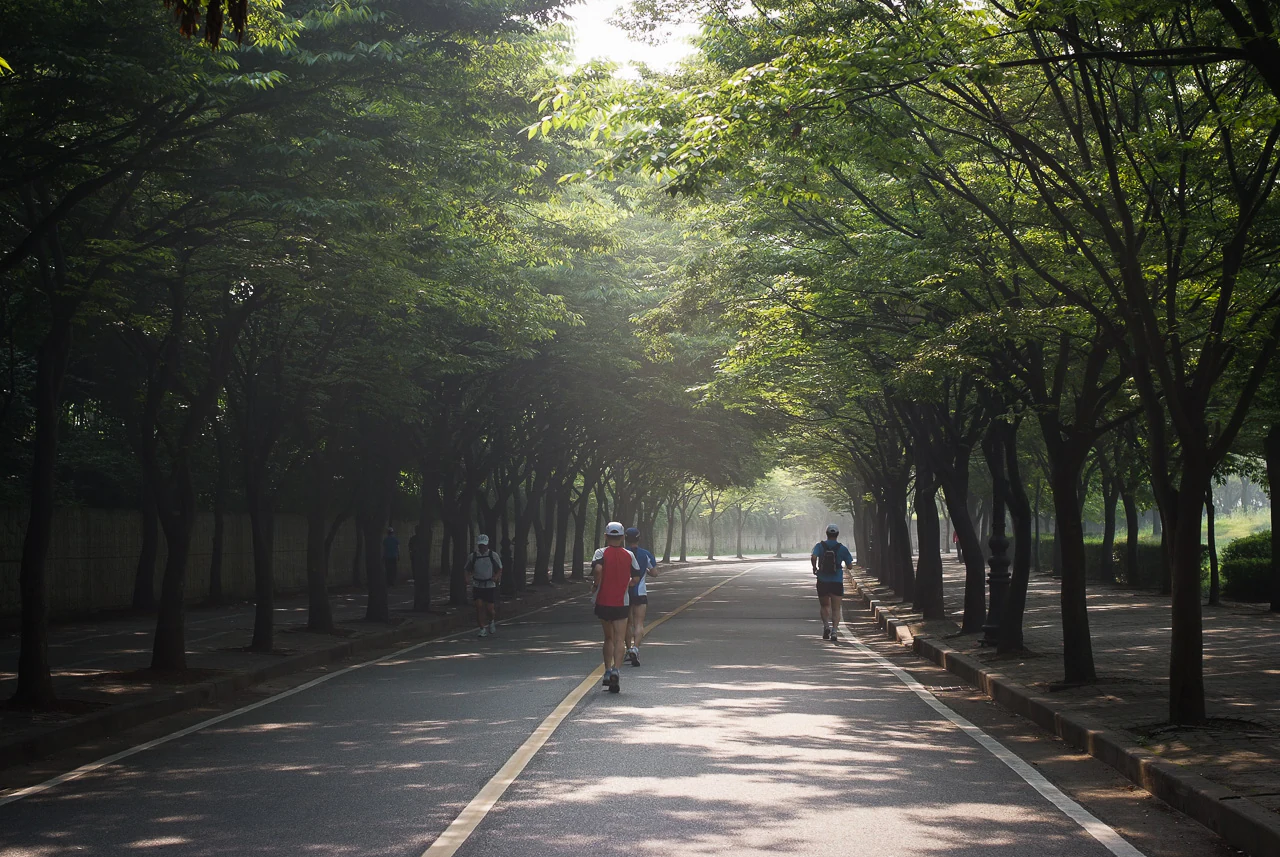
Walkers and joggers on a paved avenue beneath green trees, with shafts of light crossing the path.

A tree-lined avenue in Incheon Grand Park, photographed on 5 July 2009. The precise path is unconfirmed; this is a historical view.

Photo: “[인천대공원](https://www.flickr.com/photos/129322154@N03/15612431024/)” by old ccc (bluetree2014), [CC BY-SA 2.0](https://creativecommons.org/licenses/by-sa/2.0/deed.en). Unchanged original. · Creative Commons 1 · Creative Commons 2

Walks and routes

Lake first, then choose a garden

Use the official park information and map to find the lake from your entrance. Spend the first part of the visit along the waterside, then decide whether to add the rose garden or simply retrace a comfortable path. An out-and-back works well if you want control over walking distance; there is no need to complete a full circuit. This is a suggested order of stops, not a signed route or measured loop.


Arboretum first for a plant-focused morning

Enter during arboretum hours and choose a small number of themed collections from the arboretum map. The collection areas include theme gardens, rare/native and comparison gardens, and urban-greening displays. Give the labels time: a collection’s planting story can be more rewarding than hurrying to its far end. After leaving, take your meal break in the wider park and continue toward the lake if you still feel like walking.

Woodland as an optional extension

The forest-wellness area around Gwanmosan includes cypress woodland, a metasequoia forest path and a named barrier-free path. Treat this as a separate choice after the gardens, rather than assuming the lake walk leads seamlessly onto an accessible forest circuit. Use current signs or ask staff for the best entry and return. If the ground is wet or your group is tiring, a shorter tree-lined park walk is enough.

A manageable half-day

Choose the arboretum or a booked workshop as your fixed-time stop. Give the rest of the visit to the lake, a snack break outside restricted garden areas and an optional rose-garden detour. Before adding woodland, check the remaining daylight and the walk back to your exit. With small children, leaving one attraction for another day is usually more enjoyable than extending an already long walk.

A shorter visit

For a free hour or two, pick a single destination near your arrival route and return the same way. You can enjoy the park without reaching every named garden. If you arrive late, choose the wider grounds rather than rushing toward a facility whose entrance has already closed.

Things to try

Rose garden and close-up photography

The rose garden is beside the greenhouse, making it a natural place to pause over the color and form of cultivated flowers. Photograph from the path without moving stems or stepping between plants. A phone or handheld camera keeps your visit simple: tripods are prohibited in the arboretum and greenhouse, and commercial or plant-damaging photography is prohibited in the arboretum.

Wetland gardens with boundaries that matter

The pond garden and silvergrass garden are listed for self-guided viewing during park hours. Other wetland areas, including the rice-paddy wetland and early-childhood forest-experience areas, have restricted use to protect wildlife and plants. A visible path or field edge is not permission to enter. Keep to the designated visitor areas and only join restricted-area activities through the official arrangements.

Make something with wood

The Wood Culture Experience Center offers hands-on sessions ranging from young children’s wood play to craftwork for older children and adults. Booking online is the safest plan; walk-ins depend on spare places. Sessions and material charges vary, so choose the activity for your child’s age and check the current listing before building the day around it. The center normally operates 10:00–17:00 and closes Mondays, 1 January and the Seollal/Chuseok holiday periods.

A bicycle outing

Multi-seat bicycle rental is listed for March–November, 10:00–17:00, with no winter operation. The published charge is KRW 10,000 per hour, plus KRW 2,000 per extra ten minutes. Ask about the permitted riding area and return deadline before paying. This works better as its own activity than as transport between all the gardens, since bicycles cannot enter several visitor facilities.

Choose an indoor stop deliberately

The Environmental Future Hall explores water, land, waste and energy through exhibitions. The wood-culture center is another option if you have a suitable booking. Confirm opening and any participation requirements first; neither makes a long outdoor transfer comfortable in heavy rain. The greenhouse contains tropical/subtropical and succulent collections, but check its separate hours and the current closure notice before relying on it.

Wildlife and habitats

Plants, zoo animals and wild visitors

Read the garden labels for cultivated plants and keep zoo species separate from wildlife you might encounter on a walk. Roses here are horticultural collections, and a broad name such as “rose” does not identify one botanical species. For anything free-living, enjoy a quiet view from the path and keep food to yourself.

Stories and discoveries

A collection with a regional purpose

The arboretum combines conservation of local plants with examples of how plants can be used in city landscapes. Its garden themes include coastal-dune habitat and urban greening. That makes it worth looking beyond the showiest flowers: the way a bed is organized is part of the exhibit.

When to visit

Spring and early summer

Make blossom or roses your main reason for coming, then leave the rest flexible. A spring visit can be busy around flowering periods, so a weekday and a modest plan are sensible choices. Rose timing is a guide rather than a booking guarantee; wind, rain and temperature can shift the display.

Autumn and winter

Autumn suits a longer tree-lined walk and the park’s seasonal flower beds. A city account from October 2025 describes red spider lilies near the lake and cosmos and zinnias in Eoul Garden; planting schemes change, so treat these as examples rather than a current checklist. In winter, favor a shorter daylight outing and check an indoor venue before counting on it for warmth.

Getting there and practical advice

Opening hours: three different clocks

The main park lists 05:00–23:00 in summer and 05:00–22:00 in winter. The arboretum lists 10:00–18:00 in March–October and 10:00–17:00 in November–February, with last entry one hour before closing; winter closing can adjust with sunset. The greenhouse lists 10:00–18:00 in March–November and 10:00–17:00 in December–February. Arboretum and greenhouse both close Mondays, 1 January and the Seollal/Chuseok holiday periods. Their November schedules differ, so check the particular place you want to visit.

Zoo hours after reopening

When operating normally, the Children’s Zoo lists 10:00–17:00, last entry 16:50, with Monday, 1 January and the actual days of Seollal and Chuseok closed. Admission is free. The closure notice above takes priority. Once visits resume, watch quietly, do not feed the animals or tap the glass, and switch off flash photography.

Useful everyday facilities

The park lists toilets, snack shops and food outlets. Locate a toilet before starting a longer garden visit, and bring the essentials for your group rather than relying on every outlet being open. The information desk is listed as operating 09:00–18:00. Keep a charged phone and agree on an obvious meeting point if your group splits up.

Arrive by subway

Incheon Subway Line 2’s Incheon Grand Park Station serves the south gate. This is a straightforward option for a walking visit. If meeting friends who arrive by car, agree on a named meeting place rather than saying only “the entrance”: the main gate and south gate are different arrivals. For a bus connection, check a live journey planner on the day.

Parking and getting back to the right gate

The parking operator lists areas at the west/main gate, east gate at Manuigol and Suhyeon Village. Published daily charges are KRW 3,000 for a small vehicle and KRW 4,000 for a large vehicle, per entry/exit within the calendar day; card payment only. Parking’s 24-hour operation does not extend garden opening hours. Save your parking-area name before walking away.

Plan the connection, not just the destination

The tourism listing records accessible parking, toilets, an information desk and stroller rental for children under 24 months, while warning that some approaches have steep slopes and stairs. The national accessible-tourism guide also identifies the Gwanmosan barrier-free path and a lift, ramp and accessible toilet at the wood-culture center. These are useful starting points for planning, not a guarantee that every connection is suitable. If you need a step-free visit or a loan wheelchair, confirm the exact route and current availability with the park before travel.

Visitor information

Before you go: checked 18 October 2026

The Children’s Zoo is closed from 21 September 2026 until the foot-and-mouth disease outbreak ends. The greenhouse is scheduled to close on 20 October for heating-equipment replacement, with reopening after work finishes. Check the latest park notices before making either the focus of a visit.

Sources and useful links

Wildlife you might spot

4

Each card links to a full Explore page with photos, traits, and fun facts.

Snap map for this place

Start with the big picture, then zoom in to explore individual wildlife observations around this place.

Loading map…

Good to know before you go

Save the official park map before leaving and note which gate you used.

Make your last stop close enough to leave without rushing.

Eat before entering the arboretum; food and picnic mats are prohibited there.

Leave the tripod at home for an arboretum or greenhouse visit.

Keep children close at the water and where bicycles share the space.

Check the notice board before promising a particular attraction to children.

Frequently asked questions

General park admission and arboretum admission are free. Parking, bicycle rental and some activities have separate charges; reserve and check the total for any paid program before visiting.
The wider park is open year-round, but Monday is the regular closure day for the arboretum, greenhouse, zoo and wood-culture center. Choose a lake-and-walk visit that day, and check holiday notices.
Dogs can accompany a wider-park walk on a leash, with waste bags. Pets cannot enter the arboretum, greenhouse, zoo or Environmental Future Hall. Assistance-dog access is listed by the tourism authority; ask the relevant facility about the route and arrangements.
Ordinary viewing is separate from the bookable guided and educational programs. Arrive before the arboretum’s last admission and use the current reservation listing if you want a scheduled activity.

Recent snaps at this place

Recent snaps will appear here as new observations are added.

View all ›

Take the discovery with you

Exploring Incheon Grand Park?

Identify the wildlife you spot, learn as you go, and keep a collection of the adventure.

  1. 1Spot it
  2. 2Snap it
  3. 3Keep the discovery