Snappit logo
Snappit
Get App
Generic illustration, not a photograph of this venueIllustration
ParkChubu, Japan

Minami Alps National Park

At Hirogawara, the Southern Alps begin with a river, a forest and a very big skyline.

About

At Hirogawara, the Southern Alps begin with a river, a forest and a very big skyline. This mountain gateway sits at about 1,500 meters beside the Norogawa River, with Kitadake rising to 3,193 meters beyond it. You can enjoy the view without climbing Japan’s second-highest mountain. A satisfying visit stays close to the Norogawa-Hirogawara Information Center, takes in the mountain outlook near the suspension bridge, and adds a gentle-paced look around Hirogawara’s wooded garden when conditions allow.

Start inside the information center beside the bus terminal. Ask about the return service and the day’s path, weather and wildlife conditions before choosing your walk. The upstairs information area and lounge were renewed in 2025, making this a useful place to get your bearings as well as wait for transport. The park’s conservation story is worth a little time: sika deer can change a forest by browsing its plants, and protecting the Southern Alps’ flowers involves active work rather than simply leaving everything alone.

For the outdoor part, head toward the Kitadake trailhead suspension bridge. On a clear day, the view here gives a strong sense of how far above the valley the peaks stand. Across the river, Hirogawara Enchi, the wooded garden area, offers a closer look at the forest. Katsura trees are a highlight, alongside maples and other broadleaved trees. Take your time with the trunks, canopy and forest floor instead of treating this as the first stretch of a summit hike. Stay on the open paths and boardwalk sections, and turn back wherever staff advice, a barrier or your group’s comfort calls for it.

The wider national park reaches across Yamanashi, Nagano and Shizuoka. Its high mountains were raised by tectonic forces, and glaciers shaped parts of the upper landscape. Rock ptarmigan and rare summit flowers belong to that higher world; neither is a reason to keep following a mountain trail on this short visit. The valley’s trees, changing light and river are enough for a rewarding outing, including when the summit disappears into cloud.

The commitment here is often the journey. Hirogawara has seasonal bus and taxi access, private-car restrictions and a long winter shutdown. Heavy rain can close the approach roads even during the operating season. Bring food, warm layers and rain protection, choose your ride home before you start walking, and leave room in the day to change plans. This is a manageable mountain-gateway visit for prepared walkers, with a remote setting that deserves respect. Enhance your adventure: download the Snappit app to identify the local species you encounter.

Hirogawara was once a timber-working gateway. In the Edo period, logs were carried downstream through the Norogawa, Hayakawa and Fujikawa river system; local timber was used in repairs to Edo Castle in 1834. Mountain recreation later became central to the area. Minami Alps National Park was established on June 1, 1964. The present Hirogawara Sanso opened in June 2022 beside the bus-terminal area, replacing the older hut across the river.


What to do here

Spend time in the information center, enjoy the Kitadake view near the suspension bridge, and, if the garden paths are open and suitable for your group, cross to Hirogawara Enchi for a slow forest walk. Look at katsura trunks and maple leaves, compare conifers with broadleaved trees, and ask how deer browsing affects the vegetation. Return to the bus-terminal area for a break; Hirogawara Sanso is now beside the center, on the terminal side of the river.

Seasonal info

The center’s published 2026 season is June 15–November 3, while the normal bus-access season starts June 26. An open facility date does not mean the access road is open to visitors. Winter road closure is planned from November 4 and may begin earlier with snow or ice; do not use walking along the closed approach road as a workaround. Check the daily center calendar, road notices and bus timetable for your date.

Accessibility

The main information area is on the second floor, so ask the center about lift access if you need it. The garden approach involves a suspension bridge and woodland paths with boardwalk sections. Before traveling with a wheelchair or stroller, ask staff which paths suit your equipment, where there are steps and which toilets you can use. Check boarding and mobility-equipment arrangements with the bus or taxi operator too.

Don't miss

1

Kitadake’s skyline from the Hirogawara gateway when the clouds lift

2

Katsura trees and mixed woodland in Hirogawara Enchi

3

A mountain information center with a renewed upstairs lounge

4

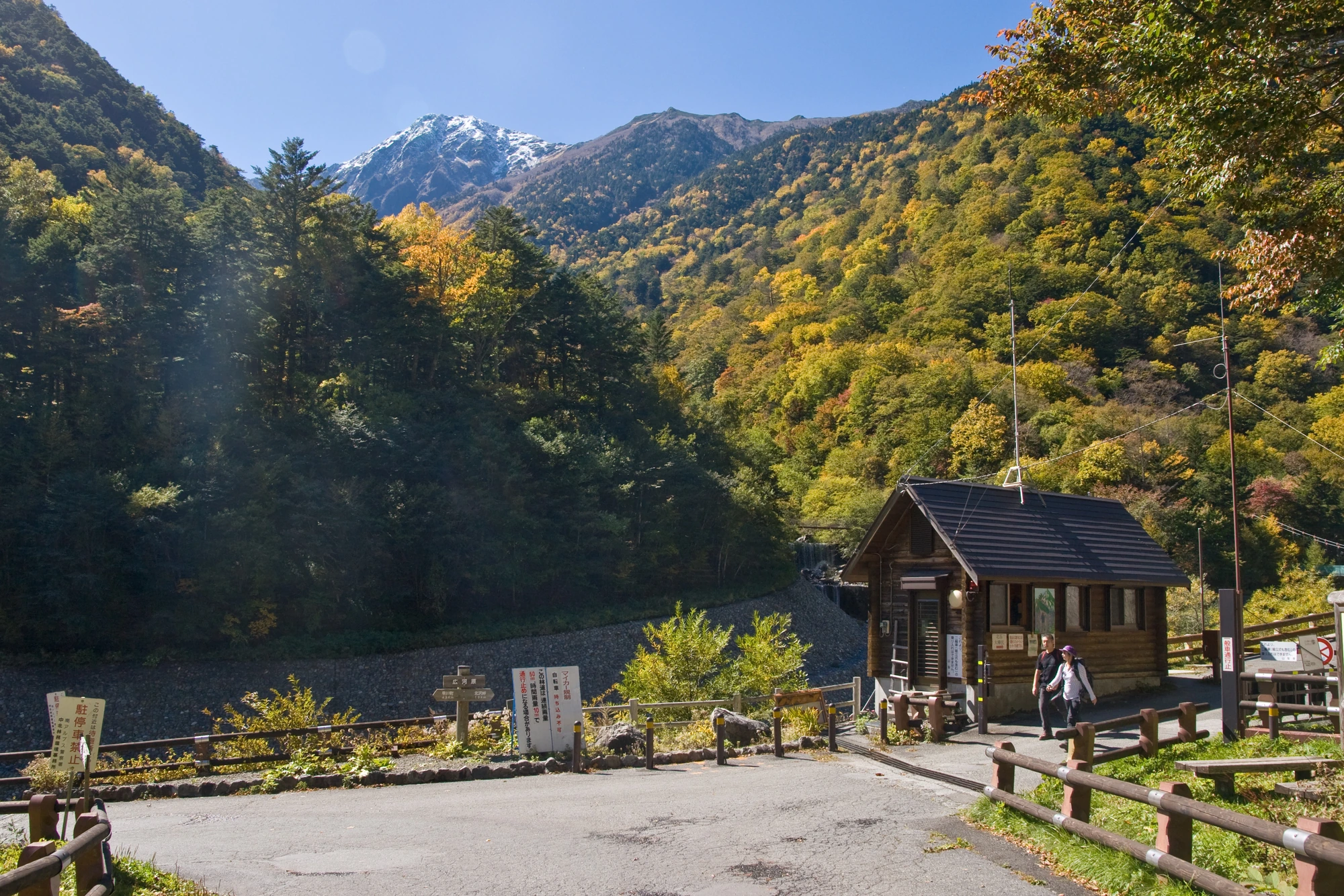
Autumn color above the Norogawa River

A snow-dusted mountain rises above autumn-coloured wooded slopes, with a small wooden building, roadside railings and visitors in the foreground.

Mount Kita rises beyond the wooded Hirogawara gateway in this view from 12 October 2015. The distant summit is mountain scenery, not the destination of the short gateway visit.

Mt.Kitadake from Hirogawara 05.jpg — Σ64, CC BY 3.0 (https://creativecommons.org/licenses/by/3.0/). Source: https://commons.wikimedia.org/wiki/File:Mt.Kitadake_from_Hirogawara_05.jpg. Resized and recompressed as WebP; no crop or retouching. · Creative Commons

Walks and routes

Center and bridge-side outlook

Start at the center and ask for the local walking map. Walk toward the Kitadake trailhead suspension bridge for the mountain and river view, then return to the terminal area. Crossing the bridge is optional; a cloudy summit is a reason to enjoy the forest, not to climb higher in search of a view.

Allow 30–60 minutes, including time to look around and pause.

Keep this as the shorter option if anyone is tired or uncomfortable with a suspension bridge. Ask staff about steps and surfaces along the approach if using a wheelchair or stroller.

Center and bridge-side outlook

Hirogawara Enchi woodland visit

When staff confirm suitable conditions, cross the river using the pedestrian suspension bridge and follow the open local garden paths around the woodland. Pause by the katsura trees and compare the canopy with the forest floor, then return to the center. At trail junctions, remain with the garden visit rather than following the uphill mountain route.

Allow 45–90 minutes for a relaxed woodland visit with stops.

Expect a suspension bridge, woodland footing and boardwalk sections that may be slippery when wet. Ask staff which parts suit your mobility or equipment, and choose the shorter visit if the crossing or paths would be difficult.

Hirogawara Enchi woodland visit

A three-hour gateway stop from Kofu

A published 2026 example leaves Kofu at 09:05 and reaches Hirogawara at 10:58; the 14:00 return reaches Kofu at 15:55. That allows about three hours at the gateway without targeting the final bus. Recheck your date, current operation and platform before using it. Do not use this example for November 3 event restrictions.

On arrival, use the toilets, confirm the return bus and ask staff about local walking and bear conditions.

Spend about 20–30 minutes with the information displays, then enjoy the outlook near the suspension bridge.

If conditions and the group suit it, add the short Hirogawara Enchi woodland visit. Otherwise return to the center and keep the outing compact.

Have your packed lunch or a pre-checked meal, then return to the stop with a comfortable boarding margin. The walk is optional; the ride home is essential.

Things to try

Begin with the mountain story

Use the center’s information displays to connect the valley woods with the alpine habitats above. Ask how browsing deer alter the plants and what visitors can do to avoid adding disturbance.

Make the forest the destination

In Hirogawara Enchi, look upward at the mix of evergreen and deciduous crowns, then down at the vegetation beneath them. The old katsura trees and maples give a short walk plenty to notice. Leave leaves, flowers, bark and fungi where they are.

Follow the landscape with your eyes

From the permitted path, compare the fast river with the steep, forested valley around it. The Southern Alps were lifted by tectonic forces, while water continues to shape their valleys. Enjoy the river from above rather than treating it as a paddling stop.

Look for several shades of autumn

In October, compare the turning maples and other broadleaved trees with the remaining evergreens. Color develops at different times on different slopes and in different years. A light rain shower is very different from a forecast likely to close the road; choose the day accordingly.

Photograph the valley-to-summit contrast

Use the view near the bridge to show the forest and Kitadake together when visibility allows. Keep the bridge clear for other walkers and take photographs from the path.

Ashiyasu Mountain Museum

If the mountain forecast is poor, make a separate lower-gateway visit to the museum in Ashiyasu for mountain culture, natural history and books. Published hours are 09:00–17:00, normally closed Wednesdays with summer exceptions. Confirm the calendar and the route there. This option should be chosen before traveling up to Hirogawara, not treated as shelter within walking distance of the center.

Wildlife and habitats

Maples (genus)

Maples are a good reason to slow down in the Hirogawara woods, especially in autumn. Compare leaf outlines from the path; the local maples are not all the species commonly sold as Japanese maple.

Sika deer

The most useful deer encounter may be learning to read their effect on plants. Ask staff about browsed vegetation and bark damage; never feed or follow deer.

Asiatic black bear

This is bear habitat. Check local advice before walking; a bear is an animal to avoid approaching, not a sighting to seek. Stay alert where river noise may hide your approach.

Japanese macaque

Japanese macaques live in the wider park. If one appears, keep your distance, secure food and let it move on; do not leave the walking route to follow a group.

Rock ptarmigan

Learn about rock ptarmigan at the gateway, but do not expect them on the riverbank woodland walk. Their high-mountain habitat belongs to a separately planned alpine trip.

If you encounter a bear, do not approach, run or shout. Back away slowly while watching it, without turning your back. If suddenly attacked, protect your face and head with your arms. Follow local staff instructions and report the encounter when you can safely do so.

Stories and discoveries

Raised mountains

The Southern Alps are an uplifted, non-volcanic range. Their massive skyline records tectonic movement as well as later erosion.

A river once carried the timber trade

Hirogawara’s logs once traveled downstream toward the coast. The timber connection to Edo Castle is a reminder that this apparently remote valley has a long human history.

A quiet forest can tell a conservation story

A heavily browsed forest floor or damaged bark can be part of the local deer story. Ask staff to explain any signs you notice rather than assuming every bare patch has the same cause.

When to visit

early_summer

Wait for the access season to begin. The center may open before the public approach road, and snow can remain on higher trails. Check the road and bus opening dates before planning an early-summer visit.

summer

Enjoy the green valley on a stable-weather day. Carry rainwear and an insulating layer even if Kofu is hot, and allow for busy mountain transport. Cancel or shorten the plan if storms threaten the approach or local paths.

autumn

October is a good season to consider for the valley’s changing leaves. Bring warmer layers and check for early snow or ice. Finish comfortably within the return schedule; the mountain’s high slopes have different conditions from the garden.

winter_and_spring

Hirogawara is not a normal drive-up or bus day-trip destination during the winter shutdown. Choose a lower gateway such as Ashiyasu Mountain Museum, subject to its own calendar and access conditions.

Getting there and practical advice

Norogawa-Hirogawara Information Center

Seasonal information, exhibits and upstairs lounge beside the terminal. Entry is free. Toilets, water facilities and coin lockers are listed; ask about availability on arrival. In 2026 the city publishes June 15–November 3 opening, with hours in its daily calendar. Staff can advise on Wi-Fi access.

Hirogawara Sanso

The current lodge is beside the information center and terminal, rather than at the old site across the river. Its published 2026 season is June 26–November 3. Confirm dining service directly; book if staying overnight. Food-allergy accommodation is unavailable according to the operator.

Kofu via Ashiyasu

Use the seasonal Yamanashi Kotsu service from Kofu Station south exit, stand 1. The journey to Hirogawara is about two hours. The operator publishes separate date/day calendars. The 2026 one-way adult fare is JPY 2,400 from Kofu or JPY 1,450 from Ashiyasu parking, before the requested road-use contribution.

Drive to Ashiyasu or Narada, then transfer

Park at the designated lower-gateway parking area and continue by permitted bus or taxi. Do not navigate a private vehicle to the center itself. The 2026 regulated access window is June 26–November 3, with a 05:30–18:00 road gate window; those hours are not a bus timetable.

Narada approach

Narada has a separate seasonal bus to Hirogawara, with a published JPY 1,300 adult one-way fare in 2026. If arriving from Minobu by local bus, check both connections carefully. Return to the side where you left your car, and avoid choosing this approach solely from a map without checking the sparse timetable.

Road-use contribution

Yamanashi requests a voluntary JPY 300 contribution per person for each passage of the regulated road, separate from the bus or taxi fare; elementary-school-age children and younger are exempt. Carry yen for transport and small local expenses.

Closures and the missing through connection

Heavy rain, road damage and snow can interrupt seasonal access. On November 3, 2026, cycling-event restrictions affect both approach sides and cancel some services. The Hirogawara–Kitazawa Pass bus is suspended, with no through walking connection; return toward Ashiyasu or Narada.

Before the journey, tell the center and transport operator about your equipment and what assistance you need. Ask whether you can board the chosen bus or taxi, reach upstairs information and suitable toilets, and comfortably use the open outdoor paths. If the garden crossing is unsuitable, ask what you can enjoy closer to the terminal.

Sources and useful links

Wildlife you might spot

5

Each card links to a full Explore page with photos, traits, and fun facts.

Snap map for this place

Start with the big picture, then zoom in to explore individual wildlife observations around this place.

Loading map…

Good to know before you go

Save your outward and return timetables before leaving Kofu or the parking area. Aim for a return with a later service still available, rather than making the last bus your plan.

Private cars, motorcycles and bicycles cannot continue along the regulated approach to Hirogawara. Use the permitted bus or taxi services from Ashiyasu or Narada.

Check road and weather notices before travel and again before boarding. Heavy rain can stop buses and taxis as well as close walking areas.

Bring a packed lunch, drinking water, warm layers, waterproofs and shoes with a good grip. Do not make food purchases or a clear summit view essential to the day.

Check recent bear information and ask the center for local advice. Make your presence known, keep food secured and take every scrap of rubbish away. Never approach a bear or cub.

Keep children beside you near the river, road and bridge. Stay out of the river and do not leave the paths for photographs or plants.

Stop at the garden paths

signs toward Kitadake or Shirane-Oike lead into a different, strenuous mountain outing. Do not improvise a summit extension.

For November 3, 2026, use the operator’s special event notice instead of assuming the normal timetable. The Hirogawara–Kitazawa Pass through route is also unavailable; it is not an exit toward Nagano.

Frequently asked questions

Yes. The information center, mountain outlook near the suspension bridge and Hirogawara Enchi make a worthwhile gateway outing. Keep to the open local paths. Kitadake’s summit is a separate, strenuous mountain objective with very different preparation and timing.
No. During the operating season, leave a private car at the designated Ashiyasu or Narada parking area and transfer to a permitted bus or taxi. The approach closes for winter outside the seasonal access period; it does not reopen to private cars.
Entry is listed as free. Its 2026 operating period is June 15–November 3, with daily hours shown in the city’s calendar. Bus access starts later, on June 26. Check both the building’s calendar and transport for the actual date, especially near the season’s ends.
Check the journey and walking demands against your group’s needs before committing. The bus ride is long, and children need close supervision beside the river and on the suspension bridge. For a wheelchair or pushchair, ask about the bridge, path surfaces, steps and toilets, as well as access to upstairs exhibits and transport boarding. You can keep the outdoor visit short if needed.
These are features of the higher mountains, not expected sights on the Hirogawara garden walk. Use the center to learn about them, and enjoy the valley’s trees and seasonal plants outdoors. Wildlife sightings anywhere in the park are unpredictable.
Hirogawara Sanso beside the terminal offers seasonal accommodation and dining facilities. Confirm meal service directly and reserve accommodation before relying on it. The operator says it cannot accommodate food allergies, so visitors with dietary needs should plan their own suitable food. Carry a lunch for a simple day visit.
Choose a lower-elevation alternative rather than relying on the center as a rainy-day destination. Rain can close the approach roads, leaving the transport plan uncertain. Ashiyasu Mountain Museum is a useful separate option if it and its access roads are open.
Not on this visit. The Hirogawara–Kitazawa Pass bus is suspended in 2026 and the through road cannot be walked end to end. Plan to return on the same access side, even if an older map shows a connection.

Recent snaps at this place

Recent snaps will appear here as new observations are added.

View all ›

Take the discovery with you

Exploring Minami Alps National Park?

Identify the wildlife you spot, learn as you go, and keep a collection of the adventure.

  1. 1Spot it
  2. 2Snap it
  3. 3Keep the discovery