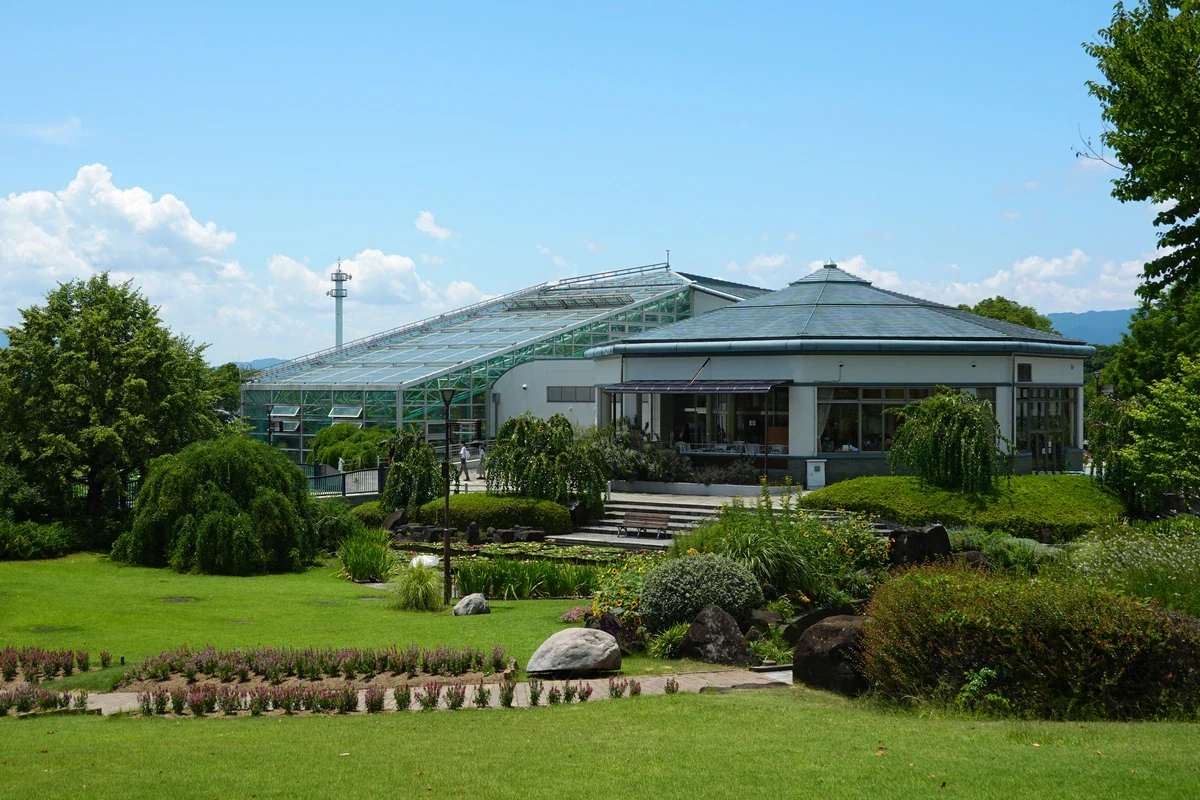
At Mizunomori, a pond is much more than a pretty backdrop. Some leaves float, some stand above the water, and others spend their lives below it. This municipal botanical garden on Kusatsu’s Karasuma Peninsula brings those differences close enough for children to notice without turning the day into a long hike. Give yourself time to stop, compare shapes and look twice.
In summer, start with the cultivated lotuses in the Teaching Garden and the displays around Lotus Hall. Then try to spot the differences between a lotus leaf and a water-lily leaf. Come in the morning, when more flowers are open. The huge natural lotus colony once growing beside the peninsula disappeared in 2016; today’s visit centres on the garden’s cultivated plants, including the community’s Hasu Ippai planting project.
Lotus Hall, also called the Lotus Pavilion in the English leaflet, gives the visit an indoor half. Its greenhouse contains tropical water lilies, while the small aquarium lets you look sideways into the world of submerged plants. Seek out nejiremo, a Lake Biwa plant with twisting, ribbon-like leaves, then use the displays to explore the place of lotus flowers in science and culture. The heated greenhouse is useful on a cold or rainy day, but it can feel warm in summer.
Outside, take a breather on the lakeside lawn or let younger children try the small play area. You can bring lunch for the designated eating spaces. A gentle garden visit works particularly well here: a flower stop, an indoor discovery and a little unhurried time looking across the lake. Take the ultimate field guide with you: use the Snappit app to identify birds, plants, and animals on your trip.
Mizunomori opened on 13 July 1996 beside the natural lotus beds of Lake Biwa. After the neighbouring wild colony disappeared in 2016, the garden started the Hasu Ippai project in 2017. Staff and local participants cultivate lotus plants within the garden, keeping a connection with that lost seasonal landscape.