Okayama Korakuen rewards a slow circuit rather than a dash between famous views. The garden opens out into lawns and Sawa-no-ike Pond, then draws you closer to a stream, a little bridge or a shaded grove. Look across the water first, then walk a little farther and see how the arrangement changes. Okayama Castle sometimes enters the view across the river, but it is a separate attraction with its own admission arrangements.
Start at the Main Gate if you want advice, a loan stroller or wheelchair, or a straightforward return to the same entrance. Choose a few anchors: the pond, Ryūten Rest House with water running through it, the seasonal planting, and a tea break. Yuishinzan Hill adds a raised viewpoint, but the garden still makes a satisfying outing if you stay on the lower paths. Follow the barrier-free map rather than treating every small bridge or shortcut as interchangeable.
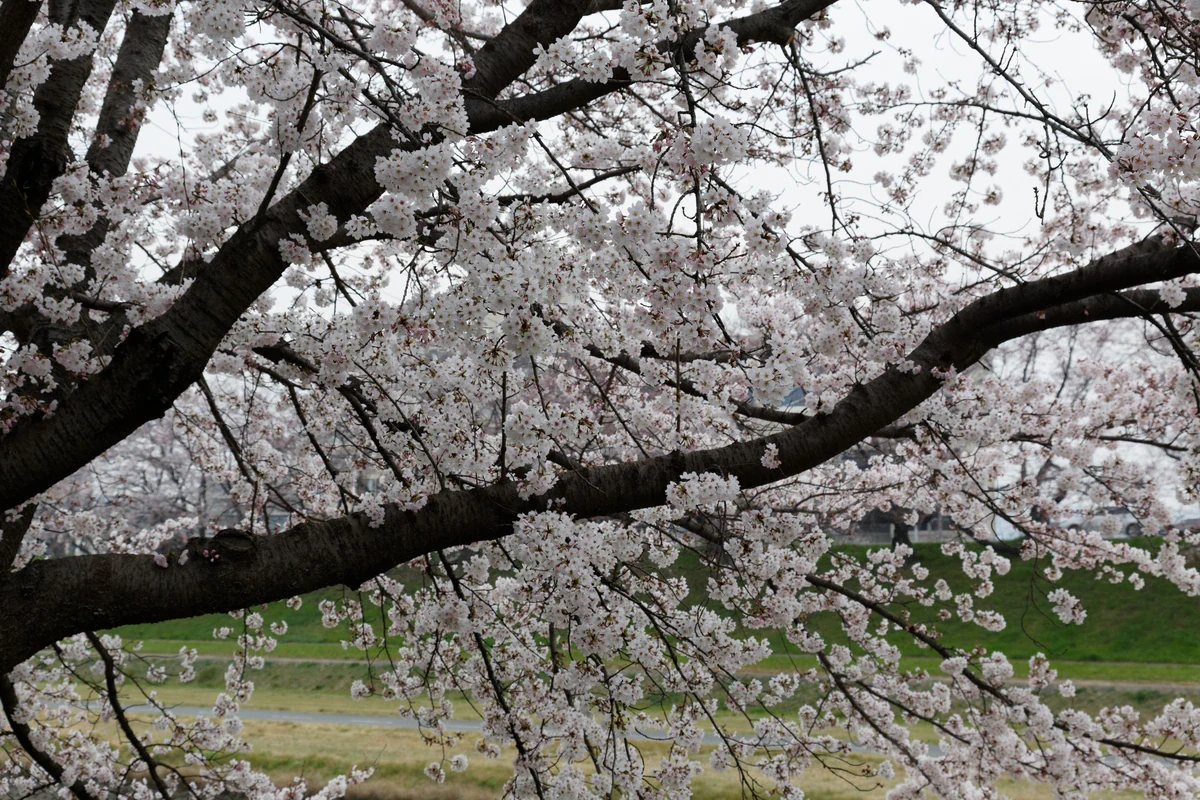
The planted landscape is part of the story. Tea bushes and the Seiden fields recall a garden that once contained substantial farmland; flower beds and groves give a different reason to return through the year. Families can make the visit a gentle looking game: find a reflection, follow the direction of a stream, and compare two leaf shapes. Keep children close at the water and save running games for another stop.
The red-crowned cranes belong to a managed captive population, usually kept in their aviary. Occasional supervised walks bring them onto the lawns, subject to the birds’ condition and the day’s arrangements. Plan the garden as the main pleasure, with flowers, birds and special events as welcome additions rather than a checklist you must complete. Enhance your adventure: download the Snappit app to identify the local species you encounter.
Lord Ikeda Tsunamasa ordered work to begin in 1687 under Tsuda Nagatada, and the garden reached an initial completion in 1700. Later lords reshaped it, including the addition of Yuishinzan Hill. Okayama Prefecture took ownership in 1884. Flooding in 1934 and the air raid of 1945 caused severe damage, followed by restoration using historical records. Designated a Special Place of Scenic Beauty in 1952, Korakuen is a preserved and repaired cultural landscape whose history is still visible in its water, buildings and planting.