
Snappit logo
Snappit
Get App
Generic illustration, not a photograph of this venueIllustration
ParkKyushu, Japan

Suizenji Jōjuen Garden

Suizenji Jōjuen is a garden for taking your time.

About

Suizenji Jōjuen is a garden for taking your time. Start beside the pond and let your eye travel from the water to the rounded grassy hills, then to the carefully shaped trees. The unmistakable little Mount Fuji gives the scene its playful sense of scale. The garden evokes the landscapes of the Tōkaidō, the historic road between Edo and Kyoto, but you can enjoy it without turning the visit into a hunt for every reference.

Water is the thread that holds the place together. Springs feed the pond, connecting this cultivated landscape to Kumamoto’s remarkable groundwater system. A short walk is enough to notice the contrast between the changing surface of the water and the deliberate shapes of the garden around it. Try looking back at the same hill from another point on the path: the composition shifts as you move.

There is more here than a beautiful view. Izumi Shrine keeps the garden connected to the Hosokawa family and to an active calendar of worship and traditional performances. The Six Flowers of Higo introduce another local inheritance: ornamental plants developed and cherished by generations of growers. Their displays change through the year, so an iris visit in early summer and a chrysanthemum visit in late autumn reveal different sides of the same garden.

For a first visit, give yourself an hour or a little longer, and leave room for tea if you want a slower finish. Kokin Denju no Ma, the historic building associated with the transmission of classical poetry, makes that pause feel part of the garden’s story. Families can keep things simple: a pond-side walk, a flower or leaf to study, and a few minutes to decide which view everyone likes best. Unlock an interactive field guide for this spot: get the Snappit app to identify nature on the go.

The garden grew from the temple and teahouse established by Hosokawa Tadatoshi in the early seventeenth century. His successors developed the grounds, with the strolling garden completed in 1671 under Hosokawa Tsunatoshi. Its name comes from a poem by Tao Yuanming. Izumi Shrine was founded here in 1878, following the devastation of the Satsuma Rebellion, and now owns and manages the garden. Kokin Denju no Ma was reconstructed at this site in 1912, adding a building with older Kyoto and Hosokawa associations to the landscape.

What to do here

Walk the garden circuit, stop at Izumi Shrine, and look for the current Six Flowers of Higo display. Add the Noh theatre and the Sōseki poetry monuments if you enjoy cultural details. Finish with paid matcha and sweets at Kokin Denju no Ma or its adjoining teahouse when service is available.

Seasonal info

Spring brings cherry blossom; early summer is a useful time to ask about Higo iris. Late autumn offers Higo chrysanthemums and sasanquas as well as changing foliage. Flowering dates and exhibition dates vary, so use the seasonal guide below as a starting point.

Accessibility

Loan wheelchairs are available at the main ticket booth. Contact the garden before visiting to discuss the most suitable entrance and paths, particularly if steps or uneven surfaces are difficult. The North Approach and the ordinary North Gate are separate entrances with different uses; see the access notes below.

Don't miss

1

The spring-fed pond and the grassy hill representing Mount Fuji

2

Izumi Shrine, with living traditions linked to the Hosokawa family

3

Seasonal Six Flowers of Higo displays and their distinctive flower forms

4

A garden-view tea pause at the historic Kokin Denju no Ma

Walks and routes

A slow garden circuit

Start and finish at the Main Gate. Use the pond as your point of reference and follow the garden paths between the stops below. This is a suggested sequence for looking around, so adapt it to flower displays, weather and the paths that feel comfortable.

Choose paths that suit your group and ask at the gate about step-free options. Skip any branch that is awkward rather than feeling you must complete a circuit.
Take in the pond and Fuji-shaped hill before setting off. Pick one feature to recognise again from the other side.

Visit Izumi Shrine, then decide whether to include the smaller Inari Shrine area. Pause respectfully if a service is taking place.

Continue to the Six Flowers of Higo area and look for labels or the day’s display information. One carefully examined bloom is enough for a worthwhile stop.

Include the Noh theatre and return towards the entrance side of the pond. Finish at Kokin Denju no Ma if you want tea; allow extra time for service.

Pond views and a shrine pause

If you are short of time or walking with a tired child, keep to a small selection of stops rather than rushing the full garden.

Choose paths that suit your group and ask at the gate about step-free options. Skip any branch that is awkward rather than feeling you must complete a circuit.

Enter at the Main Gate and spend a few minutes looking across the water.

Use the garden map to reach Izumi Shrine by a suitable path, then return towards the Main Gate.

Leave flower displays, the Noh theatre and a longer tea stop for another visit if the group has had enough.

An easy 90–120-minute visit

Keep the morning flexible. Begin with the pond views and shrine, add whichever seasonal display interests you, then choose between tea and a shorter finish. There is no need to complete every stop.

First 15 minutes: arrive, check the garden map and any notices, and enjoy the first pond view.

Next 40–55 minutes: walk at your group’s pace, stopping at the shrine and a flower display if one is available.

Final 35–50 minutes: take a rest or tea, revisit a favourite view, and return to your exit without rushing.

Things to try

Try a two-view sketch

Sketch the outline of the Fuji-shaped hill from one path-side position. Later, sketch it again with the trees and pond around it. The hill stays put, but the view you draw changes. Children can do this with a finger in the air instead of a notebook.

Follow the water in your imagination

Kumamoto’s groundwater begins with water entering the ground across the wider region, including the western Aso area and the Shirakawa river basin. Beside the spring-fed pond, ask where water travels when you cannot see it. Keep the activity on the path; there is no need to touch or collect pond water.

Make time for tea

Kokin Denju no Ma and its adjoining teahouse serve matcha and sweets for an additional charge. Choose this as a deliberate pause to look across the garden. Confirm service times, seating and group arrangements directly if you want to build your visit around it.

Keep a rainy visit short and comfortable

A light shower can be a reason to linger over tea or the exhibition, if those spaces are open. Choose a short pond-view walk between breaks and be cautious on wet surfaces. In heavy rain, strong wind or severe-weather warnings, postpone the garden visit and check the latest opening notice.

Wildlife and habitats

Higo iris: look at the shape, then the label

Higo irises are cultivated forms of Japanese iris, Iris ensata. In season, look for broad, spreading flower parts and a strong central shape. Compare the flower with its label rather than guessing a cultivar from its colour. Ask about the current display in early summer.

Higo chrysanthemums: notice the centre

These traditional cultivated chrysanthemums are worth a close look in late autumn. Notice the exposed golden centre and the outer florets, which can be flat or narrow and tube-like. The plant’s height and the balance between leaves and flowers are part of the display, too.

Cherry blossom: compare without guessing

The garden lists several kinds of cherry blossom, including Somei-yoshino, yamazakura and double-flowered cherries. Compare open flowers with unopened buds, or count the petals on a blossom you can see from the path. Use a plant label for a name; blossom colour alone is not enough.

Stories and discoveries

A garden tradition shaped by growers

Higo is the old provincial name associated with Kumamoto. Its Six Flowers tradition includes camellia, peony, Japanese iris, morning glory, chrysanthemum and sasanqua. Cultivation and the way a plant is presented matter as much as a mass of colour.

A building named for passing on poetry

Kokin denju refers to passing the interpretation of the Kokin Wakashū poetry anthology from teacher to pupil. The building’s association with Hosokawa Fujitaka, also known as Yūsai, gives a tea stop here an unusually literary backdrop.

When to visit

Spring: blossom and new growth

Cherry blossom is a highlight, while Higo camellias have a broad February–April season. Take time to compare flower forms, and check the garden’s latest flowering news if you are travelling specifically for blossom.

Late spring and early summer: peonies and irises

Higo peonies usually flower around late April to early May, followed by Higo iris around early to mid-June. Ask about displays before travelling. On a wet day, shorten the outdoor walk and leave more time for a rest.

Summer: greenery and a slower pace

Enjoy the contrast between green planting and open water. Higo morning glory is another seasonal interest, often shown through summer and early autumn displays. Choose the cooler part of the day, carry drinking water and take breaks rather than pushing through heat.

Autumn into winter: flower displays and garden structure

Look for chrysanthemums and sasanquas in late autumn, alongside changing foliage. As winter settles in, pay more attention to the shapes of branches, hills and reflections. Check event dates separately if you want to see a festival or exhibition.

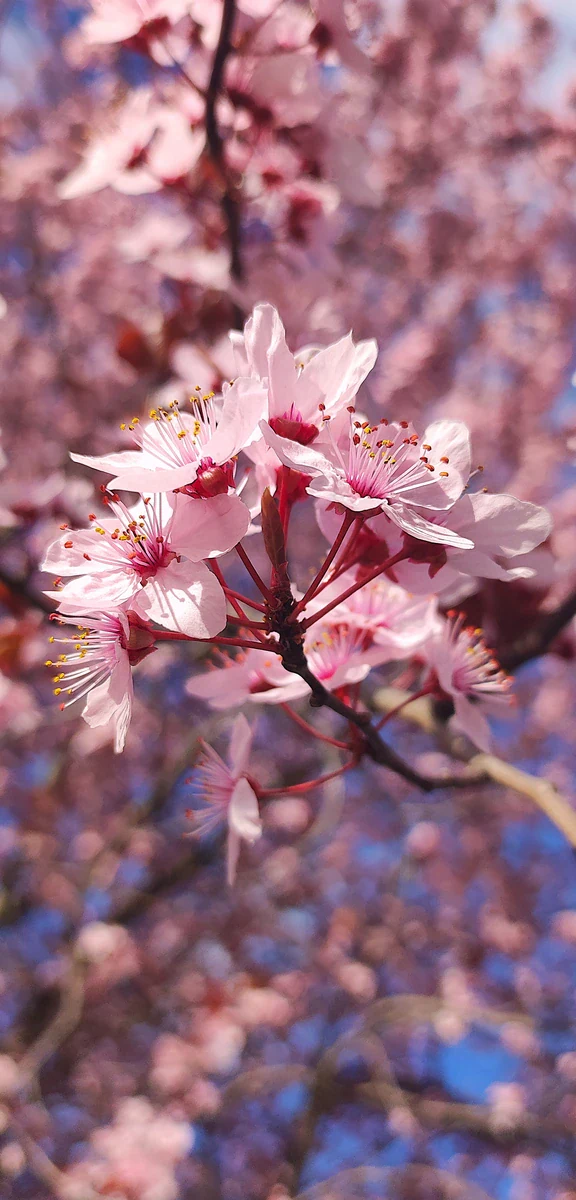
Off-site reference photograph of pale pink blossoms with fine yellow-tipped stamens clustered on a dark branch against softly blurred flowers.

Off-site botanical reference, not Suizenji Jōjuen: pale pink blossoms show how petals and fine stamens cluster along a flowering branch. The garden’s own spring display includes cherry blossom.

Emma4598 / Wikimedia Commons / CC BY-SA 4.0. Cherry_flowers_2025.jpg. Source: https://commons.wikimedia.org/wiki/File:Cherry_flowers_2025.jpg. License: https://creativecommons.org/licenses/by-sa/4.0/. Proportional downsampling to fit 1200 × 1200 pixels without enlargement; WebP quality 92, method 6. No crop, retouch, recoloring or added text. EXIF omitted. · Creative Commons

Getting there and practical advice

Rest area and exhibition hall

The rest area has heating and air conditioning, and the exhibition hall introduces the garden and Higo flowers. Check availability on arrival, especially around events and the New Year period.

Toilets and family needs

A nursing room is listed in the exhibition hall, with ostomate facilities in the east toilets. Ask staff which toilet and changing arrangements best suit your group.

Lockers and mobility support

Coin lockers and loan wheelchairs are listed at the Main Gate ticket booth. Check availability before relying on either, particularly with bulky luggage or a specific wheelchair requirement.

Guided visits

Japanese- and English-language garden guides can be arranged through Yūsuitei. Contact 096-285-8893 in advance for the available dates, price and group size.

By city tram

Alight at Suizenji Kōen, then allow about five minutes to walk to the garden. Follow signs for Suizenji Jōjuen and the Main Gate.

By JR train

Shin-Suizenji on the Hōhi Main Line is the useful nearby JR station. Allow roughly 10–15 minutes on foot; add time if you are walking slowly or carrying luggage.

By car

General visitors should use nearby paid parking. The garden’s prayer-service parking is not a general sightseeing car park. Arrange mobility-related access with the garden before driving to a side entrance.

Choose the entrance before travelling

The Main Gate follows the garden’s usual hours. The North Gate is listed as 09:30–16:00. A separate North Approach serves prayer visits and is also mentioned in the garden’s guidance for visitors with limited mobility. Call 096-383-0074 to confirm where to enter and how to reach the places you want to see.

Make the walk fit your needs

Ask staff which paths and building entrances suit your wheelchair, pushchair or walking aid. Choose a short return walk if that is more comfortable than a circuit. If you plan to have tea, ask about both the approach to the building and the seating options.

Sources and useful links

Wildlife you might spot

2

Each card links to a full Explore page with photos, traits, and fun facts.

Snap map for this place

Start with the big picture, then zoom in to explore individual wildlife observations around this place.

Loading map…

Good to know before you go

Use the Main Gate for a straightforward first arrival. The North Gate keeps shorter hours; the East, South and Sōseki gates are normally closed.

Bring shoes with grip, and slow down on wet paths. Keep young children close beside the pond.

Look at the garden from several places before choosing a photograph. A small change of position can change how the hill, trees and water fit together.

Ask which flowers are on display that day. The Six Flowers of Higo do not all bloom together.

Plan tea before the end of your visit rather than leaving it until the garden’s last admission time. Tea service has its own availability and charge.

Give worshippers space at the shrine. During festivals, follow staff directions and keep the horseback-archery course clear.

Ordinary personal scenery and family photographs do not need an application. Organised or commercial shoots need advance discussion with the garden.

Pets are not admitted, apart from assistance dogs. Smoking, bicycles and open flames are also prohibited.

Frequently asked questions

An hour to an hour and a half is comfortable for views and a few stops. Add time for tea, exhibitions or a festival; a brisk circuit takes less.
Izumi Shrine is within the garden, so it fits naturally into the same visit. Treat the shrine grounds as an active place of worship.
Tea is offered at Kokin Denju no Ma and the adjoining teahouse, but service depends on availability. Call 096-381-8008 if the tea stop is important to your plans or you are coming with a group.
No. They flower at different times, and some are presented in temporary displays. Ask what is showing when you arrive.
This guide covers the paid historic garden and its internal shrine grounds. The wider Suizenji Ezuko park area is a separate outing.
Personal scenery and family pictures are allowed without an application. Check the garden’s photography rules before arranging a commercial, model or other organised shoot.

Recent snaps at this place

Recent snaps will appear here as new observations are added.

View all ›

Take the discovery with you

Exploring Suizenji Jōjuen Garden?

Identify the wildlife you spot, learn as you go, and keep a collection of the adventure.

  1. 1Spot it
  2. 2Snap it
  3. 3Keep the discovery




