Snappit logo
Snappit
Get App
Generic illustration, not a photograph of this venueIllustration
ParkKansai, Japan

Umekoji Park

Umekoji Park makes a good change of pace between Kyoto’s temples and train journeys.

About

Umekoji Park makes a good change of pace between Kyoto’s temples and train journeys. Its roughly 13.7 hectares hold a broad lawn, places for children to play and a more intimate pair of green spaces behind the garden entrance. You can come for a free picnic and a look at the old trams, or spend a little longer discovering how a carefully composed garden and a growing wildlife habitat sit side by side.

The designed landscape is Suzaku-no-niwa. Around its central water garden, grassy mounds, little channels, planting and a waterfall keep changing the view as you walk. Pause at the Mizukagami, or water mirror: a thin layer of water over dark granite makes the surface unusually reflective. Rather than rushing round, try watching one reflection change with the breeze.

Inochi-no-Mori has a different purpose. Created in 1996 as a restoration habitat, it gives woodland and wetland life room to establish itself in the city. Ordinary visitors look into the forest from the elevated walkway, leaving the ground below largely undisturbed. Fallen leaves and tangled growth are part of the story here. A quiet few minutes looking between the branches can be more rewarding than trying to identify everything.

For a first visit, give the garden and woodland priority, then finish with a rest on the public lawn or a look at Shiden Hiroba’s preserved streetcars. Kyoto Aquarium and Kyoto Railway Museum can turn this into a much longer outing, but each has its own ticket and timetable. Choose one extra attraction rather than trying to squeeze both into a short park stop. Explore the grounds like a pro—download the Snappit app to instantly identify animals and plants.

The public park opened on 29 April 1995 on former railway freight-yard land. Inochi-no-Mori followed in 1996, with restoration shaped by the Kyoto Biotope Research Group. The garden and habitat together received national nature-coexistence-site recognition in 2024, reflecting both biodiversity and decades of monitoring and public learning.

What to do here

Pair the water garden with the woodland walkway, then choose a simple extra: a picnic, children’s water play when available, or the old streetcars. For a closer look at the habitat, check the guided nature-observation programme.

Seasonal info

Late winter brings plum blossom, followed by spring cherry blossom. Summer is leafy and warm, with crape-myrtle flowers; carry drinking water and use insect protection for woodland visits. Autumn foliage and flower exhibitions make good reasons to return, but check current notices for event dates.

Accessibility

Midori-no-Yakata has an elevator, and the garden entrance is on its upper floor. There is an accessible toilet, and you can ask about wheelchair loans. The garden and woodland include stepped paths, bridges and a ramp, so ask staff which route suits your wheelchair or stroller before buying a ticket: 075-352-2500.

Don't miss

1

Suzaku-no-niwa’s dark water mirror and changing reflections.

2

The elevated view into Inochi-no-Mori’s restored woodland.

3

A spacious public lawn for a slower family break.

4

Preserved streetcars at Shiden Hiroba, with a short operating tram on scheduled days.

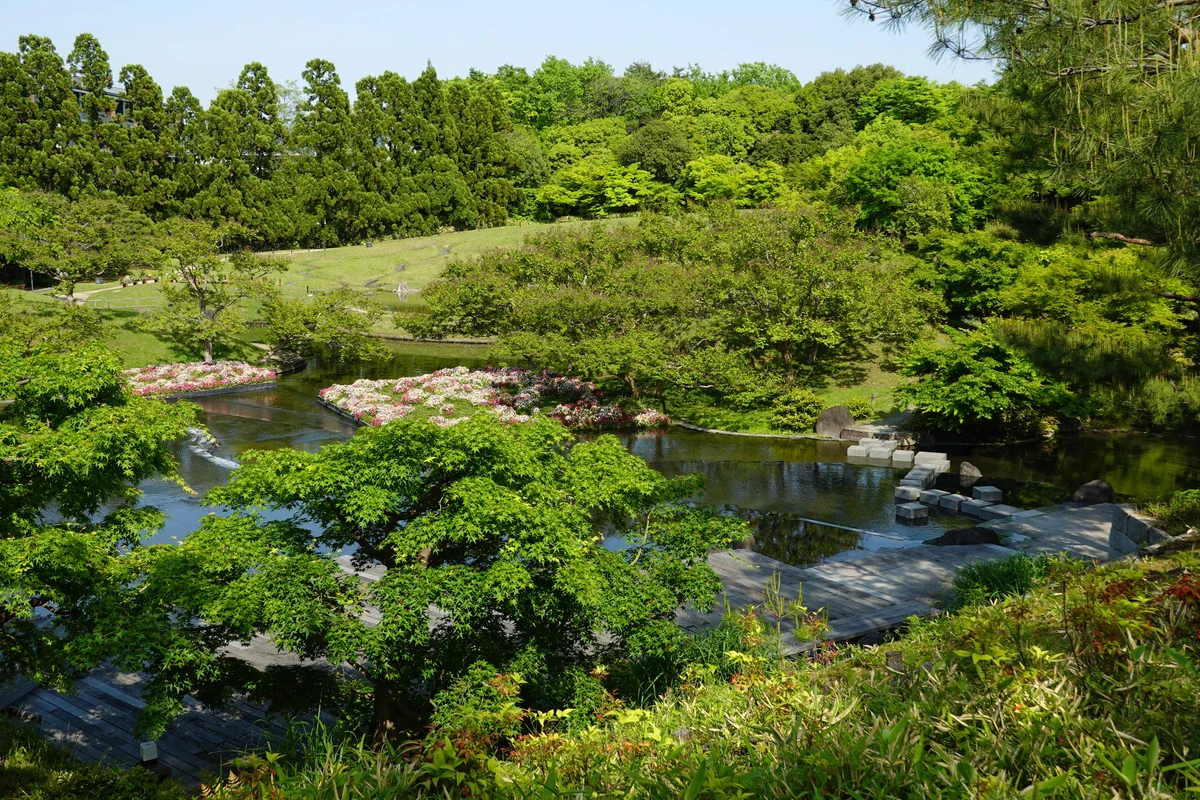
Spring-green trees surround dark shallow water, pink and white flowering beds, stone steps and a grassy slope in Umekoji Park’s Suzaku-no-niwa garden.

Fresh green foliage around the water garden at Suzaku-no-niwa, part of Umekoji Park, photographed in May 2025. This designed garden is separate from the park’s Inochi-no-Mori habitat area.

250503 Suzaku-no-niwa in Umekoji Park Kyoto Japan01s3.jpg — 663highland, CC BY-SA 4.0 (https://creativecommons.org/licenses/by-sa/4.0/). Source: https://commons.wikimedia.org/wiki/File:250503_Suzaku-no-niwa_in_Umekoji_Park_Kyoto_Japan01s3.jpg. Proportional downsampling to fit 1200 × 1200 pixels, without enlargement; encoded as WebP quality 92, method 6. No crop, retouching, colour correction or text added. EXIF omitted. · Creative Commons

Walks and routes

Garden and woodland, with time to pause

Start at Midori-no-Yakata’s garden entrance. Explore Suzaku-no-niwa’s water views, then follow the signed connection to Inochi-no-Mori and its visitor walkway. Leave time to retrace your way out rather than aiming for a brisk circuit.

Ask at the entrance for the usable ramp-and-bridge route if you need to avoid steps.

A free park break

Choose the lawn for a picnic or rest, then use the park map to find Shiden Hiroba and its preserved streetcars. This is an easy way to keep the outing short when children are tired or the gardens are closed.

Use the main public paths and choose stops that suit your group; the lawn is a different surface from the paved paths.

A free park break

Things to try

A two-minute reflection game

Choose one view of the water mirror and look for three things reflected in it. Wait for a breeze, then compare the shapes. Keep cameras and children on the visitor side of the water’s edge.

Join the monthly nature session

The third-Saturday session runs 13:30–15:00; reception at Midori-no-Yakata starts at 13:00. The walk itself has no extra charge, but ¥200 garden admission is required. Wear shoes and clothing suitable for woodland, with insect protection in summer. Light rain may not cancel it, while severe weather can. Check the organiser’s latest announcement.

Ride the little park tram

On Saturdays, Sundays and public holidays, the tram normally runs 10:00–16:00 between Suzaku Yume Hiroba and Shiden Hiroba, about 210 metres each way. A one-way ticket is ¥150, or ¥310 for a day ticket; children below elementary-school age ride free. Buy with cash and check the posted departures, which include a midday gap. The tram returned to service on 29 April 2026 after repairs.

Save room for water play

Kawara Hiroba has an artificial shallow stream and pool where children can play when open. Bring rubber sandals and a change of clothes, supervise closely and keep the water out of mouths. It is a play area separate from the protected habitat and the ornamental garden water.

Kyoto Aquarium

The aquarium is a separately ticketed option inside the park. Check the calendar for your date: opening hours vary, and admission normally finishes one hour before closing. Any captive-animal displays belong to the aquarium visit, not to wildlife spotting in the park.

Kyoto Railway Museum

The railway museum offers another separately ticketed visit. Its usual hours are 10:00–17:00, with last entry at 16:30; Wednesdays and the year-end period have closures, with calendar exceptions. Allow a proper museum visit rather than treating it as a quick shelter stop.

Wildlife and habitats

Japanese maple · Iroha-momiji

Look for Iroha-momiji among the planted shade trees beside the public water-play area. Compare its leaves through the seasons, especially when autumn colour changes the waterside view.

Crape-myrtle · Sarusuberi

In summer, look for crape-myrtle near the garden’s water mirror and among the trees by the water-play area. Its smooth trunk is worth noticing even when the summer flowers are over.

Asagimadara butterfly

On 15 October 2026, the park reported asagimadara butterflies at Suzaku-no-niwa’s autumn flower exhibition. It is a useful reminder that a designed flower display can attract wild insects; a future exhibition may bring different visitors.

Look slowly from the paths and walkway, and let wildlife come and go without feeding or chasing it. The trees below are cultivated park plantings; the butterfly example recalls a wild visitor to the garden.

Stories and discoveries

The water mirror is made with only about one centimetre of water over black granite. A shallow surface can produce a surprisingly expansive-looking reflection.

The restored habitat began on railway land rather than in surviving ancient woodland. Its designers created different wet and dry conditions, then let wildlife arrive naturally instead of treating the space as an animal collection.

In 2024, Suzaku-no-niwa and Inochi-no-Mori were recognised together as a nature-coexistence site. The designation includes the designed garden as well as the restoration habitat, and values the long-running work of observing and explaining their wildlife.

When to visit

Late winter and spring

Make blossom the focus: the park’s plum trees come first, then cherry blossom and new leaves. Keep the plan flexible rather than choosing a date from last year’s photographs.

Summer

Compare the leafy woodland with the more open lawn, and look for crape-myrtle flowers. Plan shorter outdoor stretches in heat, carry drinking water and check whether children’s water play is operating.

Autumn

Look for changing foliage and check the garden’s flower-show notices. Special evening events, when announced, have their own dates; do not assume the garden stays open after its regular closing time.

Getting there and practical advice

Midori-no-Yakata

Use this building for the garden entrance and help planning your visit. It has an elevator, toilets, a nursing room and a restaurant; individual services follow their own opening arrangements.

Shiden Hiroba

Four preserved tram cars and platforms recreate a little piece of Kyoto’s streetcar past. Some vehicles house a café or shop; check their separate opening times if you are relying on a food stop.

Arriving by train or on foot

Use JR Umekoji-Kyotonishi on the Sagano Line for the park’s western side. Alternatively, walk west from Kyoto Station’s Central Exit along Shiokoji Street; allow about 15 minutes to the park, then additional time to reach your chosen facility.

Buses and parking

City buses serve stops around the park, including Shichijo Omiya–Kyoto Aquarium and Umekoji Park–JR Umekoji-Kyotonishi Station. Check the current operator route information. The park’s Omoiyari parking is reserved for eligible visitors needing support; use public transport unless you have checked that you qualify.

Entrance and facilities

The elevator at Midori-no-Yakata reaches the garden-entry floor. The building has an accessible toilet and a free wheelchair-loan service, with two chairs listed. Call 075-352-2500 to check availability and opening arrangements.

Woodland ramp and garden bridges

Ask staff to confirm that the woodland ramp and garden bridges are open and suit your wheelchair or stroller. An elevator at the entrance does not mean every path beyond it is step-free.

Sources and useful links

Wildlife you might spot

2

Each card links to a full Explore page with photos, traits, and fun facts.

Snap map for this place

Start with the big picture, then zoom in to explore individual wildlife observations around this place.

Loading map…

Good to know before you go

The public park is free and open all day. Suzaku-no-niwa and Inochi-no-Mori share a ¥200 ticket for elementary-school-age visitors and older.

The paid areas normally open 09

00–17:00, with last entry at 16:30. They close Mondays, the following day when Monday is a public holiday, and 28 December–4 January; check holiday arrangements.

Reach Inochi-no-Mori through Suzaku-no-niwa and stay on the visitor walkway. Enter restricted habitat only with an authorised guided activity.

JR Umekoji-Kyotonishi Station is beside the park. From Kyoto Station’s Central Exit, allow about 15 minutes on foot west along Shiokoji Street.

For children’s water play, use suitable rubber sandals, keep children within close supervision and do not drink the water. Follow any closure signs.

Do not feed wildlife or pick plants. Dogs must stay on leads and paved park paths, away from the lawn and planting beds.

Check park notices before planning a picnic or tram ride: events can restrict the lawn, and operating facilities can close for maintenance.

Bring cash for the little tram. It does not accept credit or transport IC cards; its fare is separate from garden admission.

Frequently asked questions

Yes. The public park’s paths, lawn and outdoor squares are free. Suzaku-no-niwa and Inochi-no-Mori form a separate paid area, and the tram, aquarium and railway museum have their own charges.
No. Everyday visits use the elevated walkway to protect the habitat. Guided nature sessions sometimes enter areas that are normally closed to visitors.
The published programme is on the third Saturday of each month, 13:30–15:00, meeting at Midori-no-Yakata. No advance application is normally needed; the ¥200 garden admission applies. Check the current theme and weather notice before going.
An elevator serves the garden entrance, but the route beyond it matters. Ask staff about the woodland ramp and garden bridges, and avoid being directed onto stepped alternatives. Wheelchair lending is limited, so call ahead if you need it.
For light rain, you can shorten the outdoor visit and take extra care on wet surfaces. For persistent rain, consider the separately ticketed aquarium or railway museum after checking its opening calendar.

Recent snaps at this place

Recent snaps will appear here as new observations are added.

View all ›

Take the discovery with you

Exploring Umekoji Park?

Identify the wildlife you spot, learn as you go, and keep a collection of the adventure.

  1. 1Spot it
  2. 2Snap it
  3. 3Keep the discovery