A compact seal visit
For an estimated 90 minutes to two hours, check the programme, spend time at the Robbarium and choose one additional enclosure or a short play stop.
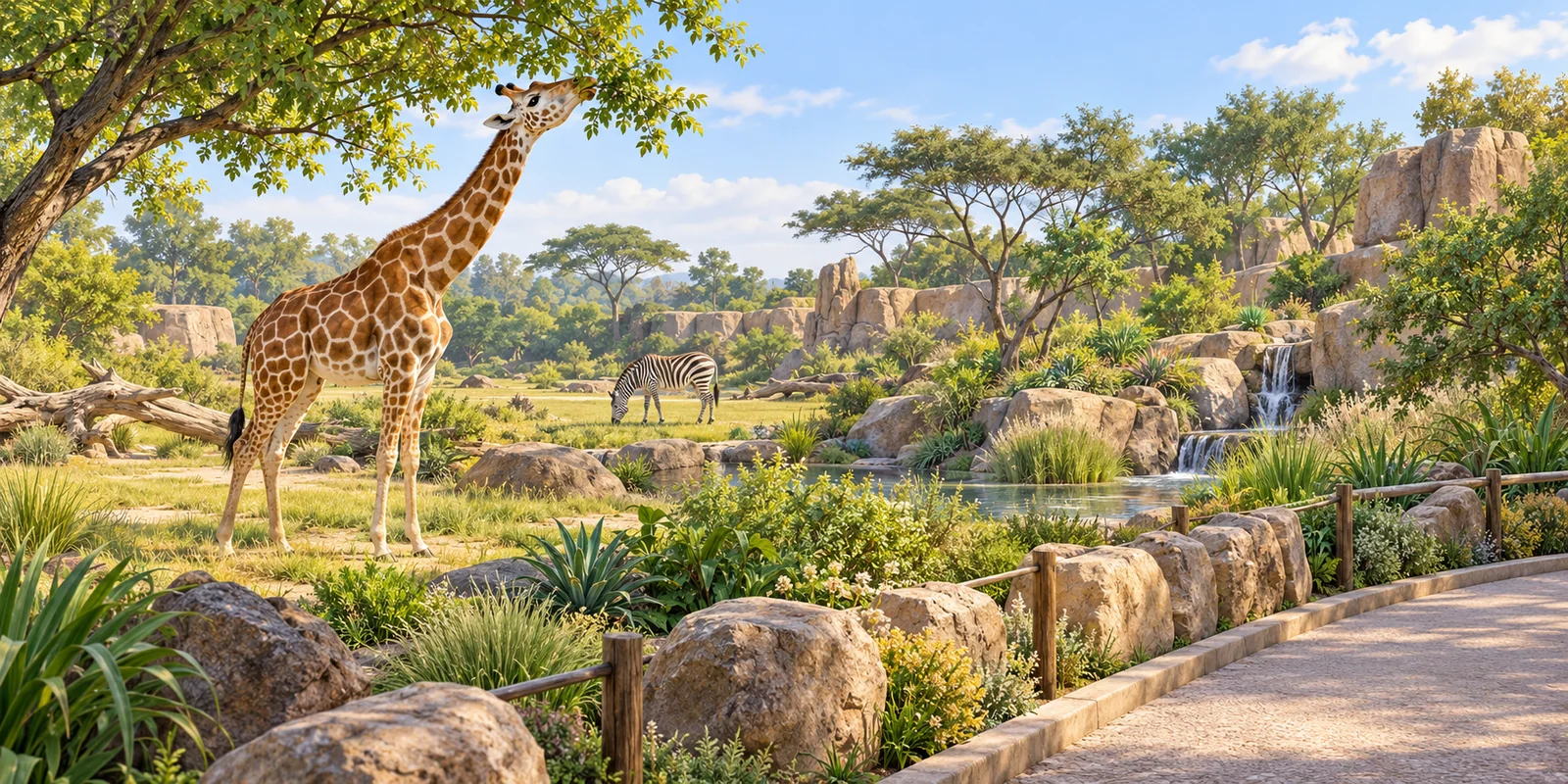 Illustration
Come to Westküstenpark for close views of harbour seals and a leisurely family day among waterbirds, old domestic breeds and play areas.
Come to Westküstenpark for close views of harbour seals and a leisurely family day among waterbirds, old domestic breeds and play areas. The 14.5-hectare park brings ponds, meadows and animal enclosures together on the edge of St. Peter-Ording. At the entrance, check the feeding programme and choose a seal presentation to build your visit around.
The Robbarium is the main draw: a large enclosure holding more than 1.2 million litres of North Sea water, with underwater windows that offer a different view of the seals. Stay a little while between presentations, too. Watching a seal change direction beneath the surface is a good reason to slow down rather than hurry straight to the next animal. These are animals in human care; this is a zoo visit, not a wild-seal viewing trip.
Beyond the pools, there is a strong sense of the surrounding farming and wetland landscape. Look at the different domestic animals, spend time at the bird enclosures and leave room for a proper play break. In summer, free-flying white storks add another layer to the visit. The restaurant overlooks the stork meadow, so even a pause for lunch can turn into a quiet birdwatching session. Wondering what that bird or insect is? Find out on your visit using the Snappit nature app.
Westküstenpark opened in 1992 as a privately run zoo combining animal care, accessible nature experiences and environmental education. Its meadows and domestic breeds reflect the relationship between farming and wildlife. A free-flying stork colony began with a nesting pair on the donkey stable in 1994. The park also works on conservation breeding, including white-naped cranes and northern bald ibises.
Combine the Robbarium with a circuit of the bird and domestic-animal areas, then let children choose between the play equipment and another favourite animal. The water-landscape-themed playground has climbing and seesaw elements, a covered picnic area and speaking flowers designed to include children using mobility aids. At the enclosures, try a simple family challenge: notice three different ways animals move, then compare a seal in water with a walking bird and an alpaca.
Keeper-led feedings add a useful explanation of what you are seeing. Pelicans, tortoises and domestic animals also feature in the programme. Only join animal feeding when staff organise it and supply the food. A paid, guided alpaca walk is an optional extra; check places and conditions before building your afternoon around it.
Summer gives you the best chance of seeing the free-flying storks; young birds normally leave southwards in late August or early September. Their presence is seasonal. Autumn can suit an animal-focused outing, but dress for wind and showers. Severe weather can close the park at short notice, so check the latest notice before setting out.
The main circuit is described by the park as suitable for pushchairs and mobility aids. The observation tower and some natural paddock or pasture areas are exceptions. Accessible toilets are in the entrance building, and a wheelchair can be borrowed at the ticket desk. Pushchairs and pull-along wagons cannot enter the walk-through animal enclosures. Ask staff about individual gates and viewing points if these affect your visit; detailed gradients and surfaces are not published.
Watch harbour seals above and below the surface in a North Sea-water enclosure.
Look for gannets, pelicans and the seasonal free-flying storks.
Compare breeds and join a supervised feeding if it is offered that day.
Try the water-landscape-themed playground and its inclusive speaking flowers.
For an estimated 90 minutes to two hours, check the programme, spend time at the Robbarium and choose one additional enclosure or a short play stop.
For an estimated 3–4 hours, combine a seal presentation, a wider circuit, lunch and play. Add the alpaca walk only if you have a place, and leave enough time to collect tickets beforehand.
Choose one seal, one bird and one domestic animal. Each person describes one movement they noticed before anyone takes a photograph. This is an informal family idea, with no need to touch or attract the animals.
The guided walk takes about 30 minutes. Pushchairs, walking aids and wheelchairs are welcome; dogs cannot join. Ask about the day’s route and places when booking.
At the newer playground, try the speaking flowers together. These were designed for children with mobility aids or motor impairments as well as other visitors. Use the covered picnic area for a pause.
Multimar Wattforum in Tönning offers aquariums and indoor exhibitions. A combined ticket is sold at the two attractions’ ticket desks and can be used on different days. Check current terms, opening times and your transport before choosing it.
Watch at the Robbarium’s underwater windows, then compare swimming with movement on land. A feeding presentation offers another perspective; the seals may choose different parts of the enclosure.
At the Robbarium, look for the gannets as well as the seals. Give the bird area its own pause rather than treating everything around the pool as background.
Check the pelican-feeding time on arrival. Watch the birds before food appears, then notice how the group changes when a keeper arrives.
Ask where to see the northern bald ibises, known in German as Waldrapp. Watch quietly, and ask a keeper how the park works with this species.
In summer, scan the stork meadow and visible nests from public paths. The restaurant gives a restful view of the meadow. Keep well back from breeding birds and let binoculars do the work.
Ask whether wild spoonbills are using the park during your visit. A wild colony was reported in 2025, but numbers and visibility change. Watch only from open visitor paths.
Watch the alpacas quietly from the public viewing area, or join the booked guided walk. Let the keeper set the pace and decide when any feeding or contact is appropriate.
Compare the goats on show and look for the Girgentana breed’s twisted horns. Read the enclosure labels to discover which domestic breeds live here.
Seal, gannet, pelican and ibis suggestions refer to captive residents. Alpacas and goats are domestic animals in human care; the goat entry covers several breeds. The stork and spoonbill suggestions refer only to documented free-living birds. All sightings depend on season, animal choice and which areas are open.
In 2025, a wild spoonbill pair raised young here and other wild spoonbills joined them. It is a good example of zoo grounds also being used by free-living wildlife; it does not guarantee birds on your visit.
The everyday keeper commentaries introduce animal behaviour and conservation. You can hear more about the animals during a normal visit without booking one of the longer education programmes.
For summer storks, linger by the meadow. For a cooler-season visit, prioritise a seal presentation and a manageable circuit rather than relying on migratory birds. Check opening days, severe-weather notices and the day’s activities before leaving.
Toilets are available at three points around the park. Baby-changing facilities are in the main building and restaurant. The entrance kiosk sells drinks, ice cream and souvenirs; additional snack service varies with the season.
An accessible guided experience can be booked for people with disabilities and their families. Discuss your needs in advance with the park. For assistance-dog arrangements on guided activities, ask directly rather than assuming the ordinary dog rules apply.
Use the official St. Peter-Ording local-bus timetable for your travel date and the Westküstenpark stop. Guest-card holders can use the local bus free. Leave time to walk back to Bahnhof Süd if that makes your onward journey easier.
Each card links to a full Explore page with photos, traits, and fun facts.
Start with the big picture, then zoom in to explore individual wildlife observations around this place.
Find the entrance
Head to Wohldweg 6, 25826 St. Peter-Ording. The park has free visitor parking and bicycle stands outside.
Come by public transport
Westküstenpark has a bus stop directly outside. The park gives a seven-minute walk from Bahnhof Süd; allow longer with small children or mobility needs.
Bring restaurant cash
Admission can be paid by debit or credit card, but Naske Pük accepts cash only. Bring your guest card if you have one and check ticket concessions.
Keep the feeding supervised
Do not bring food for the animals. Staff-led sessions are the exception to the general no-feeding rule.
Plan for your dog
Dogs are welcome on a short lead but cannot enter walk-through aviaries or petting enclosures, or join the alpaca walk.
Leave things where they belong
Stay on visitor paths, give animals room and leave fallen feathers in the park.
Pack for outdoor time
Bring a windproof layer and waterproofs. A covered picnic stop helps with a shower, but much of the visit is outside.
Book extras carefully
For the alpaca walk, register or collect reserved tickets at least 30 minutes before the start. Places are limited and severe weather can cancel it.
Recent snaps will appear here as new observations are added.

North Carolina, US
You might spot American Robin and Eastern Gray Squirrel.
View guide →

Florida, US
You might spot Anhinga, American Alligator, and Wood Duck.
View guide →

New Mexico, US
You might spot Wood Duck, Duck, and Canada Goose.
View guide →

Michigan, US
You might spot African Lion, Komodo Dragon, and Brown Bear.
View guide →
Take the discovery with you
Identify the wildlife you spot, learn as you go, and keep a collection of the adventure.