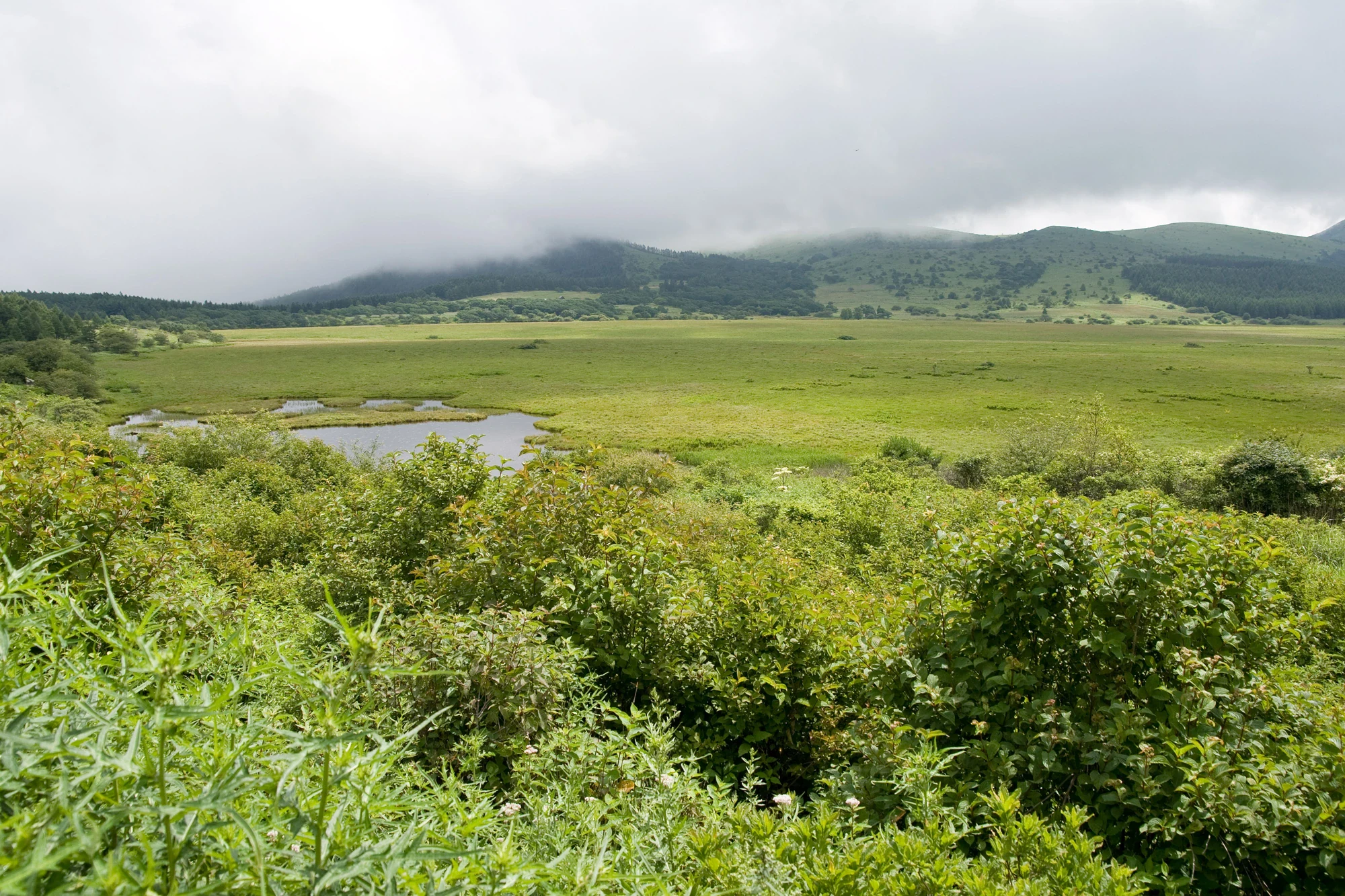
Yatsugatake-Chushin Kogen Quasi-National Park stretches across very different mountain landscapes in Nagano and Yamanashi. For a gentle introduction, make Yashimagahara Wetland in the Kirigamine highlands your destination. The Yatsugatake summits and Utsukushigahara plateau deserve separate days; here, the reward is having time to notice a much smaller landscape.
Start at Yashima Visitor Center, beside the wetland parking area. Its exhibits help explain what lies beneath the plants, and staff can point out the day’s flowers and any awkward stretches of path. From the parking area, the pedestrian tunnel beside the public toilets leads to the wetland entrance. The first open view gives you pools, a low sweep of vegetation and the rounded highland hills beyond.
You can enjoy that entrance area without completing the whole perimeter. The official walking map includes a short option of about 20 minutes, or a circuit taking roughly 90 minutes at walking pace. Give yourself longer for looking: an hour or so works well for the center and a short wander; two to three hours lets you take the approximately 3.7-kilometre circuit without hurrying past its details.
This is a raised bog, with layers of peat built up over thousands of years. Sphagnum moss is part of the living surface, while older plant material lies below. Small pools interrupt the vegetation, and the surrounding grassland leads your eye towards the hills. The boardwalk is a way to look into this delicate habitat without walking on it. Even a few steps off the path can damage the plants you came to see.
The scene changes with the season. In late spring and early summer, listen for the wetland’s frog chorus. Summer brings flowers, including yellow daylilies; by autumn, grasses, leaves and seedheads become the main attraction. Bring binoculars for distant details and let children choose one thing to follow: a bird moving between branches, a flower shape or the changing colors around a pool.
Kirigamine’s openness also has a human story. People once cut these grasslands for animal fodder and fertilizer. Today, conservation work responds to woodland expansion and deer browsing. Fences and gates are part of that effort. Use the signed entrances, leave gates as instructed, and keep the wetland itself undisturbed. Unlock an interactive field guide for this spot: get the Snappit app to identify nature on the go.
The quasi-national park was designated on 1 June 1964. Yashimagahara is one of Kirigamine’s nationally protected wetland plant communities. Its peat preserves traces of a much older landscape, including pollen that helps researchers understand past environments. The surrounding grasslands carry a more recent history of hay-cutting, while the old Misayama shrine area recalls ceremonies once held on the plateau.