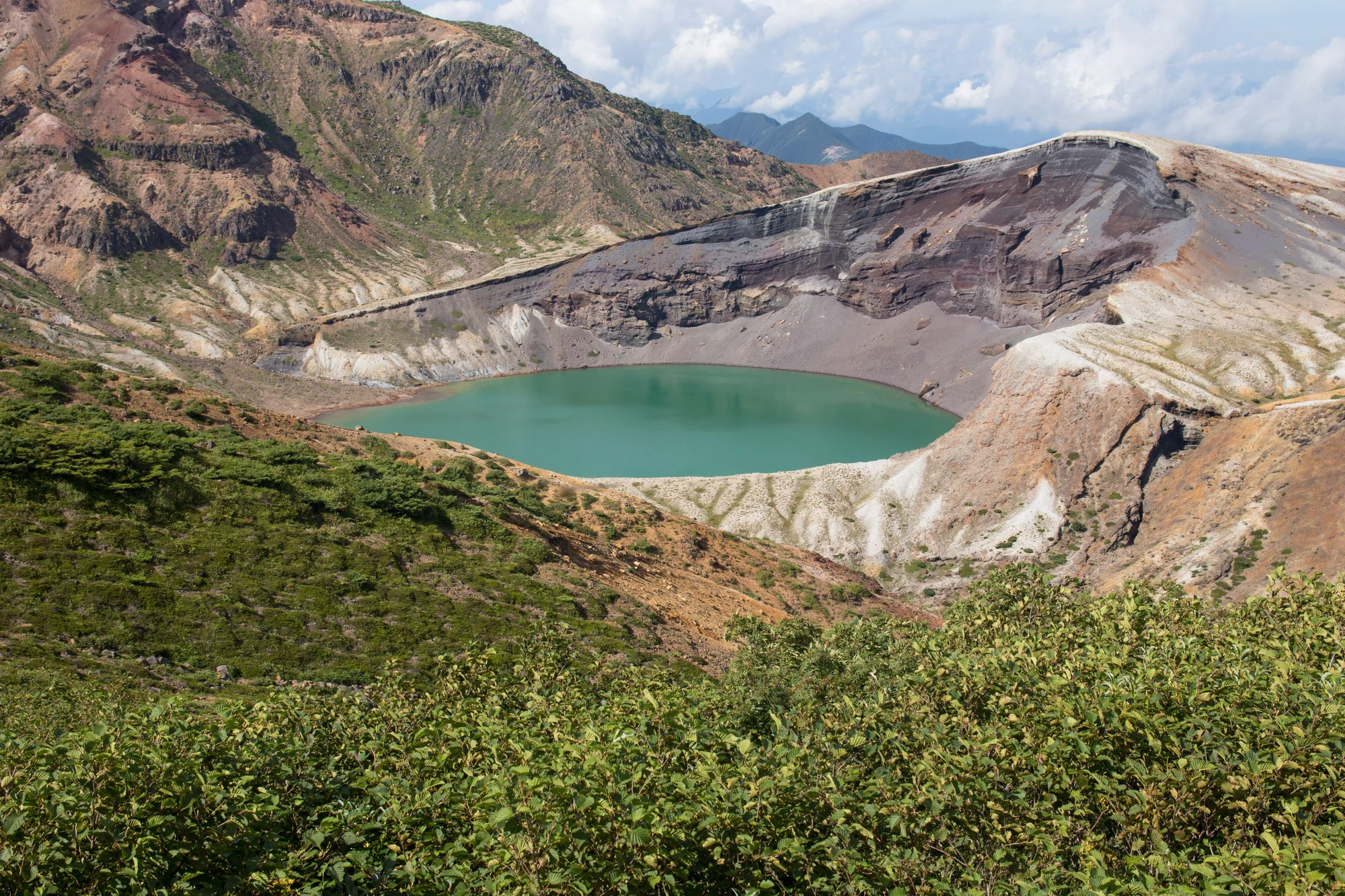
Okama is the moment Zao’s landscape opens up: a bowl of coloured water beneath steep, bare crater walls, with mountain ridges rising behind it. On a clear day the contrast is striking. You can enjoy this view without taking on a summit hike, using the small viewing area near the Zao summit rest house. Give yourself time to look, feel the wind and watch the light change across the water.
The simplest approach follows the Echo Line mountain road and its paid High Line branch to Zao Katta summit parking. From there, the tourism office describes roughly a three-minute walk via the rest house to the nearest viewpoint. Follow the prepared approach and stop at the viewing barrier. This is a view into the crater from above: the lake shore is closed to visitors, with no descent or swimming access.
Keep the first outing deliberately small. Look across the crater, compare the colours of its walls and water, and return for a rest. If the weather is settled and your group wants more, the uphill walk to Kattamine Shrine’s upper sanctuary makes a separate extension. It is listed at about ten minutes from the bus stop or end of the High Line. There is no need to continue along the exposed ridge towards Kumano-dake to make the visit worthwhile.
Weather decides how this day feels. A bright morning in the valley can become fog and strong wind higher up; the lake can disappear entirely. Bring a warm layer, a windproof outer layer and shoes with a good grip. If the ridge feels uncomfortable or you cannot see the way clearly, keep the visit short. A café break is pleasant, but it is not a reason to wait out worsening mountain weather.
For a different side of Zao, head to Kotori House near Togatta Onsen on the Miyagi foothills. This separate nature centre introduces the area’s birds, animals and seasons through displays, with an indoor observation room overlooking the woods. It is a useful alternative when the high roads are closed or the cloud stays down. The birds come and go, so let the displays be part of the fun rather than promising children a particular animal.
Zao Quasi-National Park stretches across Miyagi and Yamagata and includes much more than this crater visit: forests, wetlands, valleys and mountain routes all belong to the wider landscape. This guide keeps the day centred on Okama, with a foothill alternative. Zao Onsen’s ropeways, winter snow-monster excursions and longer traverses need separate plans and their own operating checks. Be ready to snap and learn! Get the Snappit app to identify any nature species you find here.
Zao was designated a quasi-national park on 8 August 1963, protecting a mountain landscape shaped by volcanic activity. Its human history is older: the upper shrine on Katta-dake continues a tradition of mountain worship, and its sacred object is moved to the Togatta sanctuary for winter. The Echo Line, opened in 1962, brought the high scenery within reach of many more day visitors.