
Snappit logo
Snappit
Get App
Generic illustration, not a photograph of this venueIllustration
ParkChubu, Japan

Gifu Prefectural Hyakunen Park

Hyakunen Park works best when you choose a corner and settle into it.

About

Hyakunen Park works best when you choose a corner and settle into it. Its roughly 100 hectares spread over wooded hills, so the museum, play areas and flower gardens do not all sit around one convenient lawn. For a first visit with children, start at the south entrance, give the playground time to do its job, and add a wander toward the iris garden if everyone still has energy. You can have a good morning here without crossing the whole park.

The landscape is satoyama: the kind of woodland around settlements that people have long used and cared for. That gives the place a different character from a formal garden. The pleasure is in moving between open play space and leafy paths, hearing what is happening in the trees, and noticing how the season changes a familiar patch of ground. Try a minute of quiet listening before setting off again. Even a child more interested in climbing than flowers can help spot a change in leaf shape or colour.

In early summer, make the hanashobu garden your main stop. Purple, white and pale-pink flowers offer plenty to compare without needing to know their names. In autumn, the trees become the attraction, with the usual leaf-colour season falling later than an early-October visit might suggest. The same outing can feel quite different in June and November; neither needs a packed itinerary.

Choose the north entrance instead if the museum is the reason for coming. Gifu Prefectural Museum adds dinosaur skeletons, natural history and human stories to the day, and its displays can turn an outdoor discovery into a question worth following indoors. It has its own ticket and opening arrangements. The northern approach climbs, and walking to the museum from the south adds a much longer journey. Treat the two sides as choices, especially with a pushchair, limited walking stamina or a bus to catch. Planning to visit? Download the Snappit app to identify the wildlife you spot in real-time.

The park commemorates the centenary of Gifu Prefecture’s establishment, reached in 1971. It opened on May 5, 1975, and celebrated its own fiftieth anniversary in 2025. Its name refers to the prefectural centenary rather than the age of the trees. Today, recreation sits alongside an active interest in the care and study of satoyama woodland.

What to do here

Keep your first outing simple: south-side play, a seasonal garden stop and a picnic, or a north-side walk followed by the museum. Confident riders can choose the dedicated cycle course instead of adding another long walk. Pick up a current map and ask which paths are open.

Seasonal info

Summer water play is a seasonal facility, not a year-round promise. Bring sun protection, drinks and a change of clothes if it is open. In winter, snow and ice can close outdoor facilities; choose a shorter visit and check conditions before relying on cycling.

Accessibility

This is a hilly park, and pushchair permission does not mean every path is easy. For the museum, ask the north-gate office about vehicle access if walking is difficult. The museum advertises a free slope car, but check its operation and your onward route before relying on it. Ask staff which paths and toilets suit your needs.

Don't miss

1

Seasonal hanashobu flowers in the south-side iris garden

2

A family-paced mix of playground time and woodland edges

3

Autumn colour across a rolling satoyama landscape

4

Gifu Prefectural Museum as a separately ticketed addition

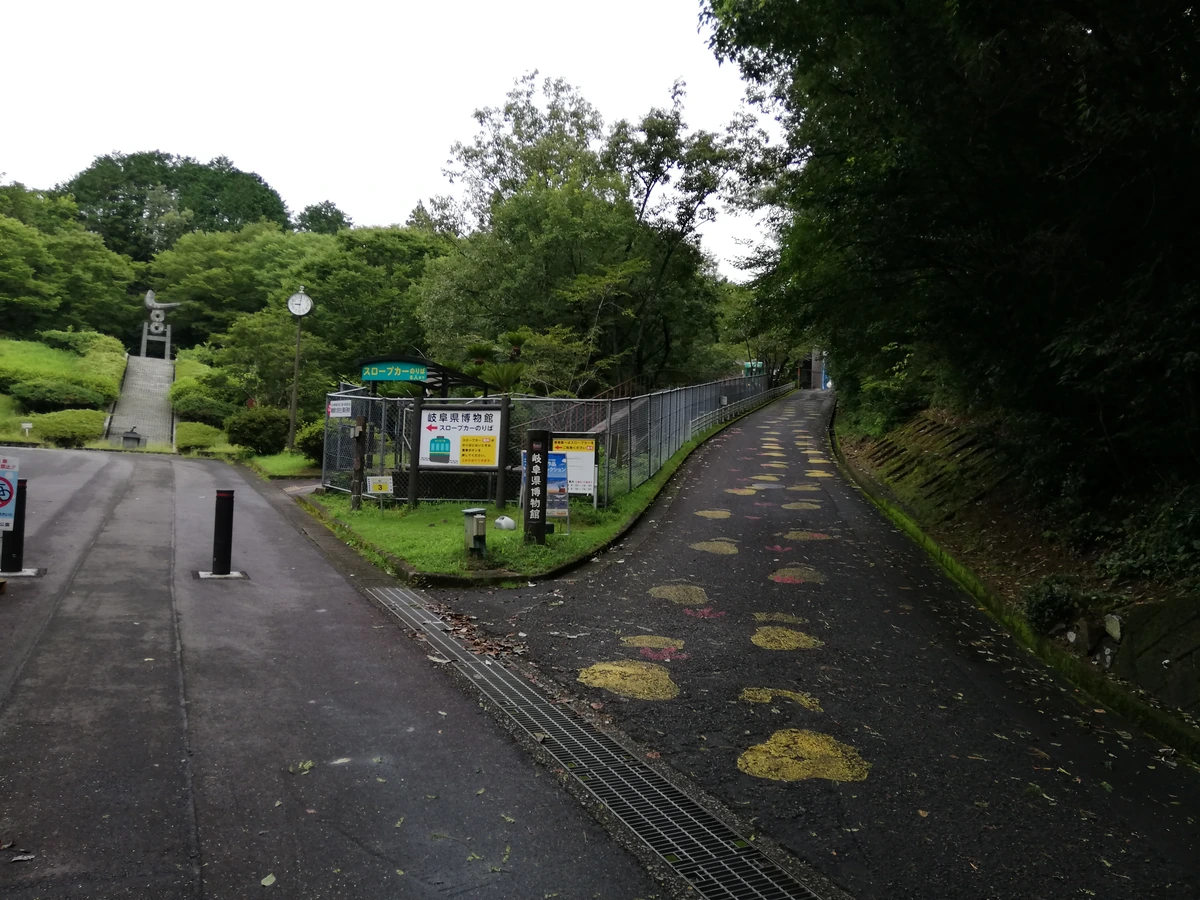
A paved uphill path with painted footprints runs beside trees and a fenced slope-car station; another path and steps lie to the left.

A wooded approach near the museum in Gifu Prefectural Hyakunen Park, photographed in August 2021. Paths and facilities may have changed since this photograph.

Gifu Prefecture Centennial Park 20210820 03.jpg — 先従隗始, CC0 1.0 (https://creativecommons.org/publicdomain/zero/1.0/). Source: https://commons.wikimedia.org/wiki/File:Gifu_Prefecture_Centennial_Park_20210820_03.jpg. Proportional reduction to at most 1200 pixels wide without upscaling; encoded as WebP quality 92, method 6. No crop, retouching, added text or colour correction. EXIF omitted. · Creative Commons

Walks and routes

South side: play first, flowers second

Start at the south entrance and choose the children’s area as your base. After some play, follow the current park signs toward the iris garden, then return by an open path you are comfortable using. In flower season, reverse the priorities and visit the garden first. There is no need to continue uphill toward the museum.

Allow for hills between attractions. Ask at the south office about today’s suitable paths before taking a wheelchair or pushchair beyond the play area.


South side: play first, flowers second

North side: a short walk and the museum

Use the north entrance for the wooded approach to the museum, about 400 m one way. Take your time on the climb, then choose a few displays to explore properly rather than trying to see everything. Return toward the same entrance, with a rest-house break if it is open.

The approach includes a slope. Ask about the free slope car and the vehicle-access procedure if walking is difficult, and confirm a suitable route from the entrance to the exhibits.

North side: a short walk and the museum

An easy family morning

Arrive at the south entrance, check the map, and let the first hour revolve around play. Add the iris garden when flowers or curiosity make the walk worthwhile. Finish with a picnic and enough energy to reach the entrance comfortably.

A nature-and-museum half day

Start in the north, enjoy the approach slowly, and use the museum to explore a question sparked outdoors: a bird, an insect or the rocks beneath the landscape. Allow lunch or a rest before deciding whether to add more park walking.

Things to try

A woodland listening stop

Find a safe place beside an open walking path and pause for a minute. Compare sounds close to the ground with those in the canopy, then try describing what you heard before looking for its source. Stay on the path and give wildlife space.

A bicycle outing

The cycle course runs 2.6 km between its northern and southern ends; riding the full distance out and back is about 5.2 km. It includes hills, so choose it for riders who can brake and steer confidently. Since April 1, 2026, reception is at the south cycle office only. Published park-cycle charges are ¥160 for a rental or ¥50 with your own bicycle, for up to two hours; check current availability and fit before paying.

A guided look at the woods

Look for a scheduled one-coin nature walk if you would enjoy help noticing small things. The 2026 programme uses the north entrance and a two-hour morning session; junior-high students and older pay ¥500. Check the next date and the organiser’s weather-cancellation notice first.

Make the museum the main event

In light rain, a shorter north-side approach and a museum visit can work well. It opens 9 am–4:30 pm from April through October and 9:30 am–4:30 pm from November through March, with last admission at 4 pm. It normally closes on Mondays, the next weekday after a Monday holiday, and December 29–January 3. Buy the main-building ticket at the first-floor reception in the My Museum building. In strong wind or heavy rain, check both park and museum notices before travelling.

Wildlife and habitats

Japanese iris: look closely at a garden flower

The hanashobu garden is planted with cultivated Japanese irises. Compare the purple, white and pale-pink flowers when they are blooming, and use any plant labels to explore differences. Enjoy them from the path rather than stepping between the beds.

Red fox: a glimpse into the less-visible park

A museum researcher’s report published in 2021 documented foxes, including young animals, on the park’s monitoring cameras. That is a lovely reminder of the life beyond a daytime stroll. If an animal crosses your view, let it pass; do not follow it into cover or look for dens.

Enjoy the flowers as cultivated garden plants and the woodland as wildlife habitat. Wild animals come and go; a good visit need not include a mammal sighting. Stay on open paths, keep your distance and never use food to draw animals closer.

Stories and discoveries

A hundred years, then fifty

Hyakunen means “one hundred years.” The park marked Gifu Prefecture’s centenary and then reached its own fiftieth birthday in 2025. Those are two different anniversaries.

The woods are a long-term study site

Museum staff and supporters monitor plants, birds, mammals and butterflies here through the Monitoring Sites 1000 programme. A familiar park can reveal changes that are easy to miss in a single afternoon.

Garden work feeds back into the landscape

The park’s satoyama programme describes turning pruned and fallen wood into compost, repair material and fuel. Looking after woodland involves practical work as well as leaving room for wildlife.

When to visit

Spring blossom

The south-side cycling-road area has cherry trees, and several cherry types flower in succession. Look from the walking paths or ride the designated course; do not use the cycle lane as a footpath. Check current blossom reports rather than relying on a single fixed date.

June irises

Early to mid-June is the usual planning window for hanashobu. Take time to compare pale and dark flowers from the garden paths. A damp day can suit flower-looking, provided footing and weather remain comfortable.

Summer shade and shorter plans

Make room for drinks, shade breaks and an earlier finish in hot weather. Build any water-play visit around the official seasonal opening, with dry clothes for afterwards.

Late-autumn colour

Mid-to-late November is the usual leaf-colour window. Give a short woodland walk more time instead of adding distance; notice how yellow and red leaves change the light under the trees.

Winter flexibility

Check conditions before a cycle outing. Snow and ice have caused facility closures here, and a museum-focused visit may be the simpler choice on a cold day. The museum opens half an hour later from November through March.

Getting there and practical advice

Food and a rest

The north-side rest house serves light meals and can be used for a break. Bringing a picnic keeps a south-side visit flexible. The museum has a designated eating area but no restaurant; food and drink are restricted elsewhere inside.

Toilets and children’s needs

The park map marks toilets at several points. Check the nearest open one before heading uphill. There is no dedicated park baby room; ask staff about a place for nursing or changing. The museum also arranges a nursing space through staff.

Summer water play

The shallow water-play facility is in the south children’s area and normally opens during the summer school-holiday period. Check that season’s dates and daily availability; supervise children continuously. Children still in nappies must use swim nappies.

By car

Seki Interchange on the Tokai-Hokuriku Expressway is about five minutes away under normal conditions. Set the destination to the south entrance for play and flowers, or the north entrance for the museum. Both car parks are free and normally close at 5 pm.

From Gifu by bus

Take a Gifu Bus Gifu–Seki line service and get off at Oyana (小屋名). The park quotes about 15 minutes on foot to the park; the museum is farther, so allow extra walking. Check the current service and your chosen entrance before boarding.

From Seki Station

Use Seki City Terminal beside the station and check route 11, Wakakusa–Koganeda. The official timetable has different Wednesday–Sunday and Monday/Tuesday patterns: the Hyakunen Park stop is bypassed on Monday/Tuesday. Beisia-mae (Hyakunen Park North Entrance) is an alternative, with a walk to the gate. Check both outward and return journeys on the city timetable.

If you need a taxi

A taxi can drive to the museum entrance. Arrange one rather than assuming you can hail a passing cab nearby; the museum says street taxis are scarce in Seki.

Arrange the approach

If walking is difficult, the museum allows vehicle access after a procedure at the park office just inside the north gate. An intercom below the office’s exterior stairs lets you call staff. Ask ahead about parking and the route from drop-off to the exhibits.

Keep the visit within one area

Choose fewer stops and a return route you know you can manage. The free slope car serves the museum approach; it is not transport across the whole park. Museum wheelchairs can be borrowed at the My Museum building’s first-floor reception.

Visitor information

A path closure to check

On October 16, 2026, the park still displayed its notice closing the path between the dog run and the main park after September storm damage. A September 30 update planned repairs for mid-October, with reopening to be announced separately. The dog run itself was described as open. Check the latest notice and respect any barriers.

The museum’s autumn 2026 exhibition

Minerals runs September 18–November 29, 2026. Adult admission during this special exhibition is ¥800, university admission ¥400, and high-school students and younger are free. Check the museum’s exhibition page if you are planning a later visit.

Taking photographs inside the museum

Photograph only exhibits marked as permitted. Flash, tripods and selfie sticks are not allowed. The museum’s permission for personal memories or social posts does not automatically cover commercial use; ask before using collection images commercially.

Sources and useful links

Wildlife you might spot

2

Each card links to a full Explore page with photos, traits, and fun facts.

Snap map for this place

Start with the big picture, then zoom in to explore individual wildlife observations around this place.

Loading map…

Good to know before you go

Check the latest park notice before setting off. The path linking the dog run with the park was still under a closure notice on October 16, 2026; a repair plan is not a reopening announcement.

Choose your entrance before travelling

south for the main children’s area and iris garden, north for the museum. The south-to-museum walk is about 2 km and includes slopes.

Check your return bus first. The Hyakunen Park stop is not served in the same way every day, and a missed departure can mean a long wait.

Wear shoes with grip and keep the return climb in mind. Shorten the outing if paths are wet, icy or tiring.

Use the designated cycle course for cycling. It is reserved for bicycles, and sections run beside pedestrian paths; slow down and follow signs.

Keep children close beside water and on play equipment. Use the summer water-play area only when it is officially open and supervised by your own adult.

Take your rubbish home, leave plants and animals undisturbed, and do not enter closed paths. A picnic does not permit a campfire or barbecue anywhere you choose.

Pets cannot accompany an ordinary park walk; assistance dogs are excepted. The separate registered-user dog run has its own access and rules.

Frequently asked questions

Normally 9 am–5 pm, with last entry at 4:30 pm. It closes on Mondays, or the next weekday when Monday is a public holiday, and December 29–January 3. Check special notices for holiday arrangements and weather closures.
Ordinary park entry and the north and south car parks are free. Cycling, the dog run, booked facilities and museum admission have separate charges. Plan those extras individually.
The south side puts the main children’s play area and seasonal iris garden within the same part of the park. Make one of those the focus and turn back before a short outing becomes a cross-park hike.
The published standard rate is ¥370 for adults and ¥120 for university students; high-school students and younger enter free. During special exhibitions the adult and university rates are ¥800 and ¥400. The Minerals exhibition runs September 18–November 29, 2026, so the higher rate applies during that period.
Pushchairs are allowed, but hills and individual paths need consideration. Discuss your route with park staff. Museum wheelchair loans are available at reception, and visitors who have difficulty walking can arrange vehicle access through the north-gate office.
Not for a general walk through the park, except for assistance dogs. There is a separately managed dog run for registered users. Check its current conditions and approach rather than walking through the park to reach it.

Recent snaps at this place

Recent snaps will appear here as new observations are added.

View all ›

Take the discovery with you

Exploring Gifu Prefectural Hyakunen Park?

Identify the wildlife you spot, learn as you go, and keep a collection of the adventure.

  1. 1Spot it
  2. 2Snap it
  3. 3Keep the discovery




