
A slow circuit through the nine gardens
Use the entrance map and garden signs to link these stops. Keep the official wheelchair map handy if steps or uneven ground are a concern, and follow any temporary diversions.
 Illustration
Koko-en rewards a slower pace than its famous neighbour.
Koko-en rewards a slower pace than its famous neighbour. Southwest of Himeji Castle, nine linked gardens fit a remarkable variety of scenery into about 3.5 hectares. A wall hides the next scene; a gate reveals a different arrangement of water, trees and stone. Give the garden an hour or two of its own, even if you are also visiting the castle. The entrances and admission arrangements are separate.
Begin with the Garden of the Lord’s Residence, the largest of the nine. Its pond evokes the Seto Inland Sea, with colourful ornamental koi moving through the reflections and a waterfall adding sound to the view. The cypress-built covered corridor and Cho-on-sai viewing building make it worth stopping more than once. Try looking at the same pond from a new angle rather than treating it as a single photo stop.
Then let the smaller gardens change the pace. The Seedling Garden shows plants grown in timber-edged beds; the Tea Ceremony Garden centres on Souju-an, where you can sit down for matcha and a sweet. Farther around, a gentle stream, a pine landscape, seasonal flowers and bamboo each have their own enclosure. In the Garden with a Hill and Pond, planted slopes and rock islands suggest a much larger landscape. Look out for a view of the castle, but enjoy the foreground too: Koko-en is more than a place to photograph the keep.
Although the layout feels rooted in the Edo period, the garden opened in 1992. Excavations revealed earlier residences and streets, and their divisions helped shape the nine gardens. That mix of archaeology and living design is part of the pleasure. For a family visit, choose a simple challenge: compare two gateways, find three leaf shapes without touching them, or listen for the change from rushing water to a quieter stream. There is plenty to notice without turning the outing into a march through every corner. Planning to visit? Download the Snappit app to identify the wildlife you spot in real-time.
Koko-en opened on 29 April 1992 as a project commemorating Himeji’s municipal centenary. Seven archaeological investigations uncovered the western residence built by Honda Tadamasa in 1618, samurai residences and passageways. The new garden used those historic land divisions rather than presenting itself as an untouched Edo-period survivor. Its name recalls Koko-do, the former domain school.
Follow the garden signs through the pond garden and smaller enclosures, pausing at the covered corridor, the stream and the hill-and-pond landscape. Add tea at Souju-an if its afternoon hours fit your day. Use the official map for castle-view spots rather than expecting the keep to appear everywhere.
Koko-en normally opens throughout the year except 29–30 December. Souju-an has a longer winter break, 21 December–5 January. Summer calls for a shorter walk in strong heat; autumn evening openings are tied to announced events. Flowering and leaf colour vary with the weather.
The operator provides a wheelchair route, free garden-use wheelchairs and accessible toilets shown on its map. Some paths have slopes, uneven ground or steps, and stepping stones lie outside the recommended route. The operator advises visiting with an attendant. Ask staff which route suits your chair or stroller, including access to tea and dining areas.
The large pond, waterfall and ornamental koi in the Garden of the Lord’s Residence.
The Garden with a Hill and Pond, where rock islands and planting create a landscape in miniature.
Nine distinct garden settings, from a flowing stream to bamboo framed by plaster walls.
A matcha-and-sweet pause at Souju-an, with a tea garden to look into.
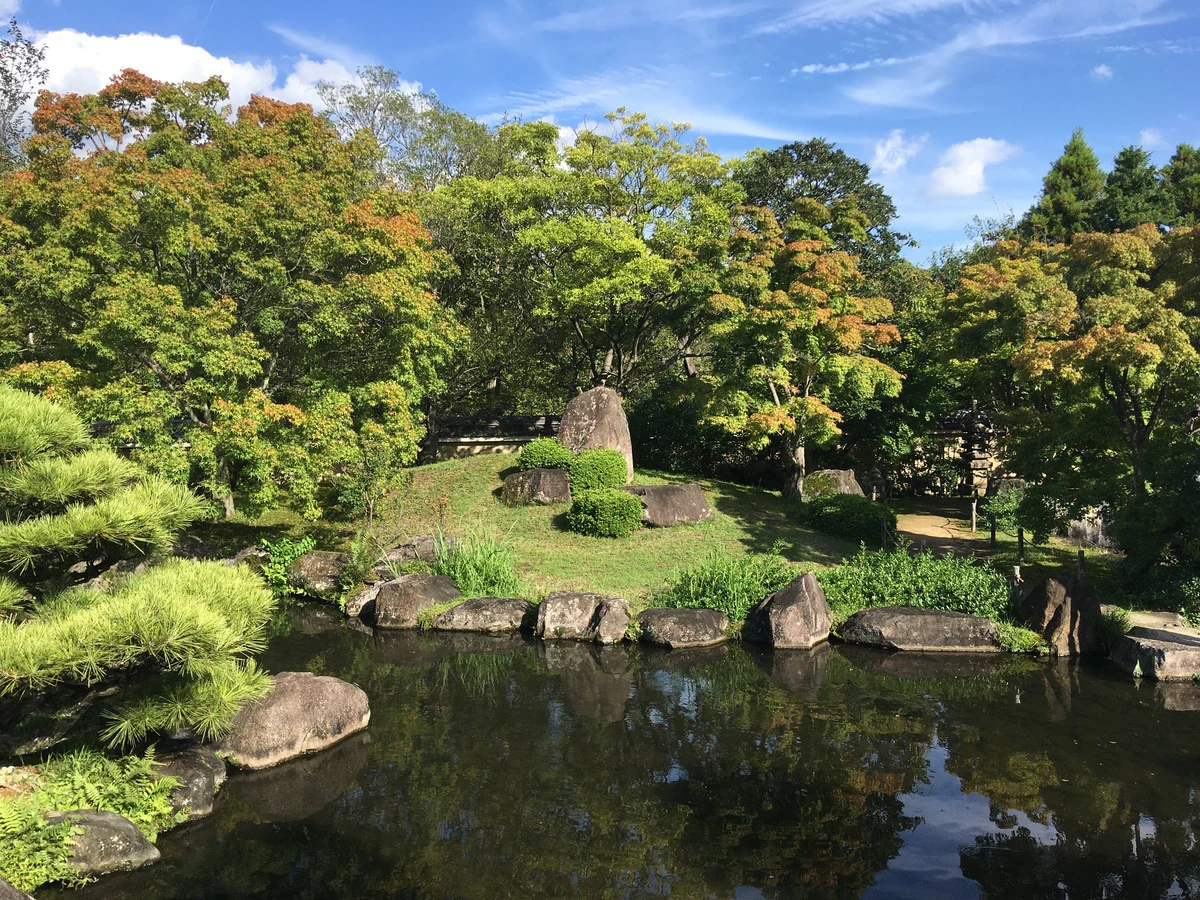
The Garden with a Hill and Pond at Koko-en, photographed in September 2018: shaped planting, rocks and water create a small landscape.
Christophe95, CC BY-SA 4.0. Tsukiyama Chisen Garden at Kōko-en 1.jpg. Source: https://commons.wikimedia.org/wiki/File:Tsukiyama_Chisen_Garden_at_Kōko-en_1.jpg. License: https://creativecommons.org/licenses/by-sa/4.0/. Proportional downsampling to fit 1200 × 1200 pixels, without enlargement; WebP quality 92, method 6. No crop, retouch, recoloring or text added. EXIF omitted. Source EXIF records iPhone software 10.3.1, modified at capture time 2018-09-22. No specific prior retouch declared; source rendering retained. · Creative Commons
Use the entrance map and garden signs to link these stops. Keep the official wheelchair map handy if steps or uneven ground are a concern, and follow any temporary diversions.
Arrive around 09:00 and allow 60–90 minutes for Koko-en. This works well if the garden is your priority and you are happy to skip tea, which starts at noon. Leave the rest of the morning or day flexible for the castle’s separate admission and any queues.
Arrive around 13:00, walk the garden at an easy pace and fit tea in before the 15:40 last reception. Allow around two hours overall and more if there is a wait. Souju-an does not accept reservations, so keep the tea stop optional.
Stand in a gateway and notice which parts of the next garden become visible first. Move a few steps along the permitted path and compare the scene again. This is an easy way to enjoy garden design without needing specialist vocabulary.
Ask everyone to find one reflection, one leaf shape and one sound of water. Compare answers without picking plants or stepping onto moss. Keep the challenge short enough that there is still time simply to wander.
Compare the stems and leaves you can see from the path, then use the Bamboo Garden’s QR plant labels to check their names. The collection includes different bamboos and sasa, so a single bamboo name will not cover everything.
A brief walk can focus on water, reflections and views from the covered corridor. Use grippy shoes and take your time on wet surfaces. Tea or the restaurant can provide a seated pause during their opening hours, but most of Koko-en remains outdoors; in heavy rain or strong wind, change the plan and check notices first.
Look for the cultivated black pines in the Garden with a Hill and Pond. Their needles grow in pairs; compare their needle texture with nearby broad-leaved trees while staying on the path. The separate Pine Garden evokes red-pine woodland, so do not label every pine here as black pine.
The garden lists crape myrtle in the Lord’s Residence, Flower, and Hill-and-Pond Gardens. In summer, look for its crinkled flowers; the smooth-looking bark adds interest outside flowering time. Use the current flower report to decide what is worth seeking on your day.
The garden divisions draw on excavated residence plots and passageways. What looks like a purely decorative sequence also preserves the outline of an earlier neighbourhood.
The Flower Garden uses volcanic Kannabe stone from northern Hyogo. Look at the rock garden as well as its plants: the materials help tie the designed setting to the wider prefecture.
Look for blossoms and new leaves, then let the day’s flower information guide your choices. The stream garden’s weeping cherry is one spring feature; exact bloom dates change each year.
Irises are an early-summer interest beside the stream; later, crape myrtle adds flowers. Choose a morning walk or shorten the visit on very hot days, take water and pause in shade.
Compare foliage in the deciduous-tree garden with pond reflections. The 2026 illumination is scheduled for 17 November–6 December, with opening extended to 20:00 and last entry at 19:30. Check the event notice close to your visit; those dates do not promise peak colour.
Enjoy the garden’s structure, evergreen planting and quieter seasonal details. Koko-en closes 29–30 December, while tea service pauses for longer, from 21 December to 5 January. Check the current flower calendar for winter blooms.
A separate ¥800 charge covers matcha and a sweet. Usual service is 12:00–16:00, with last reception at 15:40 and no reservations. It closes 21 December–5 January; event arrangements can differ.
The restaurant looks into the Lord’s Residence Garden. Usual opening is 10:00–16:00, with meals served 11:00–15:00 and final orders at 15:30. Seat reservations are currently suspended. On 27 October 2026, opening is expected around noon and may vary.
The official map marks accessible toilets near the entrance and restaurant. The administration office has ¥100 coin lockers and free wheelchairs for use within Koko-en. Ask staff about availability and the route that will suit you.
Walk from JR or Sanyo Himeji Station toward the castle, then use Koko-en’s own entrance to its southwest. The operator’s walking estimate is about 15 minutes. A Shinki bus from the station’s north side to the castle’s Otemon-area stop shortens the walk; allow about five minutes from the stop and confirm the destination with the driver.
Otemon is the nearest paid car park listed by the garden. Spring sightseeing and autumn foliage periods bring heavy traffic, so rail and walking are often the easier plan. Check parking availability before driving, especially on a combined castle day.
Ask for the operator’s wheelchair-route map. It marks a recommended circuit and a shorter connection, but also identifies slopes and uneven ground near the Seedling Garden. Routes outside it include steps and stepping stones. If you need help pushing a chair, travel with an attendant as the operator recommends.
Tell staff if you want to enter Souju-an or dine at Kassui-ken so they can advise on the approach and seating. An accessible-toilet symbol or a wheelchair route through the grounds does not tell you everything about an individual room.
Checked 16 October 2026: garden-only admission is ¥400 for adults. Under-18s are free, with the exemption continuing until the first 31 March after turning 18. A castle-and-garden ticket is ¥2,600. Normal garden hours are 09:00–17:00, last entry 16:30; the regular closure is 29–30 December. Tea, food and special service arrangements are separate.
Each card links to a full Explore page with photos, traits, and fun facts.
We are still adding species preview cards for this place.
Start with the big picture, then zoom in to explore individual wildlife observations around this place.
Garden admission is ¥400 for adults. Visitors under 18 are free, including those who have turned 18 until the first 31 March after their birthday. The Himeji Castle–Koko-en combination ticket is ¥2,600; decide whether you want both attractions before buying.
Normal hours are 09
00–17:00, with entry until 16:30. Check the current notices before a late arrival, especially during evening events or severe weather.
Souju-an serves matcha and a sweet for ¥800, separately from admission. It normally opens 12:00–16:00, with last reception at 15:40, and does not take reservations. Arriving at the garden when it opens will be too early for tea.
From Himeji Station, the operator gives about 15 minutes on foot; allow extra time for crossings and a slower pace. Head for the garden’s own walled entrance southwest of the castle, rather than the castle’s paid-entry gate.
Bring water, but plan your meal at the garden restaurant or outside Koko-en. This is not a picnic garden. Keep to the paths, leave plants untouched and do not feed or disturb the fish.
Wear shoes with a good grip and keep children close beside the water. Slow down on wet stones and wooden surfaces, and use the recommended wheelchair route when you need to avoid stepping stones.
For a garden-design visit, keep your camera down for one full minute at each of two contrasting gardens. Notice what the walls hide, how rocks change the scale, and whether water is moving or still.
Professional or wedding-portrait photography needs advance permission, and drones are prohibited. Check the garden’s rules before bringing a pet; the Japanese guidance permits pets only when fully enclosed in a carrier with no part protruding.
Recent snaps will appear here as new observations are added.

Maryland, US
You might spot White-Tailed Deer and Eastern Gray Squirrel.
View guide →

District of Columbia, US
You might spot Eastern Gray Squirrel, Duck, and House Sparrow.
View guide →

Illinois, US
You might spot American Robin, Canada Goose, and House Sparrow.
View guide →

Virginia, US
You might spot Spotted Lanternfly and Northern Cardinal.
View guide →
Take the discovery with you
Identify the wildlife you spot, learn as you go, and keep a collection of the adventure.