Makino Botanical Garden is a place to slow down and look closely. Spread across the slopes of Godaisan in Kochi City, its roughly eight hectares bring together planted landscapes, a botanical museum and a conservatory. You can make a satisfying first visit in a couple of hours, or give the garden half a day with children. The hills are part of its character, so choosing a route matters more than trying to see every corner.
Begin with the Tosa Ecology Garden near the Main Gate. Tosa is the historic name for Kochi, and this planting introduces the prefecture’s habitats in miniature: cool mountain vegetation gives way to lower hills, settled landscapes, wetlands and the coast. Read a few labels rather than racing past them. A plant that looks unremarkable at first can become interesting once you know the conditions it grows in. These are carefully arranged living collections, offering a useful introduction before exploring Kochi’s wider countryside.
The Exhibition Hall gives those plants a human story. Tomitarō Makino grew up in Sakawa, west of Kochi City, and turned a childhood fascination into a lifetime of botanical study. His drawings, notebooks and recreated study help explain how patient observation becomes science. Outside, the courtyard brings together plants he named or drew. Look at a botanical illustration, then compare it with a living leaf: the tiny differences are often the point. Hiroshi Naitō’s timber-rich memorial buildings make this an especially pleasant place to pause between outdoor sections.
Continue toward the South Garden for a change of scale. Old stonework recalls land once belonging to neighbouring Chikurinji Temple, while the anniversary garden uses ponds and streams among ornamental plantings. The conservatory then shifts from dry-country plants to lush foliage and a water garden. At its entrance, the Green Tower evokes the hollow of a huge tree, with roots spreading down the walls. It is a good finale for children who have had enough quiet label-reading.
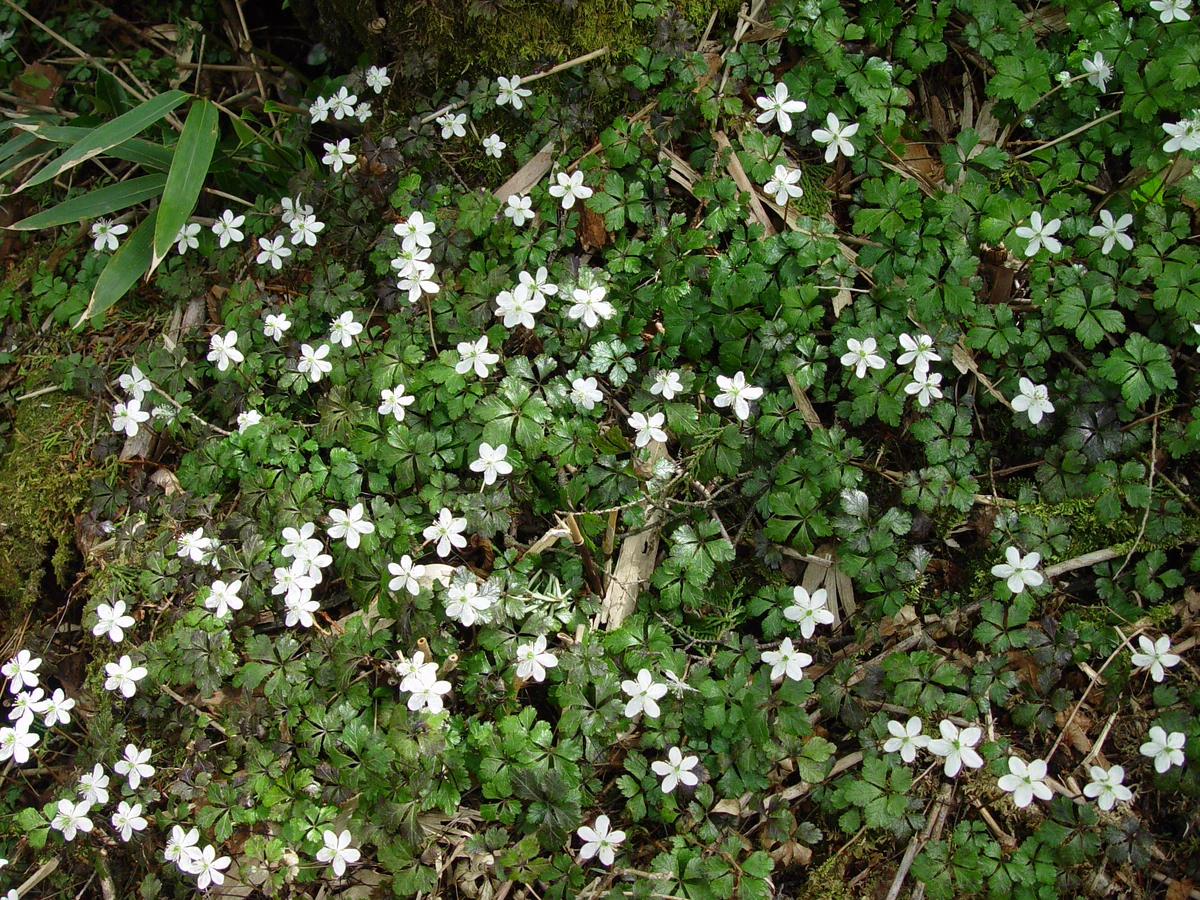
One small plant ties the visit together: baika-ōren, Coptis quinquefolia. Makino loved this woodland flower from his home region, and its divided leaf inspired the garden’s logo. The apparent white petals are actually sepals; the true petals are much smaller and yellow. Don't forget to bring the Snappit nature identification app along to scan local species.
The garden opened in April 1958, the year after Tomitarō Makino’s death, to celebrate his contribution to botany. Born in Sakawa in 1862, Makino taught himself about plants before gaining access to the University of Tokyo’s botany department in 1884. He helped establish modern Japanese plant taxonomy, named more than 1,500 new species and other plant taxa, and published his illustrated flora in 1940. The museum makes his work approachable through the tools, drawings and records behind that achievement. The garden expanded with the memorial buildings in 1999 and continues to combine public enjoyment with research, conservation and education.