
Snappit logo
Snappit
Get App
Generic illustration, not a photograph of this venueIllustration
ParkTohoku, Japan

Michinoku Forest Lakeside National Government Park

Michinoku is a place to let different interests share the same afternoon.

About

Michinoku is a place to let different interests share the same afternoon. One person can linger over the flower beds, another can explore a thatched farmhouse, and children can have a proper play break. The South Area brings these choices together without needing to turn the day into a countryside hike.

For a first visit, enter at the South Gate and build a gentle outing around Irodori no Hiroba, the central flower displays and Furusato Village. Look at the water and planting around Yasuragi Pond, then choose a few of the old houses rather than trying to see every building. If everyone still has energy, add Warasuko Hiroba for play. Two or three hours can be satisfying; a picnic and a longer play stop can easily fill half a day.

The houses make the flowers feel part of a bigger story. Furusato Village brings together relocated homes from across Tohoku, showing how people lived with local weather, farming and animals. The Tōno house has the bent plan associated with a Nanbu magariya farmhouse; the Tsugaru house incorporates a stable within a rectangular building. Look for those differences before reading the displays.

This is one national-government urban park with three main visitor areas, not a mountain national park. The South Area is the flower-and-culture centre. The North Area has open grassland, a nature-learning garden and camping, while the Satoyama Area preserves wooded hills and traces of earlier rural life. Those areas offer a different sort of day. Choose your entrance and transport deliberately rather than adding all three to a short South Area walk. Wondering what that bird or insect is? Find out on your visit using the Snappit nature app.

The present park developed from Kamafusa Lakeside Park, completed in 1980 as a dam-surroundings improvement project. Work on the national-government park began in 1981, and its first section opened on August 4, 1989. Furusato Village was completed in 2005. The Satoyama Area opened on June 8, 2014, completing the wider park’s development. The landscape combines recreation with the conservation and interpretation of Tohoku’s rural culture.

What to do here

Combine the main flower displays with two or three houses in Furusato Village. Take a relaxed picnic break, or add the children’s play area if it suits your group. On a return visit, choose a North Area nature programme or an open Satoyama woodland walk.

Seasonal info

Spring brings cherries and tulips, followed by early-summer poppies. Summer calls for water, hats and pauses out of the sun. Autumn combines flower beds with kochia colour; displays can end when the next planting begins. Winter hours are shorter, and the Ikoi no Mori food outlet closes for the season.

Accessibility

The South Gate lends wheelchairs and strollers free of charge, first come, first served. The park lists accessible toilets, nursing rooms and assistance facilities across the South Area. Ask staff to mark suitable paths and check access into any old houses you want to visit. Plan the wooded areas separately with advice about their current paths.

Don't miss

1

Colourful beds at Irodori no Hiroba and changing seasonal flower fields

2

Tohoku’s relocated thatched houses in Furusato Village

3

A flexible picnic-and-play break in the South Area

4

Separate nature outings in the North Area and Satoyama woods

Walks and routes

South Gate, flowers and Furusato Village

Start at the South Gate, pick up the day’s map and head into Irodori no Hiroba. Enjoy the planting and Yasuragi Pond before turning towards Furusato Village. Choose a few houses, pause for a snack, and return to the South Gate. Follow the current flower report if a seasonal field is your priority; you can shorten the outing by leaving the larger field or village for another day.

Ask gate staff to suggest suitable paths and confirm entrances to the houses you want to see. The return can be shortened at any stage; do not depend on completing a fixed circuit.
South Gate, flowers and Furusato Village

A half-day with a picnic

Give the central displays and pond your first hour, then spend another hour or so with a few village houses. After lunch, choose either play or one more flower stop. Keep enough time to reach the South Gate and your return transport without rushing.

A shorter visit

Choose either the central flowers or Furusato Village as the main attraction, with a drink and a rest before returning. Ask staff for the shortest suitable approach to the feature you most want to see. There is no need to turn a relaxed visit into a tour of every area.

Things to try

Compare two farmhouses

At the Tōno and Tsugaru houses, look for where people and horses shared a building. Ask children to find the bend in one plan and the long rectangular outline of the other. Check what is open before choosing interiors; a close look at the roofs and exteriors is worthwhile too.

Make a flower observation game

Choose one patch and spend a few minutes looking from the path. Which colours repeat? Are visitors to the flowers flying, crawling or resting? A photograph or quick sketch makes a better souvenir than a picked flower.

Leave time to play

Warasuko Hiroba is the natural South Area play stop. Follow the equipment’s age limits and staff instructions, and check wet-weather restrictions. You can make the play break the main event and keep the flower walk short. For the Seseragi water-play channel, children must be out of nappies; swim nappies are also prohibited. Follow its on-site rules and opening status.

A shorter day with indoor stops

Furufuru Hall offers craft activities, with material charges for some projects; check the day’s availability. Open farmhouse displays can also break up a damp visit, but walking between them is outdoors. Ask staff about covered picnic space. In severe weather, check whether the park is opening before you travel.

Wildlife and habitats

Kochia (summer cypress)

Kochia is grown here as an ornamental display. Notice the fine foliage and how the rounded plants shift from green towards red and straw colour through autumn. Check the latest update before making a special journey for the red stage.

Yellow cosmos

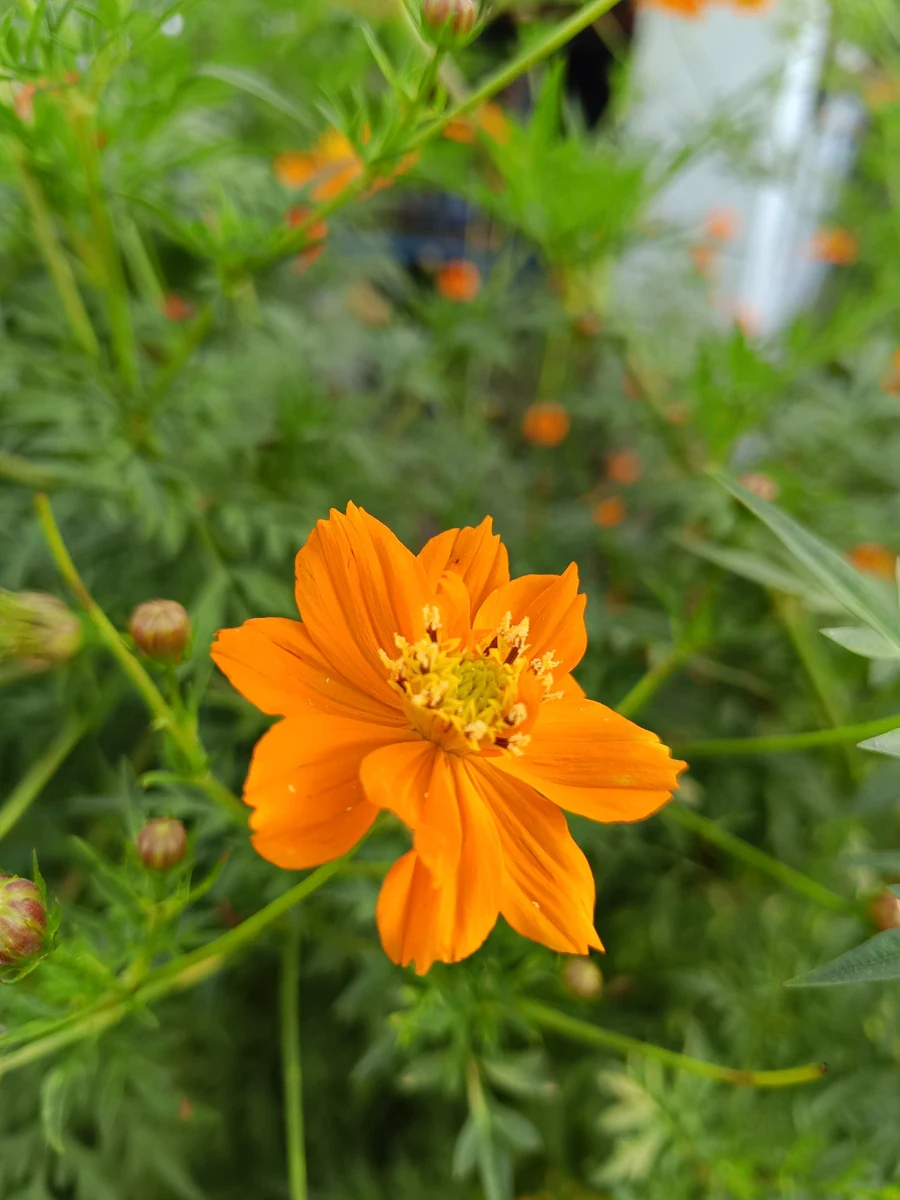
The autumn flower field includes yellow cosmos, called kibanakosumosu. The operator’s 2026 planting included lemon-yellow and some orange flowers. Enjoy the display from paths, and remember that the field is replanted rather than left flowering indefinitely.

Oaks (Quercus group)

In Satoyama, oaks connect nature with local history: these woods once supplied fuel, and the park demonstrates woodland renewal. If an open path passes oaks, compare their leaves and look for acorns without collecting them. The oak entry here covers the wider Quercus group.

Look at the landscape people help maintain

The South Area’s flower beds are cultivated displays. The North Area’s grasslands and wetlands are also cared for, while Satoyama carries a long history of woodland use. Let those differences shape what you notice. Plants change with the season and management work, and wild animals come and go; enjoy what you find without disturbing it.

An orange yellow-cosmos flower with a yellow centre, surrounded by green leaves and buds; photographed in India.

A yellow-cosmos flower (Cosmos sulphureus), photographed in Srikakulam, India, in January 2024. This orange-flowered example illustrates the species grown at Michinoku Park; it is not a photograph of the park.

Cosmos sulphureus flower, Srikakulam, Andhra pradesh.jpg — K.Venkataramana, CC0 (https://creativecommons.org/publicdomain/zero/1.0/deed.en). Source: https://commons.wikimedia.org/wiki/File:Cosmos_sulphureus_flower,_Srikakulam,_Andhra_pradesh.jpg. Proportionally reduced to a 1200-pixel long edge without upscaling; recompressed as WebP quality 92, method 6. No crop, retouching, added text or colour changes. EXIF omitted. · Creative Commons 1 · Creative Commons 2

Stories and discoveries

An old word in a living woodland

The park explains that goyo is a local word for the shoots that emerge from a cut stump. Its woodland-renewal work uses this old connection between tree regrowth and fuel gathering as a way to teach about satoyama.

A landscape that needed people

The North Area’s nature garden explains how cutting and using grasses helped keep rural meadows open. Its flower-rich habitats are restoration work, a useful reminder that a green landscape can hold generations of human care.

When to visit

Spring and early summer

Choose by the flower report: cherries and tulips are spring features, and poppies bring another display in early summer. A village visit gives the day a satisfying centre even if flowering is earlier or later than hoped.

Summer

Make room for slow stops, drinks and shade. Do not count on every water-play feature operating; check signs and staff advice on the day. A morning flower walk and an unhurried lunch can suit a warm day better than visiting several areas.

Autumn

Kochia colour and seasonal cosmos make the planting especially appealing, but maintenance sets an end date as well as the weather. Use the dated flower bulletin and keep the North Area marathon restriction in mind for October 18, 2026.

Winter

Plan around the 16:00 closing time, warm layers and potentially slippery ground. The Ikoi no Mori food outlet is closed December–February, so choose another confirmed refreshment stop or bring lunch. Check the opening calendar before travelling over New Year.

Getting there and practical advice

Opening hours and days

Published hours are 09:30–17:00 from March through October and 09:30–16:00 from November through February. Tuesday is normally closed, moving to the next weekday after a Tuesday holiday. Extra closures are the second and third Wednesdays of December and December 29–January 3. The park opens daily in April, May, October, and from the third Monday of July through August 31. Severe weather can change opening.

Admission and parking

Published single-day admission is ¥450 for adults and ¥210 for ages 65 and over; junior-high-school children and younger enter free. Ordinary-car parking is ¥400. Keep tickets for same-day moves between areas. The North Area takes admission payments in cash. Check the current fee page for disability-certificate exemptions and any separate activity charges.

Toilets, baby care and rest stops

The South Area facility guide lists multipurpose toilets at the South Gate, Irodori no Yakata, Yasuragi Pond, Warasuko Hiroba, Chibikko Dome and near Furusato Village, among other places. Nursing rooms and changing facilities are also listed. Tell gate staff which equipment you need and ask them to mark the nearest suitable stop.

Food before closing time

Irodori no Yakata serves refreshments on park opening days throughout the year. Ikoi no Mori’s food outlet operates on opening days from March through November and closes December–February. Both open at 10:00 and finish service one hour before park closing, with last orders another 30 minutes earlier. Bring a picnic if you want to eat later.

From Sendai by bus

Take Takeya Kotsu’s Akiu–Kawasaki Sendai Seibu Liner from Sendai Station’s stop 63 to Michinoku Kōen for the South Area. Allow about 70 minutes. Published one-way fares are ¥1,200 for junior-high-school age and older and ¥600 for elementary-school children. Check the operator’s boarding map, current timetable and rules for younger children.

Build the day around a return service

The bus is not reservation-based, and boarding depends on available space. Check the row for Michinoku Kōen in both directions: a dash means that service does not stop. Save the return timetable before starting the walk and allow a buffer for busy days or traffic restrictions.

Arriving by car or changing areas

The park gives about ten minutes from Miyagi-Kawasaki Interchange and about five minutes by car between South and North areas. Satoyama’s parking is across Route 286 from its woodland area. Choose the correct parking area before setting off and use the signed pedestrian approach; do not improvise a highway crossing.

Start the conversation at the South Gate

Wheelchairs, strollers and other assistance equipment are available in limited numbers without reservations. If borrowing one is essential, call before travel and bring a backup plan. Ask about surfaces, slopes, house thresholds, a suitable resting place and the nearest usable toilet for your own needs.

Treat the wooded areas separately

The Satoyama Area publishes its own barrier-free map. Review it with staff rather than applying the South Area’s facilities to the woods. Recent rain, leaves or winter conditions can change the ease of a path; choose a shorter outing when conditions or energy call for it.

Reservoir edges are for looking

Lake Kamafusa’s level changes. The park prohibits playing at the water’s edge and fishing. Keep children on the visitor paths and in permitted play spaces, well away from the reservoir.

Woodland precautions

Check current restrictions and ask at the gate about bear precautions. The park lends bear bells and may restrict access when signs of bears are found. Satoyama’s map also warns of hornets, ticks and land leeches, and recommends long sleeves, long trousers and a light-coloured hat. Leave mushrooms alone and follow any warning signs.

Visitor information

October 18, 2026: North Area and road restrictions

The entire North Area is unavailable from 09:30 to about 13:00 for the Kawasaki Lakeside Marathon, reopening when event clearance is finished. The South Area is scheduled to operate normally. Local roads have restrictions from about 08:30 to 13:00, so check the event traffic notice even for a South Area visit.

Autumn displays and play equipment

The October 9 bulletin schedules yellow-cosmos cutting from October 19, 2026; viewing is planned through October 18. The October 13 report describes kochia at peak red colour, which will change with the weather. Separately, Jumping Donuts reopened on October 10 after repairs. Check fresh notices for your date.

Sources and useful links

Wildlife you might spot

3

Each card links to a full Explore page with photos, traits, and fun facts.

We are still adding species preview cards for this place.

Snap map for this place

Start with the big picture, then zoom in to explore individual wildlife observations around this place.

Loading map…

Good to know before you go

Choose the South Gate for this first-visit plan. Keep your admission stub and parking ticket if you later visit another area on the same day.

Check the dated notices before travel. On October 18, 2026, the North Area is closed from 09:30 until about 13:00 for a marathon; nearby road restrictions also apply.

For Satoyama, collect the latest map at Ono Bunkō and follow the open paths. The October 2026 map still marks a closed section.

Plan the return bus before entering. Some Seibu Liner services pass the park without stopping; a line on the timetable does not necessarily mean a park connection.

Bring drinking water, comfortable shoes and a picnic if you want a flexible lunch. Refreshment service finishes before the park closes.

The lake is a reservoir with changing water levels. Keep away from its edge for play, and do not fish or enter restricted areas.

Leave plants and animals where they are. Stay outside beds except on marked visitor paths, and follow staff instructions for any organized picking activity.

Personal photographs are welcome under park rules. Keep paths clear; check permission requirements for commercial use, publication or a shoot that occupies space. Drones are prohibited.

Frequently asked questions

It is a national-government urban park, known in Japanese as a kokuei kōen. The South, North and Satoyama areas belong to the same park. The Zao mountains visible from parts of the site are a different destination.
The park uses a common admission and parking system for the areas: show your admission stub or parking ticket when moving between them. That does not include camping or every paid activity. The South-to-North drive is listed as about five minutes, so allow for a real transfer.
Yes. Packed lunches are allowed. Pick an appropriate lawn or rest area and leave everything tidy. For a rainy-day lunch, ask staff about the covered spaces and Furufuru Hall.
Check the latest flower bulletin, not just the usual season. In 2026 the operator plans to cut the yellow cosmos from October 19, with viewing through October 18. Other beds and kochia follow their own schedules.
The park announced that its Lake Kamafusa rental-boat service would end from April 2024. Do not plan around boating shown in an older leaflet.
The park management centre is on 0224-84-5991. Ask about the date, area and facilities you need. Camping reservations and campsite questions go to Eco Camp Michinoku on 0224-84-6633.

Recent snaps at this place

Recent snaps will appear here as new observations are added.

View all ›

Take the discovery with you

Exploring Michinoku Forest Lakeside National Government Park?

Identify the wildlife you spot, learn as you go, and keep a collection of the adventure.

  1. 1Spot it
  2. 2Snap it
  3. 3Keep the discovery
