Snappit logo
Snappit
Get App
Generic illustration, not a photograph of this venueIllustration
ParkAndalucía, Spain

La Concepción Botanical-Historical Garden

La Concepción is a garden for looking up, slowing down and occasionally changing your mind at a fork in the path.

About

La Concepción is a garden for looking up, slowing down and occasionally changing your mind at a fork in the path. Broad tree crowns, palms and climbing plants create an intimate world around the old estate buildings. Water, bridges and a winding layout make the historic garden feel quite different from the open, dry hills beyond it.

Give the historic heart priority on a first visit. Pick a few landmarks from the official map: the Museo Loringiano and its curved stone bench, the Casa-Palacio, the wisteria arbour and the cascade. They are useful points of orientation, but there is no need to turn them into a race. The shape of a root or the sound of moving water can be the best reason to pause.

Around that nineteenth-century landscape, newer botanical collections invite a more deliberate kind of looking. The entrance area introduces aquatic plants and ancient plant groups; elsewhere you can compare bamboos, palms, fruit trees and plants adapted to dry conditions. The short Vuelta al Mundo en 80 Árboles walk groups plants by their part of the world. These are cultivated collections, so a plant’s country of origin on its label tells you where it comes from naturally, not where you are standing.

For a different perspective, add a section above the historic garden. The Ruta de los Miradores looks across the treetops, while the higher Ruta Forestal brings Mediterranean vegetation into the visit. Those additions involve more walking on a hillside. A happy two-hour visit in the core is a better plan than trying to reach every corner with a tired group. Be ready to snap and learn! Get the Snappit app to identify any nature species you find here.

Jorge Loring Oyarzábal and Amalia Heredia Livermore created La Concepción in the mid-nineteenth century, with the garden dating from 1855. The French gardener Jacinto Chamoussent helped establish and acclimatise its plants. Their estate combined an ambitious garden with an interest in archaeology, represented by the Museo Loringiano. Rafael Echevarría and Amalia Echevarrieta bought the property in 1911 and added features including the palm avenue and the view towards Málaga. The garden received historic-artistic recognition in 1943. Málaga City Council acquired the estate in 1990 and opened it to the public in 1994, preserving the historic garden while developing botanical collections for education and science.

What to do here

Take a garden map at the entrance and choose two or three historic landmarks, then one contrasting collection. The wisteria arbour is worth seeing for its iron structure and climbing stems even outside flowering time. Add the 80 Trees walk for a botanical theme, or a higher viewpoint walk if everyone still wants to explore.

Seasonal info

Flowers and fruit change through the year. The garden’s published flowering calendar is based on observations made in 2007–2011, so use it as a seasonal guide rather than a forecast. Heat, heavy rain and strong wind can change the day’s plan; recheck notices and ask staff which paths are suitable.

Accessibility

The official map identifies walks suitable for wheelchairs and distinguishes them from other paths. The historic hillside also has steps, slopes, roots and changes of level; the 1.1 km Ruta Forestal is graded medium difficulty. Ask at the entrance for a connected route that suits your wheelchair, walking aid or pushchair, including the return and toilets. A short path or an easy-walking symbol does not make every branch step-free.

Don't miss

1

The historic garden’s mature trees, water features and small bridges

2

The iron wisteria arbour and the Casa-Palacio setting

3

Contrasting collections of aquatic plants, bamboos, palms and succulents

4

Treetop views from the Ruta de los Miradores

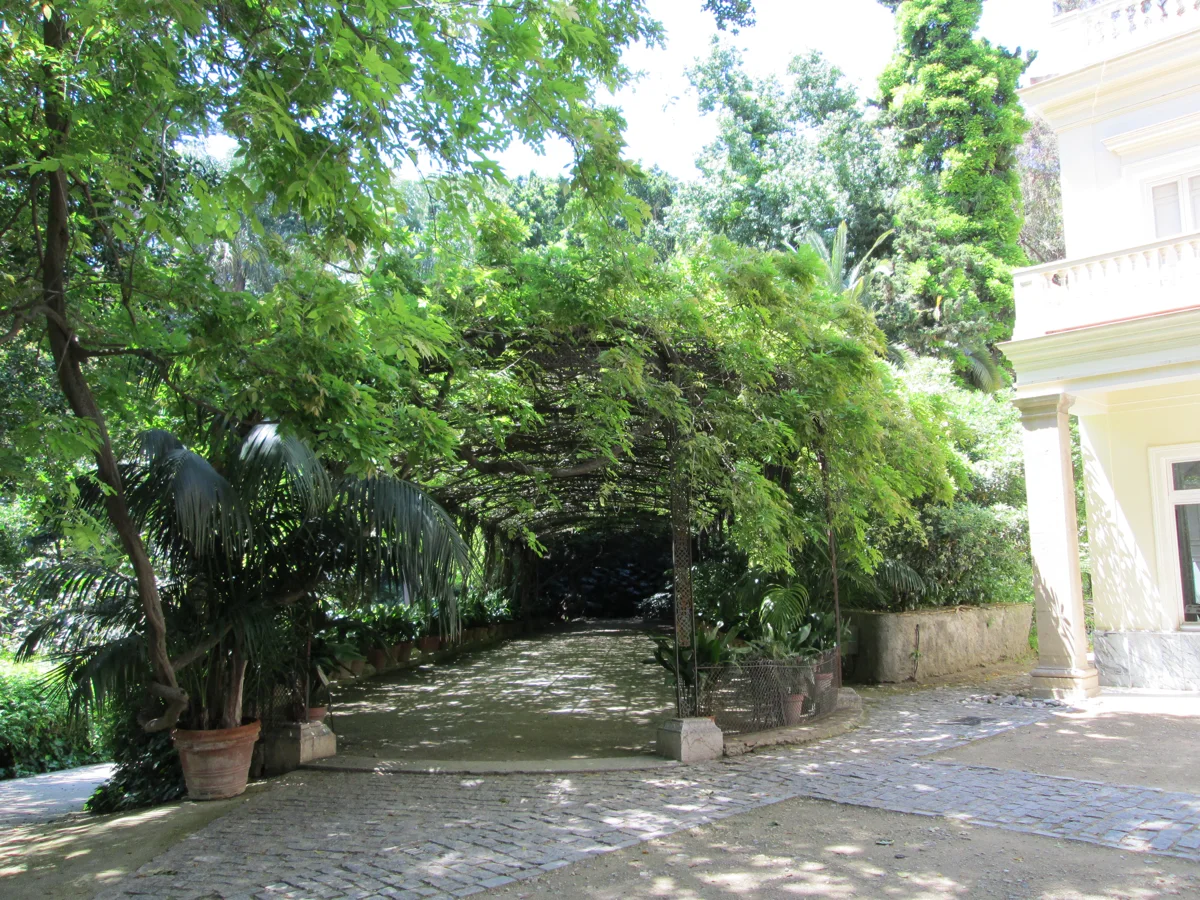
A leafy metal arbour shades a paved garden space beside a pale building, palms and dense green planting.

The leafy wisteria arbour at La Concepción, photographed in May 2013.

Cenador con glicinas01.jpg — Tyk / Wikimedia Commons / CC BY-SA 3.0 Unported · Creative Commons 1 · Creative Commons 2

Walks and routes

Historic garden: choose a few landmarks

Use the official map to select the Museo Loringiano, Casa-Palacio surroundings, wisteria arbour and cascade. Add the entrance-side plant displays as time and energy allow. Allow 60–90 minutes for this selected group of stops, with extra time for the rest of the garden. This is a flexible visit plan, not a named waymarked circuit.

The historic garden is on a hillside, with steps and changes of level among its paths. Ask staff to adapt your selection to the wheelchair-marked walks if needed.


Historic garden: choose a few landmarks

Vuelta al Mundo en 80 Árboles

The official collection walk is 400 m long and introduces plants from different continents. Its name is a playful starting point rather than a counting challenge: the collection includes shrubs, climbers and herbaceous plants as well as trees. Allow 20–40 minutes for labels and comparisons, plus the approach from the entrance.

Use the garden’s wheelchair-marked connections and ask staff about the best approach to this northern collection. The published 400 m length does not establish a step-free route from the gate.

Vuelta al Mundo en 80 Árboles

Ruta de los Miradores

This 415 m route runs just above the historic garden. Its reward is the view across tree crowns and the contrast between subtropical planting below and Mediterranean vegetation along the walk. Allow about 20–30 minutes for the route itself, then add time for the approach and return you choose.

The map distinguishes easy-walking and wheelchair-marked sections. Ask which connection suits your mobility; do not assume that the entire upper walk or its approaches are step-free.

Ruta de los Miradores

Ruta Forestal

The 1.1 km forest route follows the estate’s highest path from north to south. Look out across the garden and surrounding hills, and compare the Mediterranean vegetation with the garden collections below. Allow roughly 40–60 minutes for the upper route with pauses, plus your chosen access and return paths; 1.1 km is not a gate-to-gate circuit.

The official map grades this route medium difficulty. Treat it as a hillside walk rather than the default option for wheelchairs, pushchairs or anyone needing an easy outing.

Ruta Forestal

A relaxed first visit: around two hours

Start with the map and entrance-side collections. Choose a handful of historic-garden landmarks, taking the paths that suit your group, then pause in a designated rest area. Finish with one collection that caught your attention rather than pushing on to the highest paths. Let the time at each stop be flexible.

A plant-focused half day

Give the historic garden its own hour or more, then choose either the 80 Trees walk and palms or the bamboo and succulent collections. Add a café or picnic-area break. Three hours is a useful starting allowance, but reading labels can easily fill more time; check closing and transport before adding another collection.

A longer walk with views

Begin in the historic garden, then choose the Ruta de los Miradores or the higher Ruta Forestal. Use the official plan to connect back to the entrance, leaving time for the return and a rest. The historic viewpoint pavilion is another named landmark, but it is not the same thing as the entire Ruta de los Miradores.

A visit built around access

At the entrance, explain the surface, slope and step limits that matter to you. Ask staff to mark a manageable connected walk, a suitable toilet and a rest stop, then choose plant collections along that plan. Keep the upper paths optional and confirm transport home before extending the visit.

Things to try

Compare three very different plants

Choose an aquatic plant near the entrance, a bamboo and a succulent. Look at the whole plant before its name: where does it put its leaves, how does it support itself, and what might its shape help it do? Read the label together and leave the specimen untouched.

Make a small palm study

The palm collections occupy more than one part of the garden, including a geographically arranged collection. Choose two labelled specimens and compare their silhouettes from the path. The Chilean wine palm and date palm are both documented here, but many other palms have very different shapes; a label is more reliable than a quick guess.

Listen before you look

Pause quietly and see how many different bird sounds you can separate from moving water and leaves. The official map includes a bird observatory on the upper route, so make it an optional stop only if that walk suits your group. Birds using the grounds are wild visitors, separate from the cultivated plant collection.

Let a guide connect the details

The booked Paseos con Encanto daytime visit lasts 90 minutes and combines botany with the people who shaped the estate. The listed price is €8.05 standard or €5.95 reduced, including garden admission. Dates vary: consult the current programme, and ask about private English-language visits if that would help your group.

Choose an organised family session

The garden offers family activities and seasonal events with their own reservations, ages and timings. They can be a good choice when children enjoy a guided challenge or workshop. Read the current event listing before booking instead of assuming the same activity runs every Sunday.

For a brief shower, ask about an indoor pause

The exhibition spaces or gardener’s-house display may give you a short change of scene when open. They are reached through the garden, so they do not turn the whole outing into an indoor activity. Ask about current opening and the safest connection before heading across slippery paths.

In strong wind, leave the garden for another day

Málaga has closed La Concepción during severe wind warnings in the past. Follow current municipal and garden notices and do not wait beneath old trees for conditions to improve. If heavy rain or wind makes the visit unsuitable, choose an indoor plan elsewhere in the city.

Wildlife and habitats

Moreton Bay fig

Look for the broad crown and conspicuous roots of the Moreton Bay fig near the old carriage bridge. Its large leaves can suggest a magnolia, but the label identifies it as a fig from Australia. Stay on the path rather than climbing among the roots.

Chinese wisteria

The climbing plant over the iron arbour is Chinese wisteria. Compare its woody stems with the structure that supports them. Its lilac flower clusters are a brief spring event; outside that period, the framework and growth habit still make a rewarding stop.

Black bamboo

The bamboo collection around the Casita del Jardinero includes black bamboo. Look at the contrasting stems and the repeated joints without entering the planting. This is a cultivated collection with several bamboo kinds, so check labels before attaching a name to an individual clump.

Deodar cedar

Look for the deodar beside the Casa del Administrador. Take a moment to see the whole tree before looking for details from the path. Its label links this Himalayan species with a very different growing setting in Málaga.

Sacred lotus

Lotus is one of the plants in the garden’s aquatic collection. Use the plant label to distinguish it from the various water lilies in the collection. Compare the plants from the pond edge and keep children close; flowers are seasonal, and not every water feature has the same planting.

Living collections and wild visitors

The named plants below are grown as part of the garden’s cultivated collections. Use labels to confirm what you are looking at, and expect seasonal or maintenance changes. Birds moving through the grounds are wild; the garden’s bird list distinguishes regular visitors from occasional records, so quiet observation is more useful than expecting a particular species.

Stories and discoveries

The old greenhouses were a stepping stone

The two historic iron structures date from the later nineteenth century. Plants were gradually prepared for life outdoors through protected growing conditions, including a heated structure. They tell a practical story behind the garden’s lush appearance: collecting a plant was only the beginning; getting it established took care and experimentation.

The water has a return journey

The garden explains that water passing through its streams and ponds reaches a low-level lake and is pumped back uphill for reuse. The lake was created in 2005 as part of water-saving measures. Watch a small stream with that circuit in mind, while remembering that fountains and cascades may be switched off for maintenance.

A pleasure garden with a working-estate past

La Concepción began with agricultural land as well as ornamental planting. Its citrus story includes lemons shipped to Britain. Fruit collections now help preserve the memory and diversity of that productive landscape; the fruit is part of the display, so leave it on the tree.

The small classical temple tells a larger story

The Museo Loringiano was built in 1859 around a Roman mosaic from Cártama. The Loring family’s archaeological collection later became dispersed among museums, so the temple is best understood as part of that collecting history, rather than a promise that every famous object remains on site.

Some modest plants carry a conservation story

The Mediterranean rockery includes work linked to the Proyecto Phoenix programme, growing threatened or endemic plants outside their natural habitats. Small labelled plants can therefore be as significant as a dramatic old tree. Look closely from the path and let their labels explain the connection to the surrounding region.

When to visit

Spring: follow flowering updates

The wisteria’s short flowering period is the obvious seasonal draw, but it should be a bonus rather than the only reason to come. Use the garden’s flowering information and current staff advice, then enjoy other collections if your visit falls before or after the main display.

Summer: begin early and take breaks

Málaga’s summers can be very hot. Start at opening, carry water and alternate short walks with rests. Mature trees provide shade in parts of the garden, but upper routes and other collections need separate judgement. A greenhouse is not a guaranteed cool refuge.

Autumn: choose a calm walking day

Milder weather can suit the 80 Trees walk or a viewpoint addition. Look at plant structure and changing leaves rather than expecting one fixed flower display. Check rain and wind before using upper paths, and remember that the shorter October–March hours apply.

Winter: make use of the shorter day

Plan the historic garden and a selected collection while the light is good. Ask which exhibitions or indoor displays are open if you want a sheltered pause. Check holiday closures and do not assume that a night-time event uses the ordinary daytime ticket or hours.

Getting there and practical advice

Opening hours and holidays

Checked 17 October 2026: the operator lists 09:30–20:30 from April through September and 09:30–17:30 from October through March. Mondays are normally closed, with an exception for public-holiday Mondays; 25 December and 1 January are closed. Closing is 15:00 on 24 and 31 December. The operator allows a further half hour inside after the published closing time, but plan your main visit earlier.

Tickets and free Sunday periods

Ordinary entry is €5.20; the reduced rate is €3.10 for eligible visitors. Bring the relevant proof and check the full eligibility list. Admission is free on Sundays 14:00–17:30 in October–March and 16:30–20:30 in April–September. Ordinary tickets are gate-only; special activities have separate arrangements.

Information, shop, café and practical stops

The entrance has information, a shop and a kiosk-café. The map shows toilets, including wheelchair symbols at facilities near the entrance, Casa-Palacio and palm avenue. It also marks places where food is allowed. Confirm which facilities are open that day; admission is required to visit the café and exhibitions.

A small greenhouse with specialised plants

Near the entrance, a small greenhouse brings together insectivorous plants, bromeliads and orchids. Look for the different structures used by plants that capture insects or grow supported by other plants. Check at the entrance whether the display is open and how to reach it.

Historic buildings and indoor displays

The Casita del Jardinero houses a doll-based retelling of the garden’s history. The Casa del Administrador contains exhibition spaces and also working research facilities; it is not all public gallery space. Ask about current exhibitions and the naturalist-cabinet display. The Casa-Palacio is an estate mansion whose interior appears in some organised visits; confirm access with the visitor service.

Contact the visitor service

For general information and the ticket office, call +34 951 926 180. For guided-visit and activity reservations, the published contacts also include +34 639 914 055, with WhatsApp, and [email protected]. Use the official website to verify the current contact details and programme before booking.

Choose the garden entrance as your destination

Use Camino del Jardín Botánico, 3, 29014 Málaga. This is on the city’s northern side, beyond the central sightseeing area. The official map marks public parking outside the entrance side of the garden; follow current signs and check any charges or restrictions on arrival. The separately marked private parking is not a visitor alternative.

Check the direct garden bus first

The garden lists the City Sightseeing connection known as line 91 from the train/bus-station area, and Málaga bus station lists a Jardín Botánico destination. Confirm that day’s departure, fare and last return with the operator before travelling. Check both journeys for your date, allowing time to leave the garden before its seasonal closing time.

Line 20 needs a walking connection

The garden suggests a walk of about 15 minutes from the final stop of EMT line 20. EMT’s service-change notice moved that line’s terminal to San José from November 2025. Check the current stop and pedestrian approach with EMT; the quoted walking time is not an accessibility assessment. For limited mobility, confirm a suitable vehicle and gate drop-off instead of improvising the last stretch.

Plan the journey back as carefully as the arrival

Before entering, check your return stop and the last useful departure, allowing for the walk back from the part of the garden you choose. A taxi can simplify a short visit, but arrange any wheelchair-accessible vehicle and pickup point in advance. Avoid relying on an unconfirmed evening service after a seasonal closing time.

Read the access symbols separately

On the official plan, a wheelchair symbol denotes a suitable walk; an easy-walking symbol is a different category. The forest route has its own medium-difficulty label. Use those distinctions when choosing your visit, and ask staff to show a continuous outward-and-return route rather than linking individual symbols yourself.

Check surfaces and connections on arrival

The visitor rules explicitly warn of slopes, roots, ponds and changes of level. Wet conditions can make these features harder to negotiate. If a route is unsuitable, choose a smaller selection of collections with staff rather than attempting an awkward shortcut or stair connection.

Confirm each facility you need

Wheelchair symbols are shown beside several toilet locations, but the map does not provide doorway widths, turning space or transfer details. Ask about those needs, any steps into exhibitions or greenhouses, and the café entrance. The presence of an accessible outdoor walk does not confirm access to every historic interior.

Use more than plant labels

The map identifies a Jardín de los Sentidos, and an audio guide is linked from the garden website. Ask how to use these and what support is available. A sensory-garden name alone does not establish a fully tactile, audio-described or step-free visit; follow staff guidance about which plants may be touched.

Sources and useful links

Wildlife you might spot

5

Each card links to a full Explore page with photos, traits, and fun facts.

Snap map for this place

Start with the big picture, then zoom in to explore individual wildlife observations around this place.

Loading map…

Good to know before you go

Use the official map and decide on a return time before wandering. The tempting upper paths are optional additions to the historic core.

Buy ordinary admission at the entrance. Reserve guided visits and organised activities separately through the garden’s visitor service.

Wear shoes with grip and carry water. Take particular care around roots, steps, pond edges and damp paths.

Keep children close beside the water and on changes of level. Under-16s must be accompanied and supervised by an adult.

Leave flowers, fruit, seeds and branches where they are. Stay on paths, and avoid touching spiny or unfamiliar plants.

Eat only in designated picnic/rest areas. Coolers, smoking, bicycles, skates, balls and drones are not allowed.

Dogs must stay on a lead and on paths, and owners must sign the access rules. Check the building restrictions before planning an indoor stop.

Confirm the last bus back before entering. If you want a wheelchair-friendly arrival, check the whole connection from transport or parking to the gate.

Frequently asked questions

No. It is a separate municipal botanical-historical garden in Málaga. The natural park is part of the wider landscape seen from the upper walks; a garden visit does not require a mountain-hiking itinerary.
The operator currently sells ordinary entrance tickets only at the gate. Guided visits and organised activities have advance reservations. Check the practical details below and use the official visitor service for the option you want.
Its main display is short and weather-dependent. Late March and early April are the usual period, but the actual dates vary. Ask for the current flowering update rather than treating photographs or the historical calendar as a promise.
There are wheelchair-marked walks, but the whole hillside is not equally accessible. Let staff help you choose a connected route and confirm toilets, building access and your way back to the entrance.
They serve different purposes. The small greenhouse near the entrance houses plant displays; the two historic iron structures explain acclimatisation. Palace interiors feature in some organised visits. Ask which interiors are open that day rather than assuming a general ticket includes every building.
A snack in a designated picnic area fits the visit. The garden is a living collection, so ball games, bicycles and other play equipment listed in the rules are not allowed. Plan quiet looking activities and keep children on the paths.
Yes, subject to the published dog rules and a signed acceptance. Dogs must be microchipped, vaccinated and treated for parasites. Bring a lead and waste bags; keep them out of planted areas and ponds. The rules also exclude dogs from the Casa-Palacio, shop and covered kiosk-bar area. Check any assistance-dog arrangements directly.
Keep paths clear and protect the plants. The rules require advance permission and a fee for organised family or commercial photographic sessions. Contact the garden before arranging a portrait shoot, wedding session or commercial work.

Recent snaps at this place

Recent snaps will appear here as new observations are added.

View all ›

Take the discovery with you

Exploring La Concepción Botanical-Historical Garden?

Identify the wildlife you spot, learn as you go, and keep a collection of the adventure.

  1. 1Spot it
  2. 2Snap it
  3. 3Keep the discovery